Every plant on your shelf carries a story from its original home—some from dry, sun-drenched deserts, others from warm, filtered rainforests, and some from cool, misty forest floors. When we honor those origins, watering and lighting become clearer and more intuitive.
This guide gently compares three major indoor plant groups—succulents, tropicals, and ferns—so you can match water and light to what each truly needs.
Why Origins Matter for Water & Light
Plants adapt deeply to the climates they evolved in:
- Desert plants (succulents and cacti) learned to store water and endure intense light.
- Tropical plants grew under broken canopies with bright, indirect light and steady moisture.
- Ferns often lived in shaded, humid understories or near streams.
Bringing this understanding into your home helps you decide:
- How bright their spot should be
- How often to water
- How much drying between waterings is healthy
Group 1: Succulents & Cacti — Children of the Sun
Light Needs
Succulents and cacti generally prefer very bright light, often including some direct sun.
- Ideal spots: South or west-facing windows; bright east windows with morning sun.
- Signs they’re happy: Compact growth, rich color, firm leaves.
- Signs of too little light: Stretching, leaning, pale or washed-out color.
Examples:
- Echeveria
- Haworthia
- Aloe
- Mammillaria and other small cacti
- Jade Plant (Crassula ovata)
Watering Style
Think of watering succulents as offering a deep drink followed by a rest.
- Let soil dry completely between waterings.
- Water thoroughly until water drains from the bottom.
- In winter, water significantly less as most slow down.
Simple test:
- Soil feels dry all the way through.
- Pot feels light when lifted.
- Leaves may slightly wrinkle when it’s time to water.
Common Mistakes & Gentle Fixes
- Mistake: Watering a little every few days.
- Fix: Switch to deeper, less frequent watering, and ensure well-draining soil.
- Mistake: Keeping succulents far from windows.
- Fix: Gradually move closer to bright light over 1–2 weeks to prevent sun shock.
Group 2: Tropical Foliage Plants — Lovers of Bright, Filtered Light
Tropical plants like Monstera, Philodendron, Pothos, Ficus, and Peace Lily come from lush, warm environments with overhead canopies.
Light Needs
Most tropical foliage plants favor bright, indirect light:
- Near an east or north window
- A few feet back from a south or west window with a sheer curtain
Examples:
- Monstera deliciosa
- Fiddle Leaf Fig (Ficus lyrata)
- Rubber Plant (Ficus elastica)
- Pothos (Epipremnum aureum)
- Philodendron varieties
Signs of too little light:
- Slow growth
- Smaller leaves
- Long spaces between leaves on vines or stems
Signs of too much direct light:
- Brown patches where sun hits directly
- Bleached or faded leaves
Watering Style
Tropicals usually like a rhythm of moisture followed by a moderate dry-down, not bone-dry and not constantly soggy.
- Check the top 2–5 cm (1–2 inches) of soil.
- When dry at that depth, water thoroughly.
- Let excess drain and remove standing water from saucers.
Examples & nuances:
- Monstera & Philodendron: Allow the top 1–2 inches to dry; they dislike constantly wet roots.
- Fiddle Leaf Fig: Needs consistent, deep watering when the top 2 inches are dry; prefers a stable location with strong light.
- Peace Lily: Likes evenly moist soil; responds dramatically to dryness with drooping.
Common Mistakes & Gentle Fixes
- Mistake: Treating all tropicals like succulents.
- Fix: Adjust to more frequent watering and higher humidity, particularly for thin-leaf species.
- Mistake: Keeping them in low-light corners.
- Fix: Move closer to windows or add a grow light; many will reward you with larger, healthier leaves.
Group 3: Ferns — Keepers of Cool, Humid Shade
Ferns such as Boston Fern, Maidenhair Fern, and Bird’s Nest Fern come from shaded, damp environments.
Light Needs
Ferns prefer low to medium indirect light:
- North windows
- A few feet from bright windows, fully out of direct sun
Signs of too much light:
- Bleached foliage
- Crispy fronds
Signs of too little light:
- Very slow growth
- Sparse fronds
Watering Style
Ferns typically love consistently moist, but not waterlogged, soil and higher humidity.
- Check the top 1–2 cm (½–1 inch) of soil.
- Water when this top layer just begins to feel dry.
- Avoid letting the soil fully dry out for extended periods.
Species nuances:
- Boston Fern: Enjoys evenly moist soil and cooler rooms with good humidity.
- Maidenhair Fern: Very sensitive to drying out and direct sun; prefers soft, consistent moisture.
- Bird’s Nest Fern: Tolerates a bit more dryness at the surface but still appreciates overall moisture.
Common Mistakes & Gentle Fixes
- Mistake: Placing ferns in hot, sunny windows.
- Fix: Move to a shadier spot or behind other plants that filter the light.
- Mistake: Allowing soil to alternate between bone-dry and soaked.
- Fix: Check more frequently and water when the top begins to dry, not after it’s fully parched.
Seasonal Adjustments for Each Group
Spring & Summer
- Succulents & Cacti: Use more water as they grow faster; maintain strong light and ensure pots don’t overheat in windows.
- Tropicals: Increase watering frequency slightly; watch for leaf scorch near hot windows and soften light with curtains.
- Ferns: Benefit from increased ambient humidity; keep soil consistently moist.
Autumn & Winter
- Succulents & Cacti: Reduce watering significantly; keep soil dry longer and ensure they stay in the brightest available window.
- Tropicals: Light levels drop; consider moving them closer to windows and water less as growth slows.
- Ferns: Heaters dry the air; maintain humidity with trays or humidifiers and avoid placing ferns near hot vents or drafts.
Putting It Together: A Gentle Snapshot Chart
Use this as a soft reference, not a rigid rule:
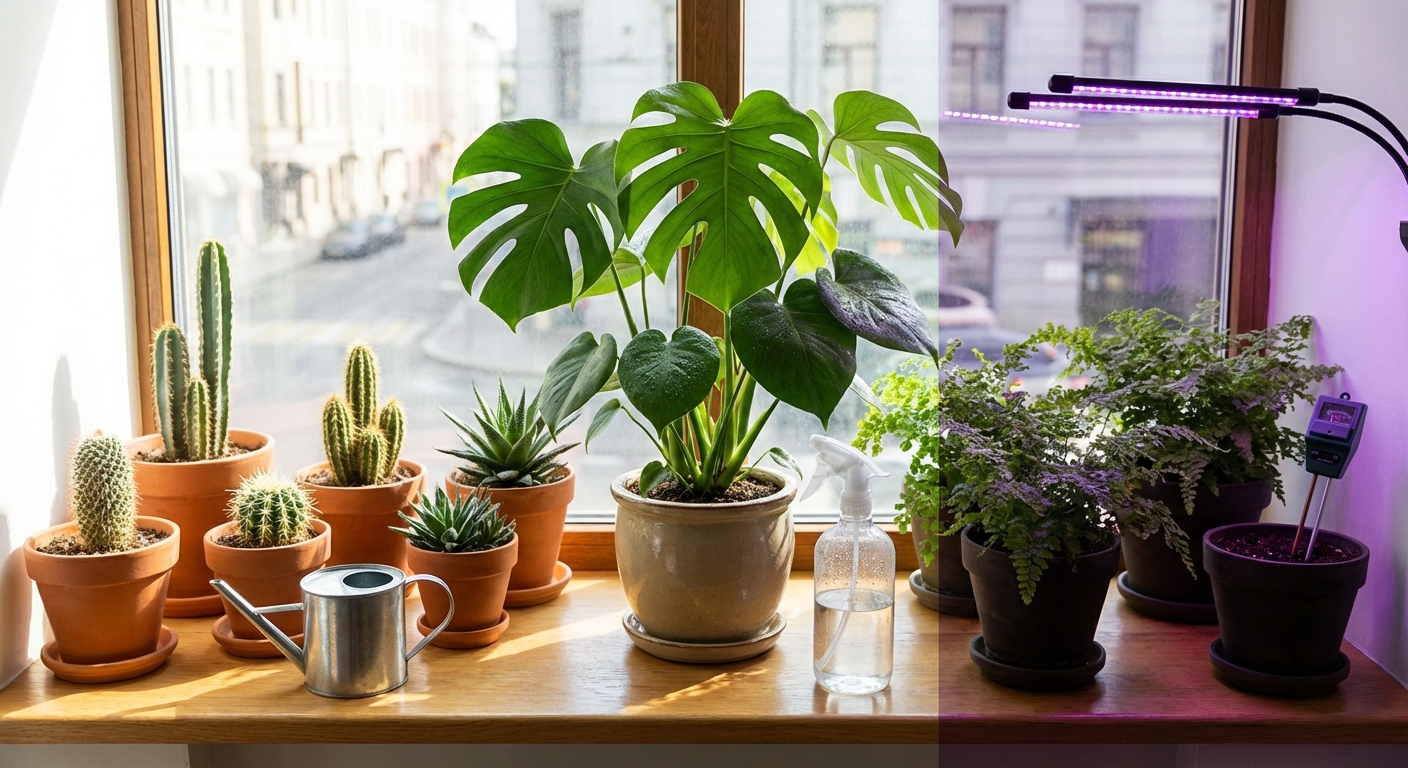
| Group | Light Preference | Soil Drying Preference |
|---|---|---|
| Succulents & Cacti | Bright, often direct sun | Dry completely between waterings |
| Tropicals (Foliage) | Bright, indirect; some medium | Dry top 1–2 inches, then water deeply |
| Ferns | Low to medium indirect | Lightly moist, avoid full dry-down |
Choosing the Right Plant for Your Light
If your home is:
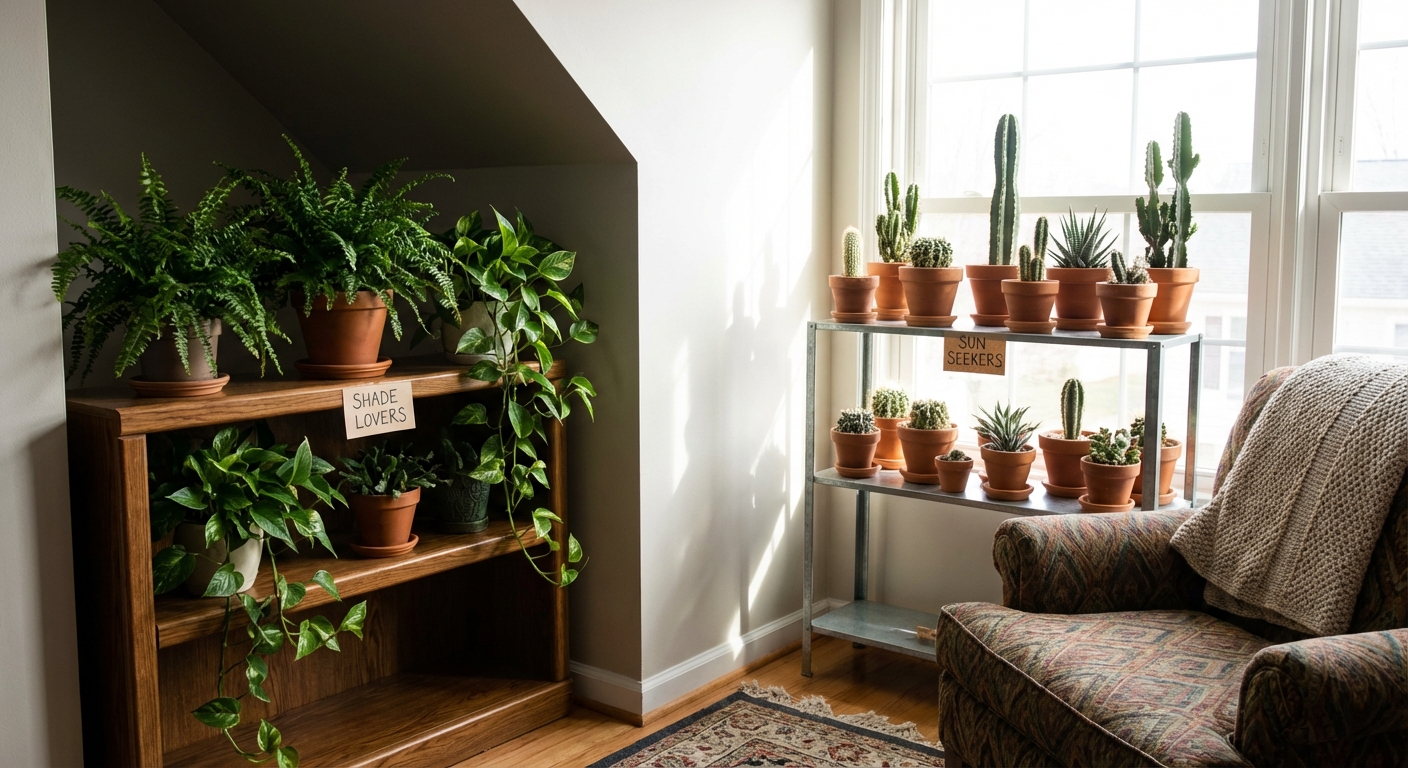
- Bright and sunny with large south or west windows → Lean toward succulents, cacti, and light-loving tropicals like figs.
- Bright but not sunny (many east or north windows) → Ideal for most tropical foliage plants and some ferns.
- Softly lit or shaded → Focus on ferns, low-light tropicals, and sturdy plants like ZZ and Snake Plants.
Matching plants to your light first makes watering feel simpler. Desert plants get drier treatment; rainforest and forest-floor species receive gentler, steadier moisture.
A Calm, Observant Practice
You don’t need to memorize every detail. Instead:
- Learn which group each plant belongs to.
- Place it in light that mirrors its origin.
- Water in a way that echoes its native climate.
- Watch, adjust slowly, and trust your growing experience.
Over time, your succulents will stay compact and vibrant, your tropicals will unfurl broad leaves, and your ferns will hold onto their soft, lush fronds. Each plant becomes a quiet reminder of the landscapes it came from—and of the gentle care you offer every time you choose just the right amount of water and light.
Key Takeaway
The most important thing to remember from this article is that following these steps can lead to great results.