Indoor plants move through the seasons right alongside us, even if they never leave our living rooms. Light shifts, temperatures drift, and their thirst changes. When we honor these subtle rhythms, watering and lighting feel less confusing and more like a calming ritual.
This guide offers a nurturing, seasonal routine you can adjust for your own space and plant collection.
How Seasons Quietly Change Indoor Light
Even inside, plants feel seasonal shifts:
- Spring: Days lengthen, the sun climbs higher, and windows receive more hours of light.
- Summer: Light is strongest and most direct; south and west windows can become intense.
- Autumn: Daylight shortens, and intensity softens.
- Winter: Light is weak and brief; north-facing and deeply set windows can become low-light environments.
Because light is the driver of growth, it also shapes how much water a plant needs. More light usually means more growth, which means more water use.
A Gentle Year-Round Watering Framework
Instead of watering on a strict schedule, use this flexible framework:
- Check the soil, not the calendar.
- Observe the plant’s posture and color.
- Adjust with the seasons in mind.
Below, we’ll pair this framework with four seasonal routines and a few species-specific examples.
Spring: Waking Up Gently
Light in Spring
- Many homes receive increasing bright indirect light.
- East-facing windows become especially valuable: soft morning sun that rarely burns leaves.
Water in Spring
- As plants wake and produce new growth, they generally use more water.
- Root systems that shrank during winter begin to explore the soil again.
Routine
- Check moisture: Once a week for most plants; every 10–14 days for drought-tolerant species.
- Rotate pots: Turn plants ¼ turn every one to two weeks to encourage balanced growth.
- Begin light feeding: Pair watering with gentle fertilizer for active growers (skip for dormant or slow-growers like some succulents).
Spring Notes for Specific Plants
- Monstera deliciosa: Move gradually closer to bright windows. Water when the top 3–5 cm (1–2 inches) of soil is dry; you may notice it drying faster now.
- Peperomia species: These semi-succulent leaves dislike soggy soil; as light increases, they may need slightly more frequent—but still moderate—watering.
- African violets (Saintpaulia): Enjoy bright, filtered spring light; keep soil lightly moist, avoiding water on leaves.
Summer: Protecting From Harsh Heat
Light in Summer
- Sun is strongest, especially at south and west windows.
- Glass can concentrate heat; some leaves may scorch or fade.
Water in Summer
- Warmth and bright light increase evaporation and growth.
- Many plants need water more frequently, but overwatering is still possible if drainage is poor.
Routine
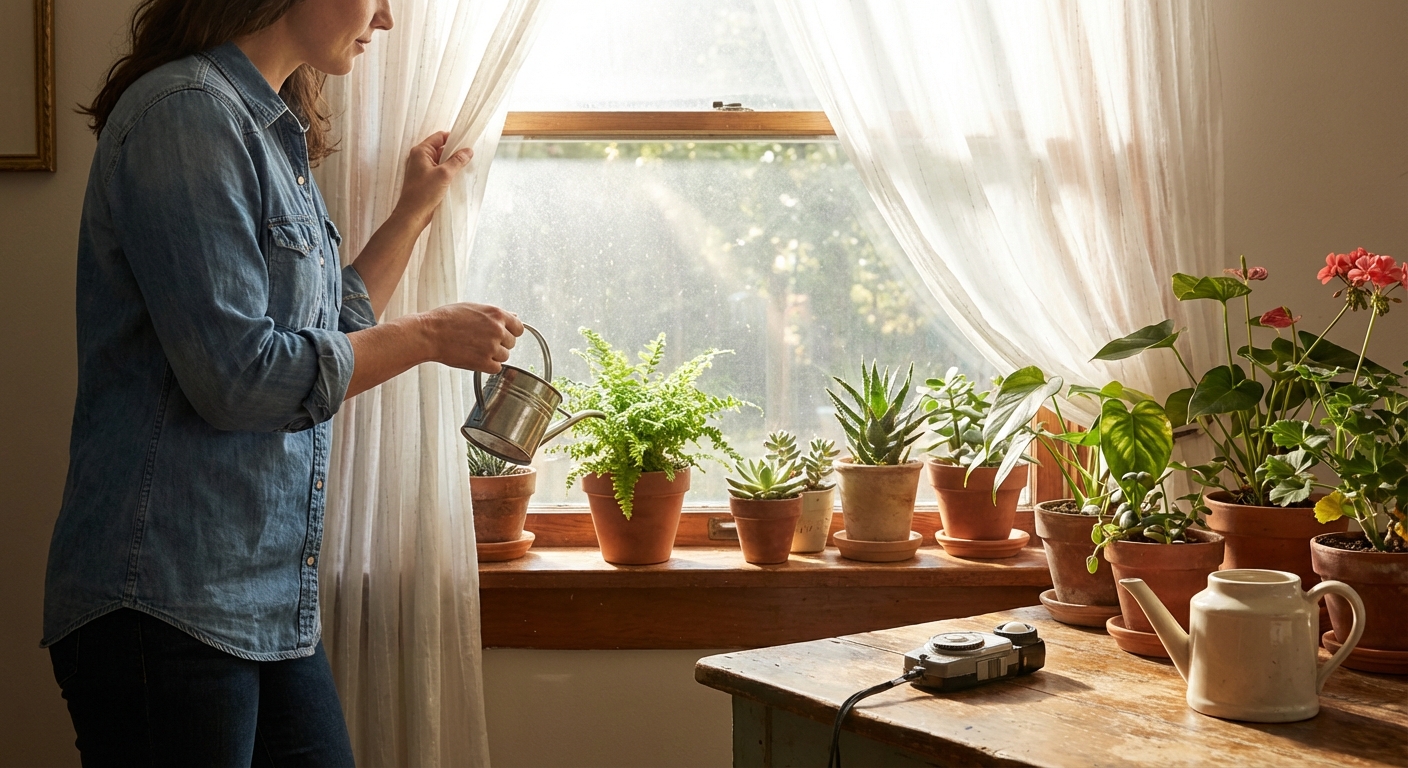
- Shade harsh sun with sheer curtains or a step back from the window.
- Check thirsty plants (like tropicals) every 3–5 days by feel, not by date.
- Top up humidity for tropical plants with grouping or a pebble tray.
Summer Notes for Specific Plants
- Fiddle Leaf Fig: Loves bright light but can burn in intense afternoon sun. Provide bright, filtered light and deep watering when the top 5 cm (2 inches) are dry.
- Spider Plant (Chlorophytum comosum): Tolerates brighter light in summer but prefers indirect rays. Let the top inch of soil dry between waterings.
- Aloe and other succulents: These may enjoy sunny windows, but if leaves start to turn brown or reddish on the sun-facing side, move slightly back. Water only when soil is completely dry.
Autumn: Slowing Down With Grace
Light in Autumn
- Days shorten, and light gradually softens.
- A bright summer spot may become comfortably indirect or medium light.
Water in Autumn
- Growth slows; plants drink less.
- Overwatering risk quietly increases if we don’t adjust our habits.
Routine
- Extend watering intervals: If you watered every 5 days in summer, you may stretch to 7–10 days in fall.
- Observe older leaves: It’s normal for some to yellow and shed as plants transition; focus on the health of new growth.
- Plan repositioning: Consider moving light-loving plants closer to windows as light weakens.
Autumn Notes for Specific Plants
- Pothos: If vines become sparse near the soil line, trim and propagate cuttings. Place young cuttings in bright autumn windows to root well.
- ZZ Plant (Zamioculcas zamiifolia): Already a low-water species, it typically needs even less in fall. Water only when the full pot feels light and soil is dry throughout.
- Calathea and prayer plants: As heaters come on and air dries, they may develop brown tips. Keep them away from vents and maintain slightly moist soil, but never waterlogged.
Winter: Offering Light When the World Is Dim
Light in Winter
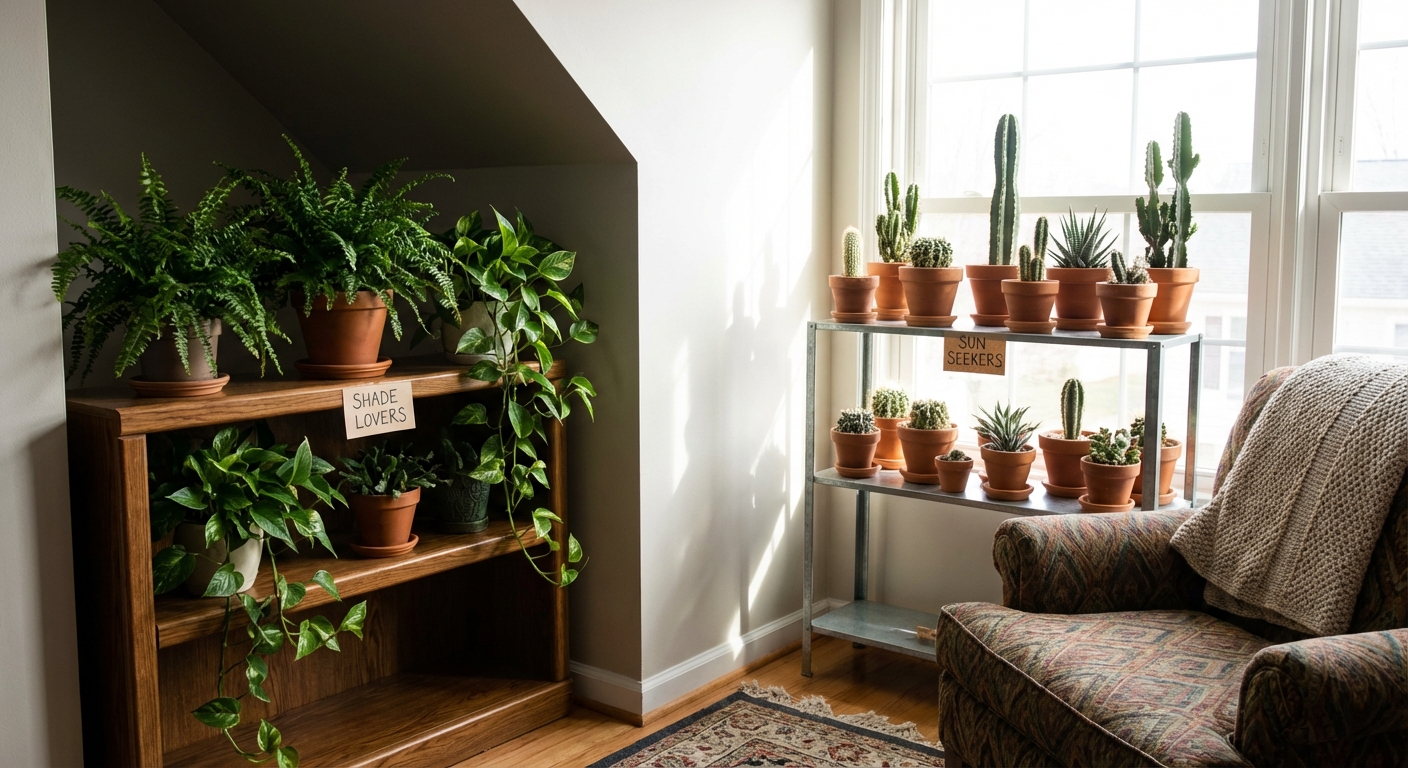
- Even bright rooms can feel like low to medium light.
- North windows may offer gentle, consistent but weak light.
Water in Winter
- Plants rest or grow slowly.
- Roots are more vulnerable to rot in cold, wet soil.
Routine
- Pull plants closer to windows where possible, avoiding cold drafts.
- Use grow lights if you have many light-loving species like figs or flowering plants.
- Reduce watering: Many plants need about half as often as in summer, but always confirm by feeling the soil.
Winter Notes for Specific Plants
- Peace Lily: In low winter light, it may bloom less and use less water. Let the top inch dry before watering, and avoid cold water straight from the tap.
- Snake Plant: Needs very little water in winter. Once every 3–6 weeks may be enough, depending on light and temperature.
- Cacti: Many benefit from a drier rest period; water lightly only when soil is bone dry, and growth is minimal.
Gentle Troubleshooting Through the Seasons
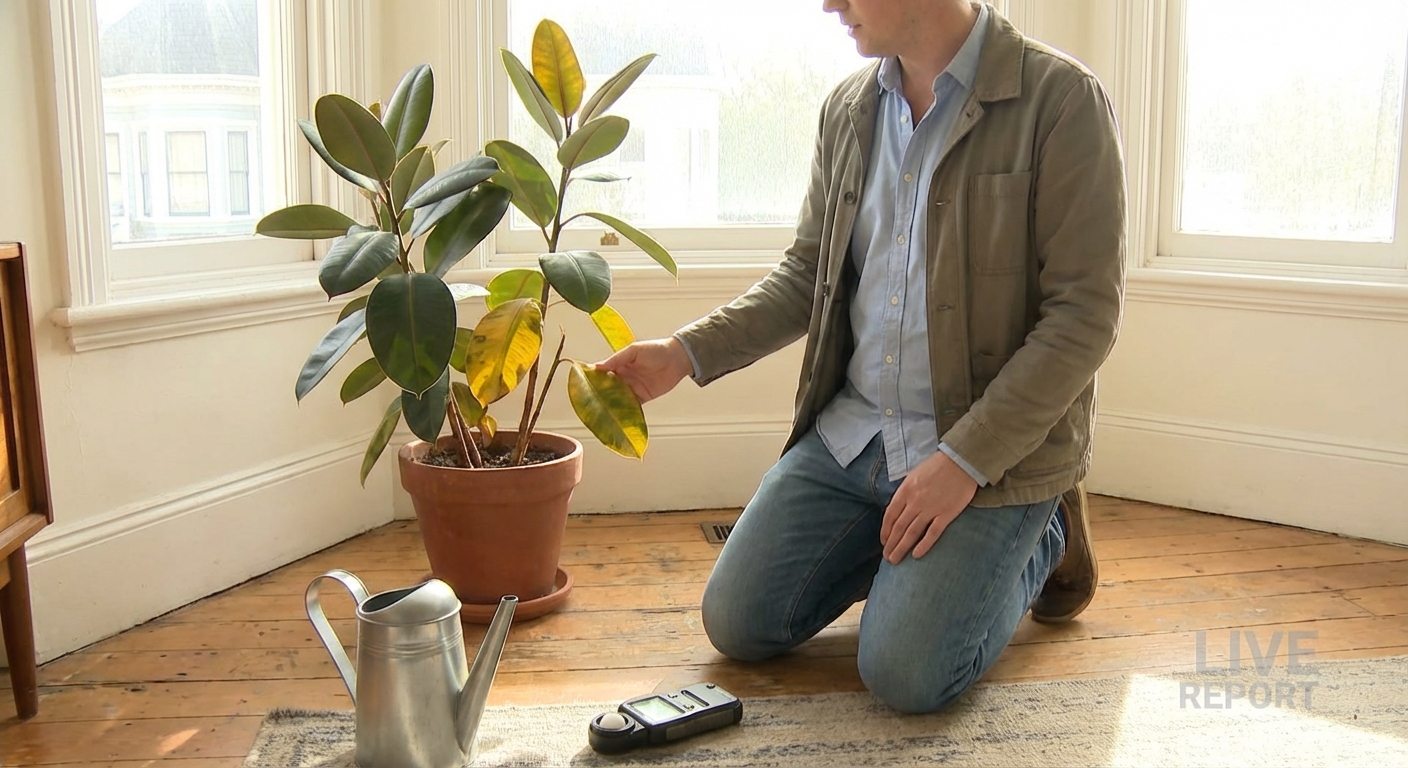
If Leaves Yellow in Winter
- Likely causes: Overwatering + low light.
- Soft response:
- Extend time between waterings.
- Move to brighter light if possible.
- Check drainage and consider repotting in spring if soil stays soggy.
If Leaves Scorch in Summer
- Likely cause: Direct, intense sun.
- Soft response:
- Add a sheer curtain or shift the plant a bit farther from the glass.
- Trim damaged leaves gradually; focus on protecting new growth.
If Growth Stalls in Spring or Summer
- Likely causes: Insufficient light, nutrient depletion, or a too-small pot.
- Soft response:
- Offer brighter indirect light.
- Begin a light fertilizer routine during the active growing season.
- Consider a gentle repot if roots are circling tightly.
Building Your Own Water & Light Ritual
Over time, you’ll notice that your plants, your home, and your habits form their own pattern. To support this, you might:
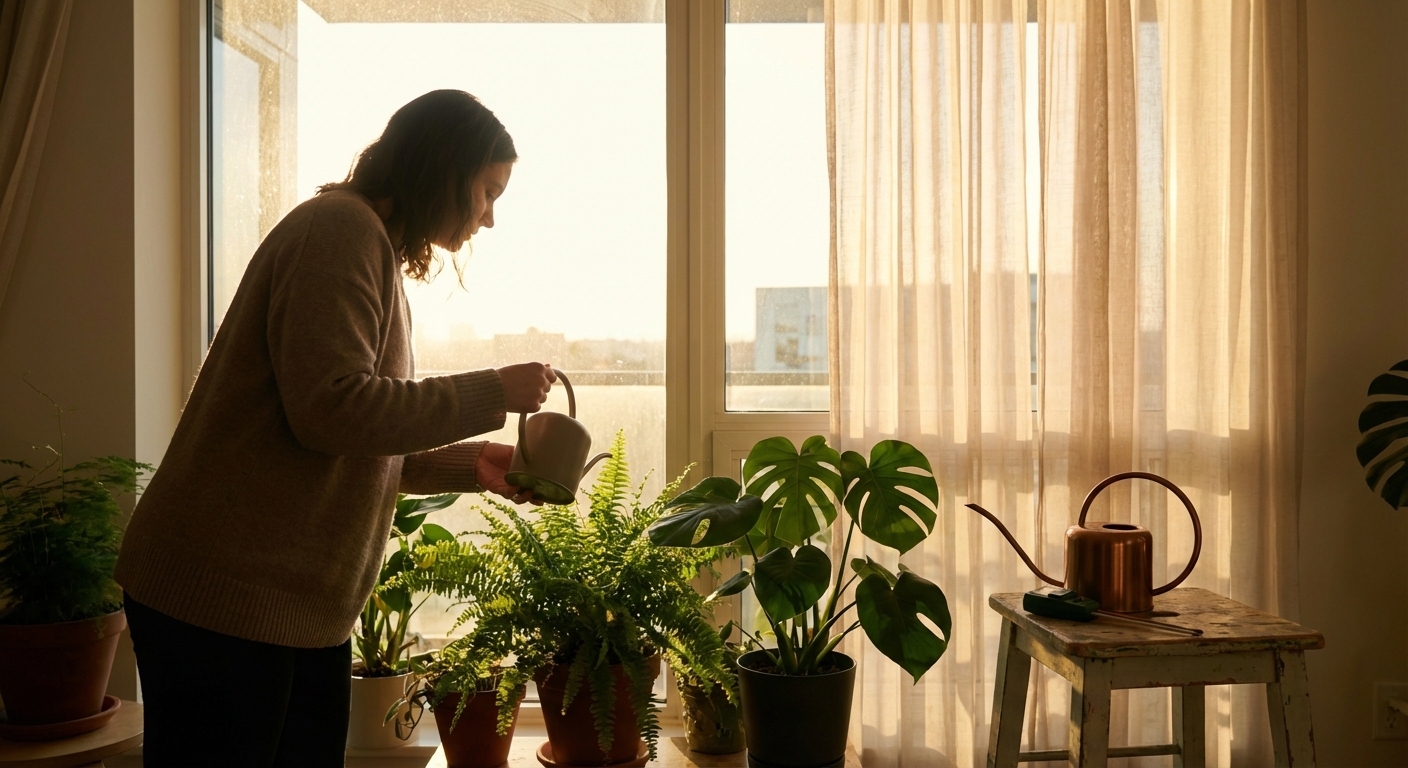
- Create a weekly "plant walk": A quiet moment to check soil, observe leaves, and rotate pots.
- Use reminders as gentle prompts: Not fixed watering days, but check-ins—“Touch soil on Thursdays.”
- Keep a simple log: A small note of when you watered and any changes you noticed.
There is no single perfect routine that suits every plant, home, and season. Instead, think of watering and lighting as a soft, ongoing conversation. As the sun shifts and the air changes, your plants will show you what they need—and you can answer with gentle adjustments, one calm moment at a time.
Key Takeaway
The most important thing to remember from this article is that this information can change how you think about Watering & Light.