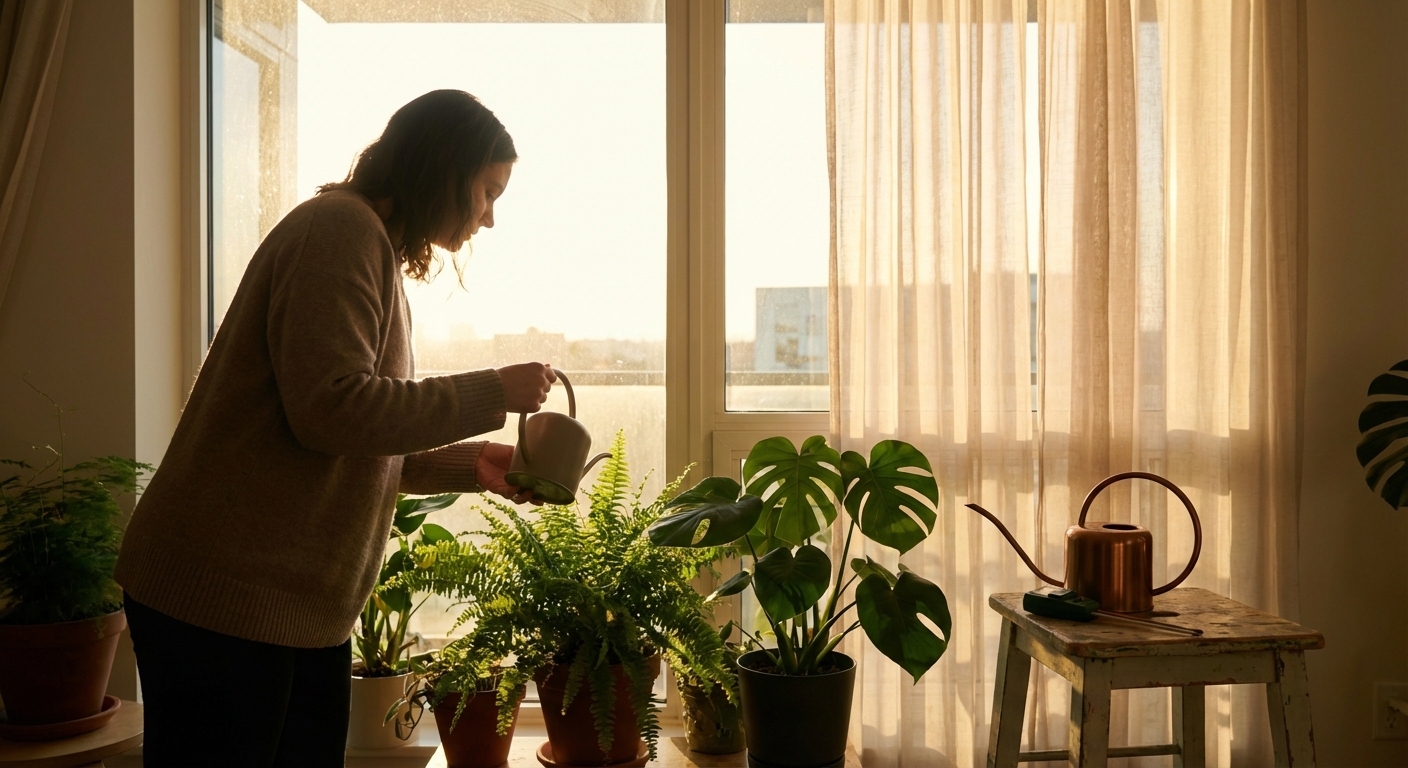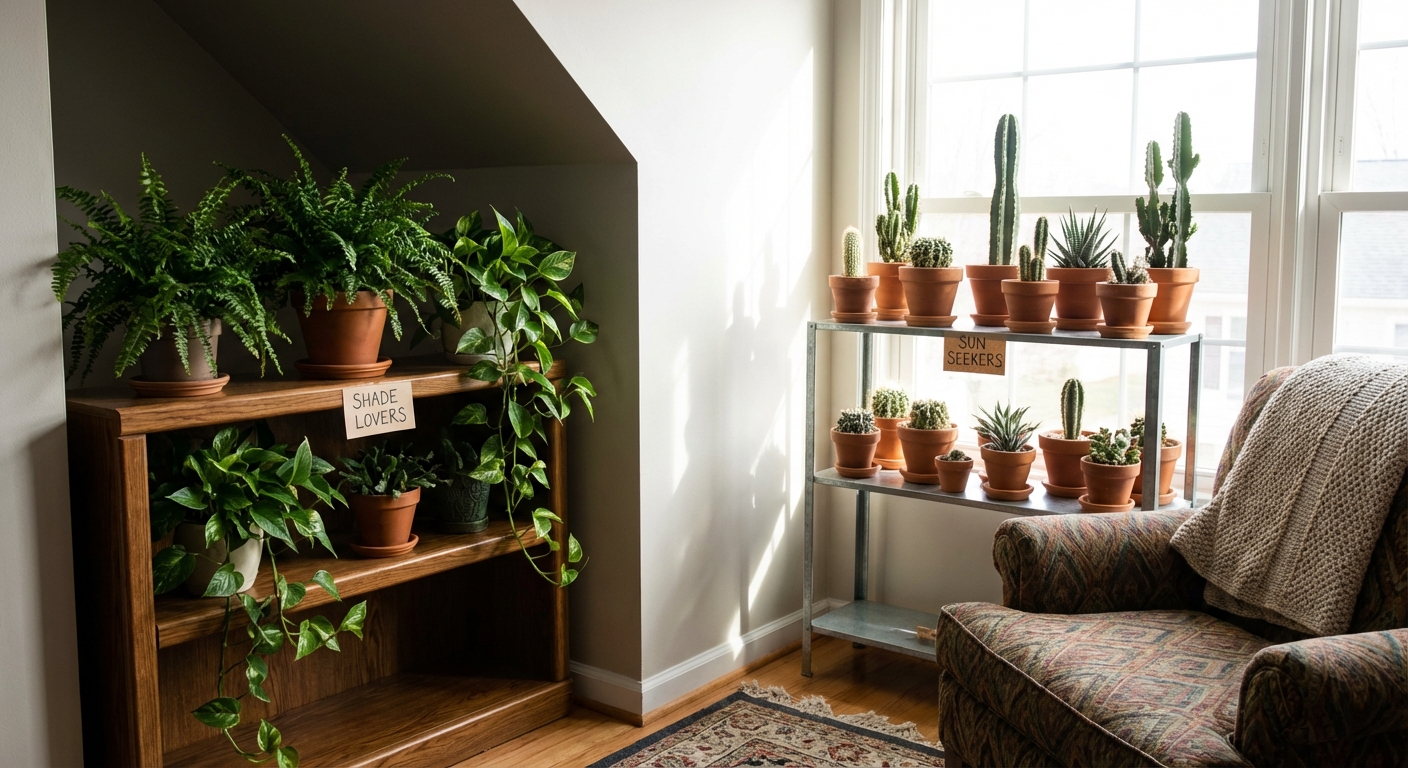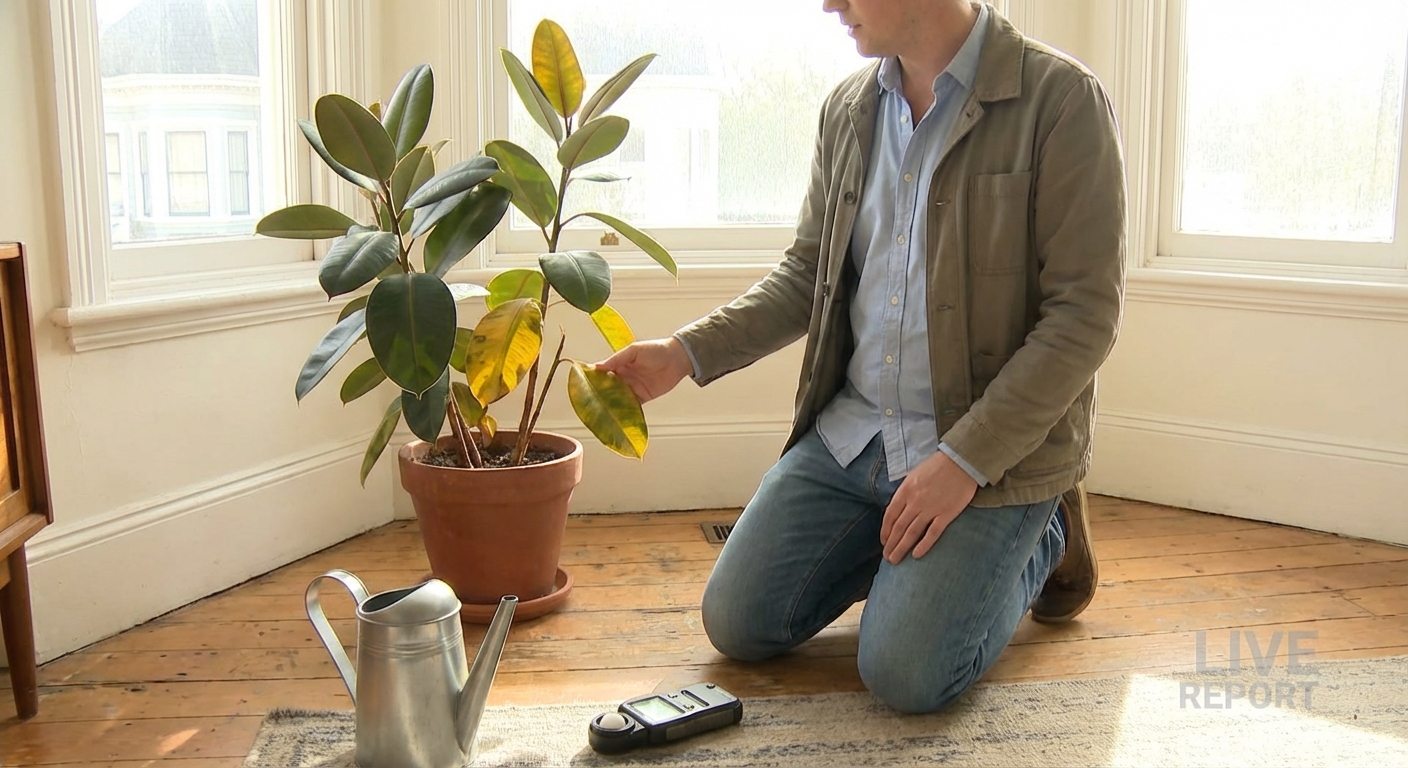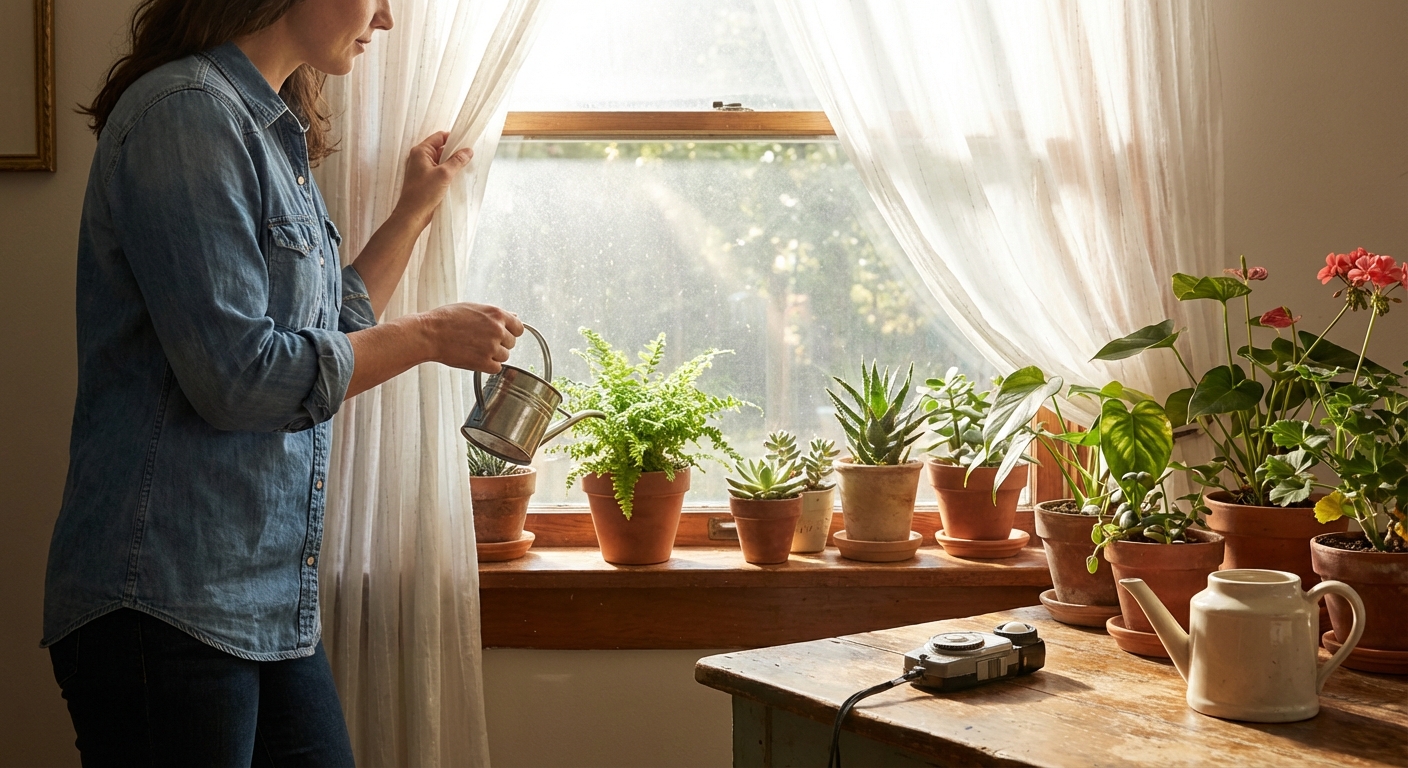
Caring for indoor plants is a quiet conversation between you, water, and light. When those elements are in balance, leaves stay lush, growth is steady, and your home feels more alive. When they drift out of balance, your plants will whisper about it—through yellowing leaves, drooping stems, or crispy tips.
This guide offers a calm, nurturing walk through the basics of watering and light for popular indoor plants, with species-specific notes and gentle troubleshooting along the way.
Understanding the Two Essentials: Water & Light
Think of water and light as the fuel and food of a plant.
- Light powers photosynthesis, helping your plant create energy.
- Water carries nutrients, keeps cells turgid, and supports every function.
Too little of either, and your plant slows down. Too much, and roots or leaves become stressed. The goal is not perfection, but a sustainable, attentive rhythm.
Light Basics for Indoor Plants
Types of Indoor Light
Most houseplants fall into a few light preference categories:
- Low light: A few feet away from a bright window; you can comfortably read without turning on a lamp, but there’s no direct sun.
- Medium/bright indirect light: Near an east- or north-facing window, or a few feet back from a sunny south/west window with sheer curtains.
- Direct light: Sunbeams touch the leaves for several hours a day, typical of unobstructed south- or west-facing windows.
Simple Light Test
Stand where you plan to place your plant around midday:
- If your shadow is faint and blurry, it’s low light.
- If your shadow is soft but clearly outlined, it’s bright indirect.
- If your shadow is sharp and dark, it’s direct light.
Watering Basics: From Schedule to Rhythm
Watering is less about a strict calendar and more about observing the plant and soil.
The Finger Test
- Insert a clean finger about 2–3 cm (1 inch) into the potting mix.
- If it feels dry at that depth, it’s usually time to water for most plants.
- If it still feels moist and cool, wait a few days.
When You Do Water
- Water slowly until liquid begins to drain from the bottom of the pot.
- Empty any excess water from saucers after 10–15 minutes.
- Avoid “sips” that only moisten the top layer; roots thrive when the soil is evenly watered and then allowed to dry appropriately.
Species-Specific Water & Light Notes
1. Monstera deliciosa (Swiss Cheese Plant)
- Light: Bright indirect is ideal. A few hours of soft morning sun is welcome, but harsh afternoon rays can scorch leaves.
- Water: Let the top 3–5 cm (1–2 inches) of soil dry out between waterings.
- Keeping soil constantly wet, leading to yellow lower leaves and potential root rot.
- Low light placement that causes leggy growth and small, non-fenestrated leaves.
Common mistakes:
Gentle fix: Move your Monstera closer to a bright window (but out of direct midday sun) and allow more drying time between waterings. Trim yellowing leaves slowly over time.
2. Fiddle Leaf Fig (Ficus lyrata)
- Light: Very bright indirect light; they appreciate being near a large south or west window with filtered sun.
- Water: Water when the top 5 cm (2 inches) are dry. They prefer consistency more than frequency.
- Frequent, small waterings leading to shallow roots and stress.
- Sudden changes in light (moving from dark corner to strong sun overnight).
Common mistakes:
Gentle fix: Transition slowly to brighter light over 1–2 weeks. Switch to deep, thorough watering and let excess drain fully.
3. Snake Plant (Sansevieria / Dracaena trifasciata)
- Light: Tolerates low light but thrives in bright indirect. Color and growth improve with more (gentle) light.
- Water: In well-lit rooms, water when soil is dry at least halfway down the pot. In low light, water sparingly.
- Overwatering in low light, causing mushy, collapsing leaves.
Common mistakes:
Gentle fix: Allow the soil to dry thoroughly before watering again. If roots are soft or smelly, repot in fresh, well-draining mix and remove damaged roots.
4. Pothos (Epipremnum aureum)
- Light: Happy in medium to bright indirect light. Variegated types need brighter spots to maintain their color.
- Water: Let the top 2–3 cm (1 inch) dry; leaves may gently droop when thirsty but perk up after watering.
- Very low light leading to loss of variegation and sparse vines.
- Allowing soil to stay soggy, causing yellow leaves.
Common mistakes:
Gentle fix: Trim leggy vines; move to brighter indirect light. Adjust watering so the soil dries slightly deeper before the next drink.
5. Peace Lily (Spathiphyllum)
- Light: Low to medium light tolerant, but blooms best in bright indirect light.
- Water: Likes evenly moist soil but not waterlogged. Will dramatically droop when dry, then revive after watering.
- Letting it cycle between extreme drought and heavy saturation repeatedly.
Common mistakes:
Gentle fix: Aim for a steadier rhythm—check soil every few days and water when the top begins to dry, rather than waiting for full droop.
Seasonal Tips: Adapting Water & Light Through the Year
Spring and Summer
- Light: Sun is stronger; watch for leaf scorch on south- and west-facing windows. Sheer curtains can soften harsh rays.
- Water: Plants grow faster and use more water. You may water more frequently, but always use the soil, not the calendar, as your guide.
Autumn and Winter
- Light: Days are shorter; even bright rooms become medium light. Consider moving plants closer to windows or adding a grow light.
- Water: Growth slows; roots need less water. Extend the time between waterings and be especially cautious of overwatering.
A helpful rule: In winter, keep the light as bright as is safe, and the watering a little lighter.
Common Water & Light Problems, Gently Troubleshot
Yellowing Leaves
- Possible causes: Overwatering, low light, or natural aging of lower leaves.
- Try this:
- Check the roots and soil moisture first.
- Reduce watering frequency and ensure drainage holes are clear.
- Offer slightly brighter, indirect light.
Brown, Crispy Tips
- Possible causes: Underwatering, low humidity, or salt buildup from fertilizer.
- Try this:
- Water a bit more consistently.
- Group plants together or add a pebble tray with water nearby to increase ambient humidity.
- Occasionally flush the soil with plain water until it runs freely from the pot’s base.
Leggy, Stretched Stems
- Likely cause: Insufficient light.
- Try this:
- Move the plant to a brighter spot.
- Rotate the pot every 1–2 weeks so growth remains even.
- Prune gently to encourage fuller growth.
Creating a Calm Routine
Instead of aiming for strict rules, cultivate a soft, observant rhythm:
- Weekly check-in: Walk through your home once a week. Touch the soil, look at new leaves, notice any changes.
- Adjust slowly: When you move a plant to a brighter or darker location, do it gradually over days to reduce shock.
- Keep notes: A simple notebook or phone note with dates of watering and observations can help you learn each plant’s preferences.
With time, the relationship between your plants, your space, and your habits will settle into a comfortable balance. Water and light are not problems to solve once, but an ongoing, gentle dialogue—one that can be deeply grounding to listen to.
Key Takeaway
The most important thing to remember from this article is that this information can change how you think about Watering & Light.