Seeing a beloved plant droop, yellow, or drop leaves can feel discouraging. Yet most houseplant “emergencies” are calls for adjustment, not reasons for shame.
When Your Plant Looks Unhappy
This nurturing guide walks through common issues, their quiet causes, and gentle steps toward recovery. We’ll focus on supportive solutions rather than harsh fixes, so you can respond calmly and confidently.
First, Take a Breath and Observe
Before changing anything, pause and look closely.
Ask yourself:
- Has the plant moved recently?
- Has watering changed?
- Has the season shifted (more heat, less light)?
- Are there any visible pests under leaves or on stems?
A few minutes of patient observation often reveals the first clues.
Problem 1: Yellow Leaves
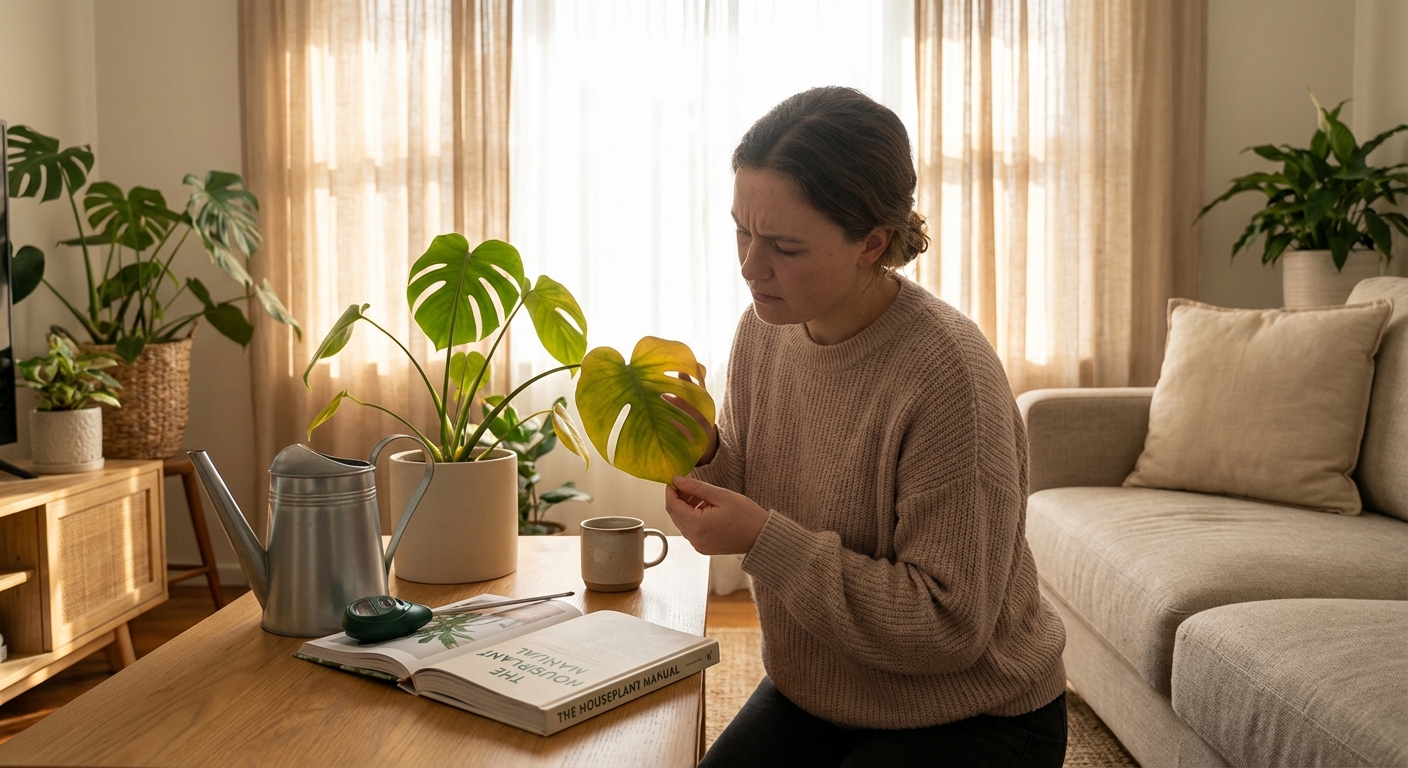
Yellow leaves are one of the most common plant distress signals—but they don’t all mean the same thing.
Likely Causes
Natural Aging
- Older leaves near the base turn yellow and drop as new leaves grow. - Occasional, isolated yellowing can be normal.
Overwatering
- Several leaves yellowing at once. - Soil staying wet for many days. - Leaves may feel soft or limp.
Underwatering
- Yellowing accompanied by crispy or curled edges. - Soil pulling away from pot edges.
Gentle Fix
- Check soil moisture 2–3 cm (1 in) below the surface.
- If wet and heavy:
- Allow more time between waterings.
- Make sure the pot has drainage holes.
- If dry and pulling from sides:
- Water thoroughly, then consider a second light watering 10–15 minutes later so the soil can rehydrate.
- Often yellows with inconsistent watering.
- Aim for evenly moist soil; don’t allow it to stay soggy or very dry for long.
Species example – Peace Lily:
Problem 2: Brown Tips and Edges
Brown tips can look alarming, but they’re often a slow, reversible response to environmental stress.
Likely Causes
- Low humidity, especially for tropical plants.
- Fertilizer buildup in the soil.
- Water quality issues (some plants dislike high fluoride or chlorine).
Gentle Fix
Increase local humidity for tropicals:
- Group plants together. - Place a pebble tray with water (pots raised above the water line). - Use a small humidifier near humidity-loving plants like Calathea or Ferns.
Flush the soil every few months:
- Place the pot in a sink or tub. - Slowly run room-temperature water through the soil for several minutes. - Allow it to drain thoroughly.
Water quality adjustments:
- Let tap water sit out 24 hours before use. - Consider filtered water for particularly sensitive species.
You may trim brown tips if they bother you—just avoid cutting into the healthy green part more than needed.
Species example – Calathea:
- Easily develops brown edges from dry air and mineral-heavy water.
- Consistent humidity and gentle watering with filtered water can gradually improve new growth.
Problem 3: Drooping or Wilting Leaves
Drooping leaves can be surprisingly ambiguous: they show up with both overwatering and underwatering.
How to Tell the Difference
- Overwatered plant:
- Soil is damp, possibly foul-smelling.
- Leaves may be yellowing and soft.
- Underwatered plant:
- Soil is very dry and may pull away from pot edges.
- Leaves feel thin, crisp, or papery.
Gentle Fix
- For overwatering:
- Let soil dry more thoroughly before watering again.
- Check that the pot drains freely.
- If roots smell sour or feel mushy, consider repotting with fresh soil, trimming only the most damaged roots.
- For underwatering:
- Water slowly and deeply.
- For hydrophobic, extremely dry soil, water in stages so it can absorb properly.
- Often droops gently when thirsty and perks up within hours of watering.
- If drooping persists in wet soil, consider root issues and reduce water.
Species example – Pothos:
Problem 4: Leggy, Stretched Growth
Long stems with widely spaced leaves point to one main issue: not enough light.
Likely Causes
- Plant is too far from a window.
- Light direction is uneven (one-sided growth toward a single light source).
Gentle Fix
- Move the plant to a brighter spot with indirect light.
- Rotate the pot a quarter turn weekly.
- Consider supplemental grow lights in especially dim rooms.
- Prune leggy stems above a leaf node to encourage bushier growth.
- Responds well to pruning; cutting back encourages fuller, denser vines.
Species example – Heartleaf Philodendron:
Problem 5: Soft, Mushy Stems or Leaves
This is often a sign of rot, usually from chronic overwatering or poor drainage.
Likely Causes
- Soil remains constantly wet.
- Pot lacks drainage holes.
- Heavy, compact soil doesn’t allow airflow around roots.
Gentle Fix
- Stop watering temporarily and let the soil dry down partway.
Inspect roots by carefully removing the plant from the pot:
- Healthy roots are firm and white or light tan. - Rotted roots are dark, mushy, and may smell unpleasant. 3. Trim away rotten roots using clean scissors. 4. Repot into fresh, well-draining soil and a pot with drainage holes.
Species examples:
- Snake Plant, Jade, and other succulents are especially prone to rot if watered too often.
- For these, err on the dry side and choose gritty, fast-draining mixes.
Problem 6: Leaf Drop
Leaves falling can feel dramatic, but sometimes it’s a plant’s way of rebalancing.
Likely Causes
- Sudden environmental change: new location, new home, new season.
- Drafts or temperature shifts.
- Under or overwatering over time.
Gentle Fix
- Try to restore stability: consistent light, temperature, and watering.
- Avoid moving the plant frequently.
- Trim away clearly dead stems or leaves but leave any part that’s still green.
- Well-known for dropping leaves after being moved, repotted, or exposed to drafts.
- Often stabilizes once it adjusts; new growth can resume when conditions are steady.
Species example – Ficus (including Rubber Plant, Fiddle Leaf Fig):
Problem 7: Pests, Softly Managed
Even well-cared-for plants may attract pests. Calm, consistent action works better than harsh, rushed treatments.
Common Houseplant Pests
- Spider mites: Fine webbing, tiny moving dots, stippled leaves.
- Mealybugs: White, cottony clusters on stems and leaf joints.
- Scale: Brown or tan shell-like bumps that don’t wipe off easily.
- Fungus gnats: Tiny black flies hovering over soil.
Gentle Pest Response
- Isolate the plant if possible to keep pests from spreading.
Shower the foliage:
- Rinse leaves and stems with lukewarm water to dislodge pests.
Wipe leaves carefully:
- Use a soft cloth with mild soapy water (a drop of gentle liquid soap in a cup of water). - Avoid harsh chemicals that damage leaves. 4. Consider neem oil or insecticidal soap as labeled, testing on a small leaf area first.
For fungus gnats:
- Allow the top layer of soil to dry more between waterings.
- Remove decaying plant matter.
- Consider a sand or small-stone top layer to discourage egg-laying.
Species-Specific Quick Notes
Monstera deliciosa
- Problem: Yellow lower leaves, slow growth.
- Likely: Insufficient light or inconsistent watering.
- Support: Move to bright, indirect light and water when top 2–3 cm are dry.
Aloe vera
- Problem: Floppy, thinning leaves.
- Likely: Not enough light or overwatering.
- Support: Move to a brighter spot with some direct sun, water sparingly.
Hoya
- Problem: No blooms despite healthy vines.
- Likely: Insufficient light or overfertilizing.
- Support: Increase bright, indirect light; avoid cutting peduncles; use light feeding only in growing season.
When to Let Go—and How to Learn from It
Sometimes, despite care and adjustments, a plant continues to decline. This can happen from severe root rot, unnoticed long-term pest damage, or simply a mismatch between plant and environment.
If you reach that point:
- Know that letting a plant go is not a failure. It’s part of learning.
- Consider saving a healthy cutting (if available) to propagate a new plant.
- Reflect on what the plant may have been asking for (more light, less water, different humidity) and carry that wisdom to your next leafy friend.
A Calmer Way Forward
Houseplant care is less about never having problems and more about responding gently when they appear. Yellow leaves, brown tips, and pests are all part of the story of living things indoors.
With time, you’ll start to recognize patterns: how your Peace Lily bows to ask for water, how your Snake Plant prefers to dry fully, how your Calathea curls its leaves when the air feels too dry. Each challenge you navigate brings you and your plants into a quieter, more trusting relationship.
You don’t have to know everything at once. Just keep observing, adjusting, and offering patient care. Healthy new growth is your plant’s way of saying, “We’re finding our balance together.”
Key Takeaway
The most important thing to remember from this article is that this information can change how you think about Houseplant Care.