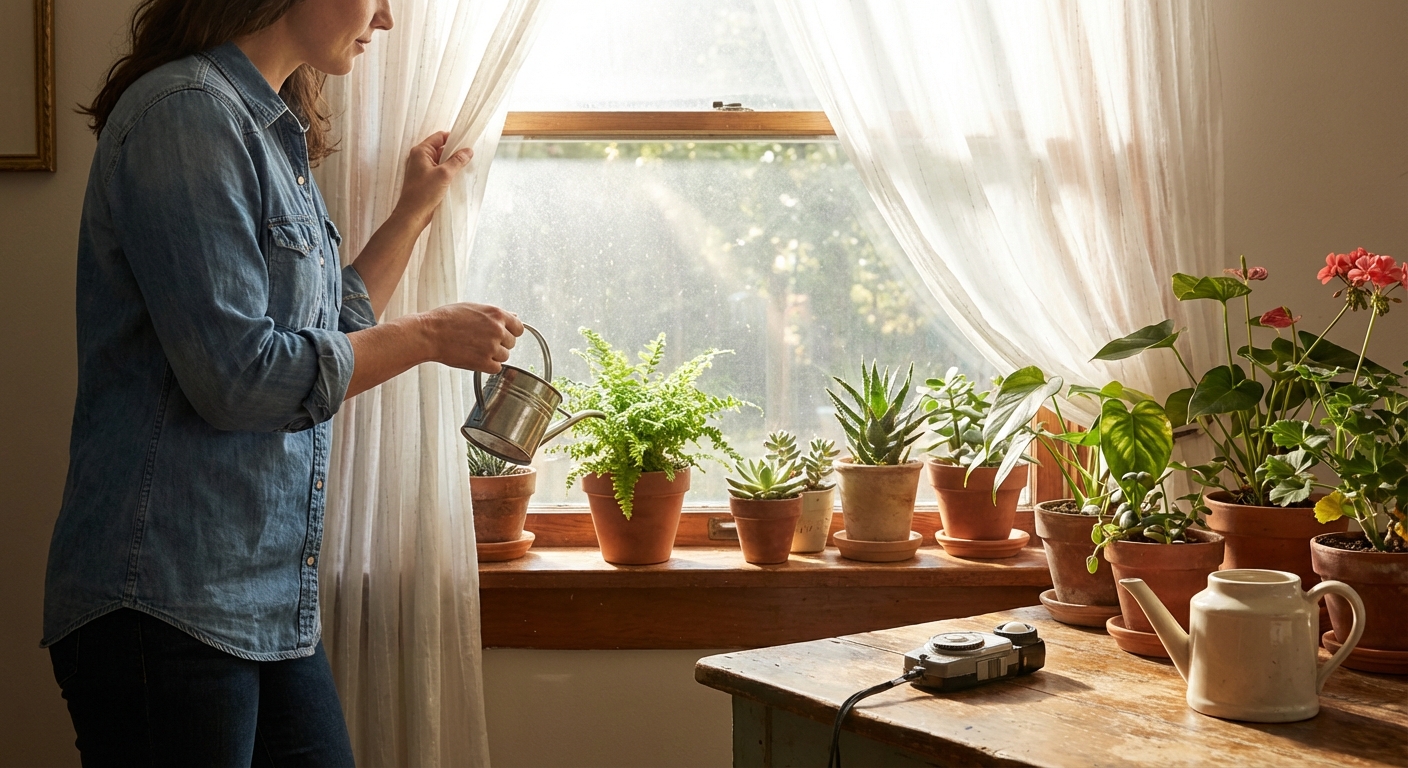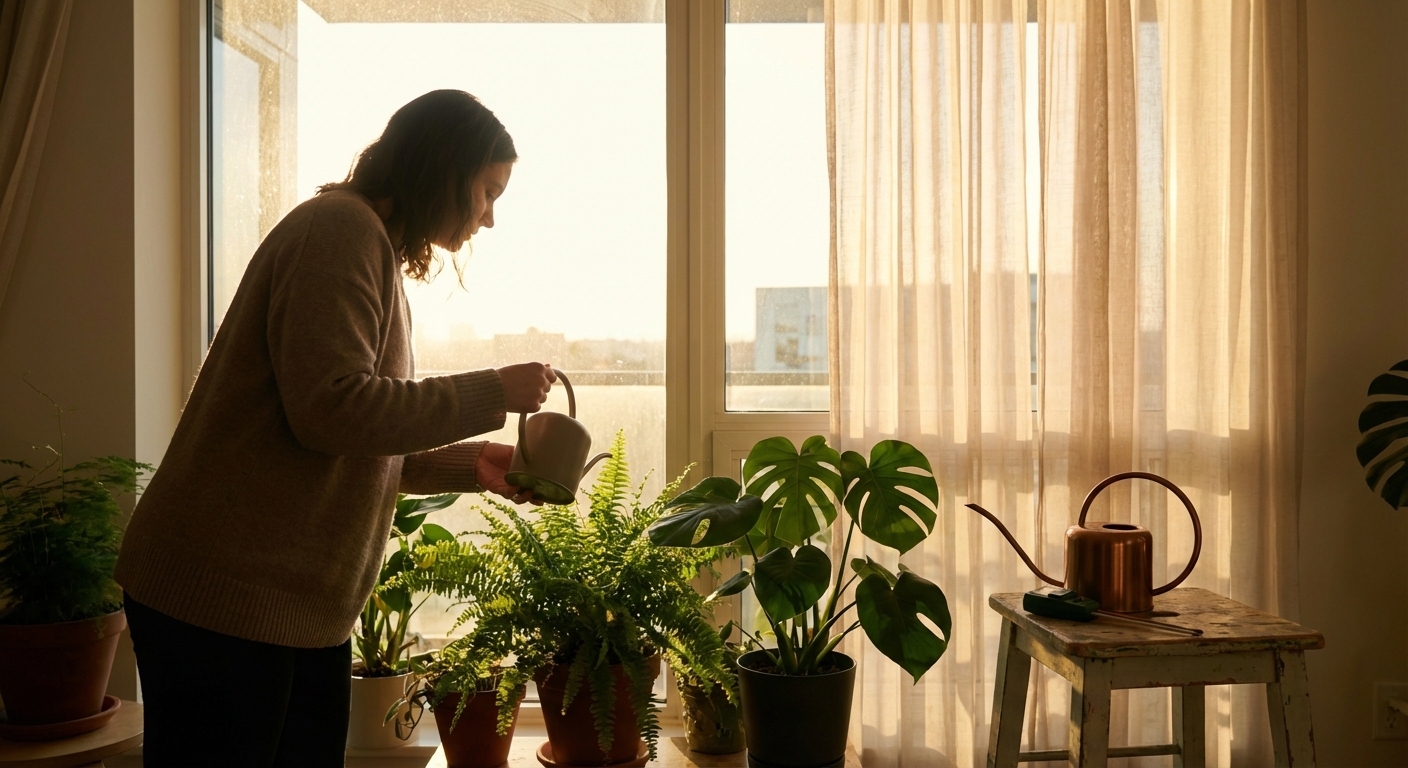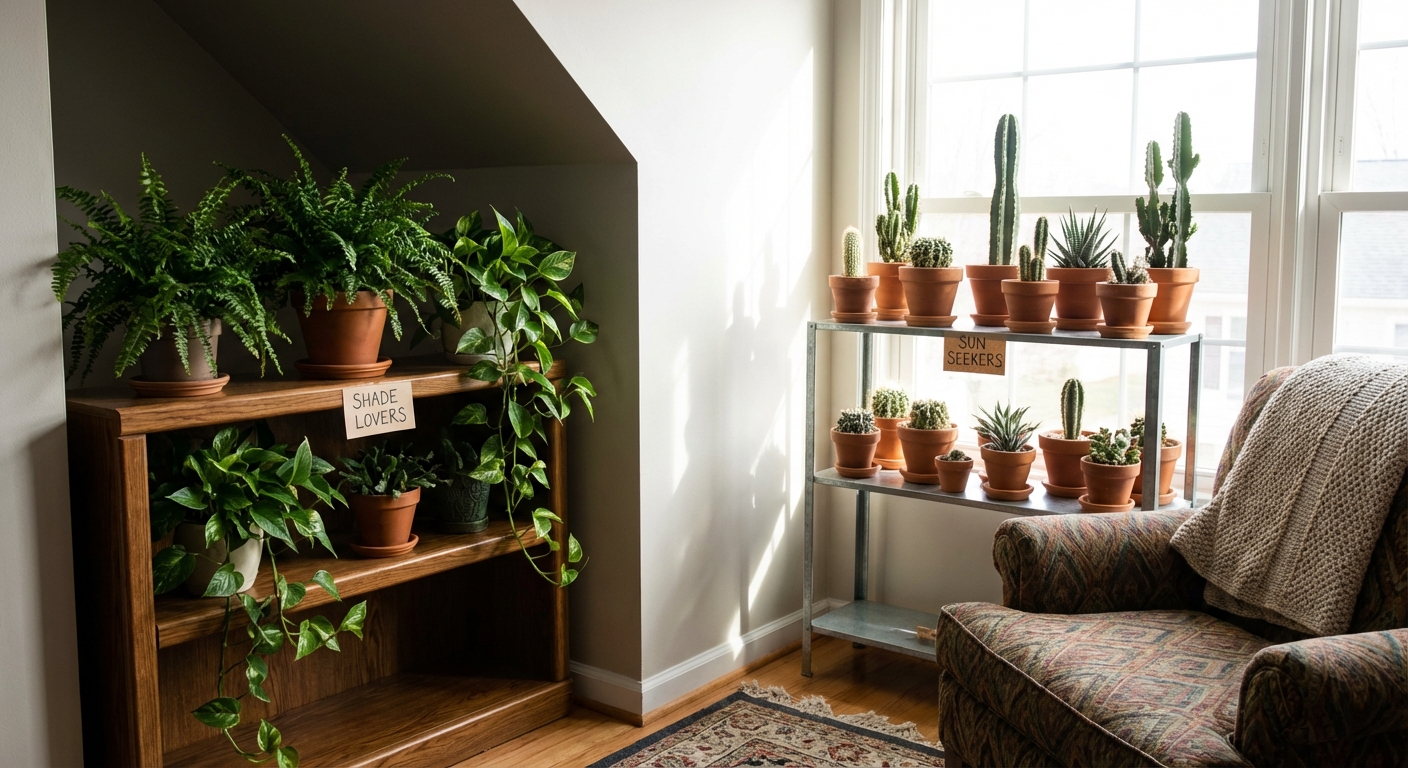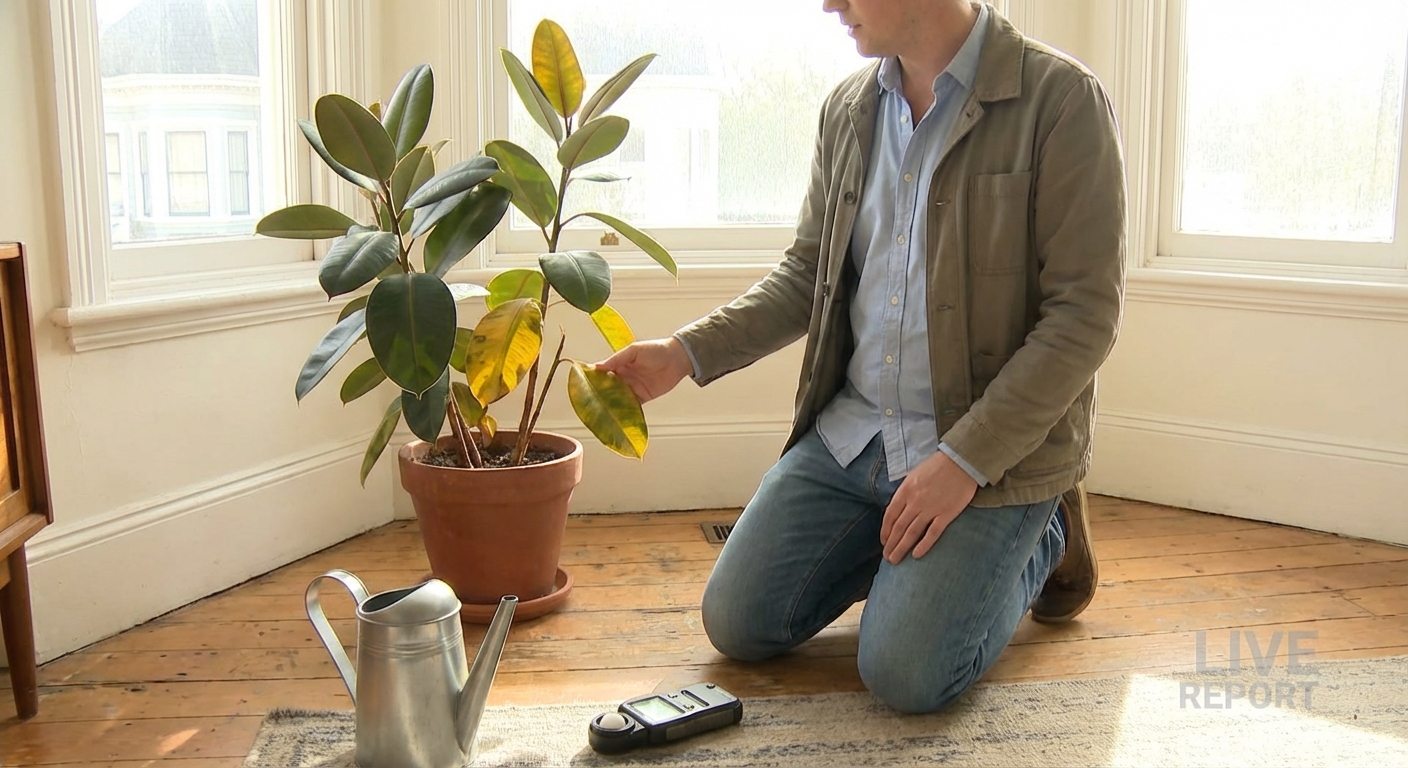
Every houseplant has a quiet language. Leaves curl, stems droop, colors change—all messages about water, light, and comfort. You don’t need years of experience to understand these signals; you only need to slow down and look closely.
This soothing guide will help you read what your plants are telling you about water and light, then respond with small, kind adjustments.
Step 1: Notice Before You Fix
When something seems off, pause and observe:
- Which leaves are affected—old, new, top, bottom?
- How does the soil feel—wet, damp, or dry?
- What kind of light does the plant receive—direct sun, bright indirect, or low light?
Writing down these simple observations can make troubleshooting feel calmer and more clear.
Reading Common Leaf Signals
1. Yellow Leaves
Yellow leaves are one of the most common plant concerns.
Potential causes:
- Overwatering
- Low light
- Natural aging of lower leaves
How to tell the difference:
- Overwatering: Multiple leaves (often lower and older first) turn soft yellow; soil feels wet or heavy.
- Low light: Growth may be slow and leggy; new leaves are small and pale.
- Natural aging: Only an occasional older leaf yellows while new growth looks healthy.
Gentle responses:
- Let soil dry more deeply before the next watering.
- Move the plant to slightly brighter indirect light.
- Remove very yellow, soft leaves with clean scissors so the plant can focus on new growth.
Species notes:
- Monstera & Philodendron: Often show overwatering through yellow lower leaves and mushy stems.
- Snake Plant: Yellowing plus softness often signals severe overwatering; check roots and repot in fresh, well-draining soil.
2. Brown, Crispy Tips
Crispy edges or tips can look alarming, but often indicate environmental stress rather than sudden decline.
Potential causes:
- Low humidity
- Irregular watering (too dry between waterings)
- Mineral or fertilizer buildup
Gentle responses:
- Water more consistently, allowing appropriate drying but avoiding extremes.
- Increase humidity with a pebble tray, humidifier, or grouping plants together.
- Once a month, flush the soil with plain water until it drains, helping remove excess salts.
Species notes:
- Calathea, Maranta, and other prayer plants: Very prone to brown tips from dry air or inconsistent moisture.
- Spider Plant: Often gets brown tips from tap water minerals—switching to filtered or resting tap water overnight can help.
3. Soft, Mushy Stems or Leaves
Softness almost always points toward water stress, often from too much moisture.
Potential causes:
- Persistent overwatering
- Poor drainage or lack of drainage holes
- Rot from compacted, waterlogged soil
Gentle responses:
- Carefully slide the plant from its pot.
Inspect roots:
- Healthy roots: firm, white to light tan. - Unhealthy roots: mushy, dark, or smelling sour. 3. Trim away affected roots with clean scissors. 4. Repot in fresh, well-draining mix and a pot with drainage. 5. Water sparingly at first, letting the top layer dry fully before re-watering.
Species notes:
- Succulents & Cacti: Very sensitive to overwatering; leaves may become translucent or squishy.
- Peace Lily: Can also suffer if soil never dries; aim for evenly moist, not saturated.
4. Leggy, Stretched Growth
When a plant stretches, it’s leaning toward more light.
Potential causes:
- Insufficient light for the species
- Light coming from only one direction
Gentle responses:
- Move the plant to a brighter location with consistent, indirect light.
- Rotate the pot every 1–2 weeks.
- Prune leggy stems to encourage fuller, bushier growth.
Species notes:
- Pothos & Philodendron vines: Quickly show leggy growth in low light; new leaves get smaller and spaced far apart.
- Succulents: Rosettes spread out, and stems elongate when light is too low.
5. Drooping or Wilting
Drooping can signal both underwatering and overwatering, so the soil check is essential.
Underwatering signs:
- Soil is very dry and pulling away from the pot edges.
- Leaves feel thin, limp, or papery.
Overwatering signs:
- Soil is wet or consistently damp.
- Leaves may be soft and yellowish.
Gentle responses:
- For underwatering: Water deeply until water drains from the bottom. Consider breaking up any dry, compacted soil so moisture can reach roots.
- For overwatering: Allow extra drying time; ensure good drainage. In severe cases, repot into fresh mix.
Species notes:
- Peace Lily: Dramatic drooper when dry; aim to water just before full droop becomes a habit.
- Fiddle Leaf Fig: Droops slightly when thirsty but more often drops leaves with chronic overwatering or low light.
Step 2: Consider the Light Story
Once you’ve examined the leaves and soil, step back and notice the plant’s light situation.
Ask:
- How many hours of light does this spot get?
- Is there direct sun touching the leaves?
- Is the room brighter in the morning or afternoon?
Signs of Too Little Light
- Slow or no new growth during active seasons.
- Smaller, paler new leaves.
- Stretched, leaning stems.
Simple adjustments:
- Move the plant closer to a window.
- Choose a brighter window (east or south in many homes).
- Use a grow light for light-loving species in darker rooms.
Signs of Too Much Light
- Bleached or faded patches on leaves.
- Brown, crispy spots where sun hits most directly.
- Soil drying extremely quickly.
Simple adjustments:
- Add a sheer curtain.
- Shift the plant a little farther from the glass.
- Move from west to east light for gentler sun.
Step 3: Species-Specific Sensitivities
Some plants are particularly expressive about water and light.
Fiddle Leaf Fig
- Sensitive to: Sudden changes in light, cold drafts, inconsistent watering.
- Troubleshooting tips:
- Keep in one bright spot; avoid frequent moves.
- Water thoroughly when the top 5 cm (2 inches) are dry.
- Leaf drop near the bottom can signal stress; focus on keeping new growth healthy.
Calathea & Prayer Plants
- Sensitive to: Dry air, cold water, harsh sun.
- Troubleshooting tips:
- Keep in bright but filtered light.
- Use room-temperature water and keep soil slightly moist.
- Provide extra humidity to ease brown tips.
Snake Plant & ZZ Plant
- Sensitive to: Overwatering more than low light.
- Troubleshooting tips:
- Let soil dry deeply between waterings.
- Use well-draining soil and a pot with drainage.
- Slight wrinkling of leaves can signal thirst; softness suggests rot.
Succulents & Cacti
- Sensitive to: Overwatering and insufficient light.
- Troubleshooting tips:
- Provide bright light, preferably with some direct sun.
- Water only when soil is completely dry.
- If they stretch, increase light gradually over 1–2 weeks.
Step 4: Adjust Slowly and Kindly
Plants respond best to gradual change.
- When increasing light, move closer to bright windows over a week or two, especially for shade-adapted plants.
- When correcting overwatering, allow extra drying time before watering again, but don’t let them swing to extreme drought.
- When repotting due to stress, choose a slightly larger pot, not an oversized one, to avoid waterlogged soil.
Building a Calming Check-In Habit
Instead of waiting for emergencies, create a gentle routine:
- Weekly visual check: Look for color changes, new leaves, or shifts in posture.
- Touch the soil: Use the finger test to guide watering.
Notice the light: Is a once-bright window now shaded by seasonal changes or outdoor trees?
4. Take notes: A simple log of what you changed and when can be reassuring and informative.
Your plants don’t require perfection. They respond generously to small, thoughtful improvements and a bit of patience. Over time, the language of their leaves becomes familiar, and watering and lighting decisions begin to feel like natural, calming gestures of care.
Key Takeaway
The most important thing to remember from this article is that this information can change how you think about Watering & Light.