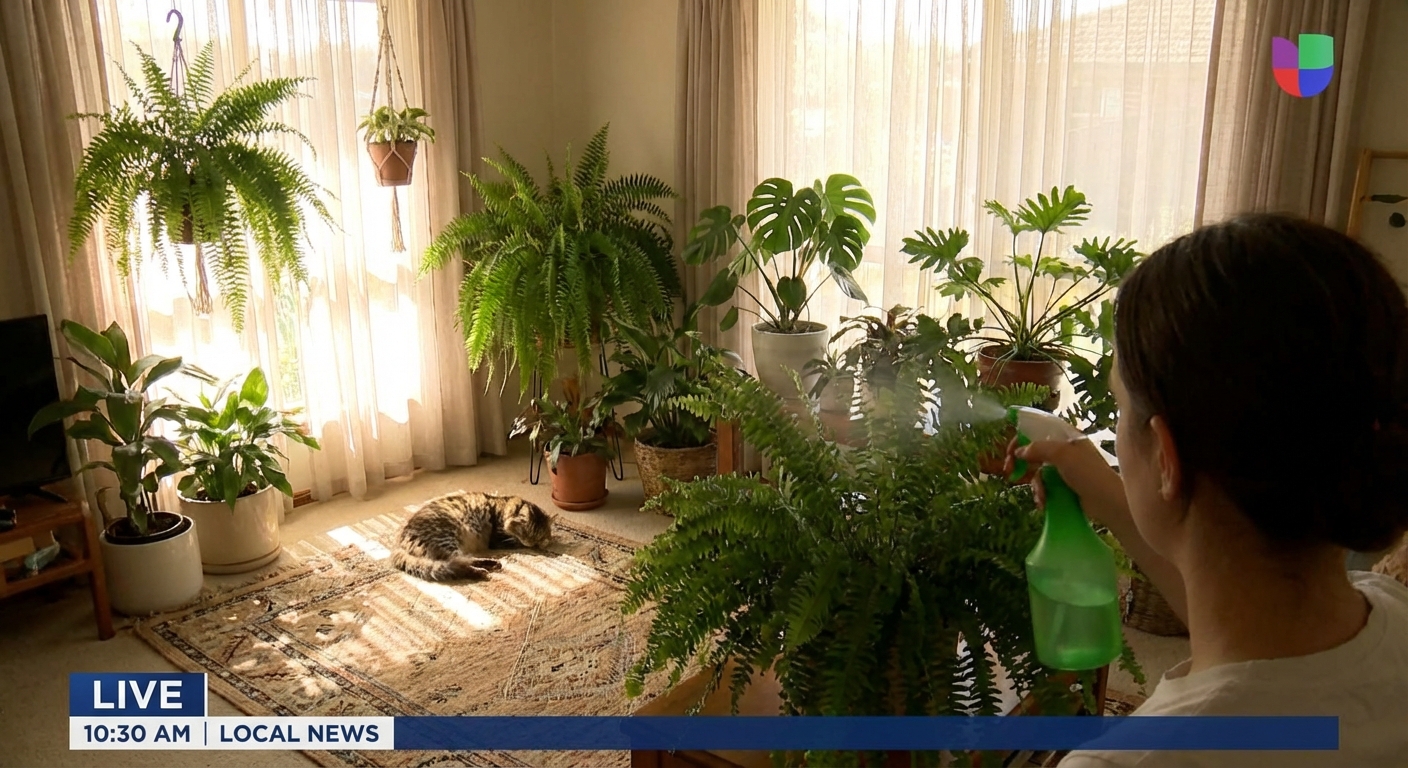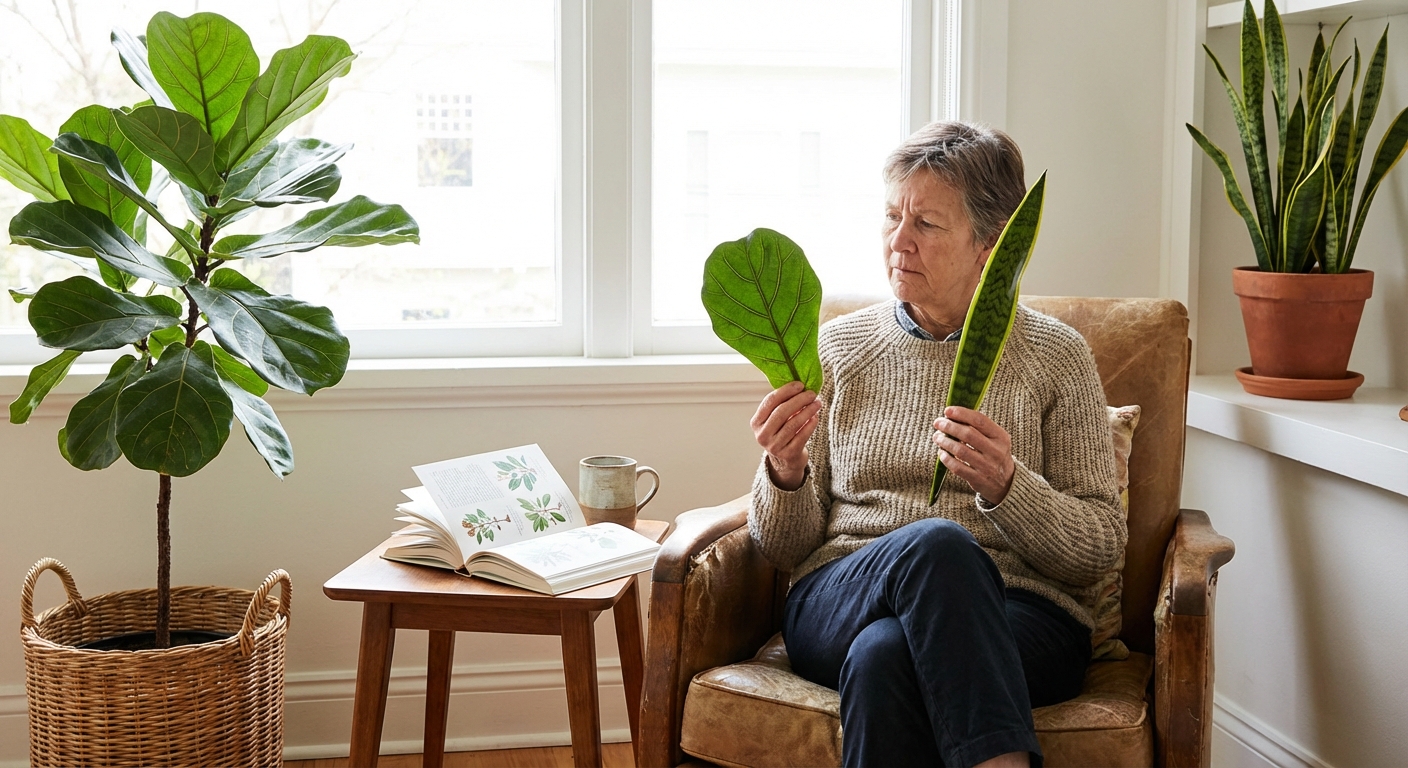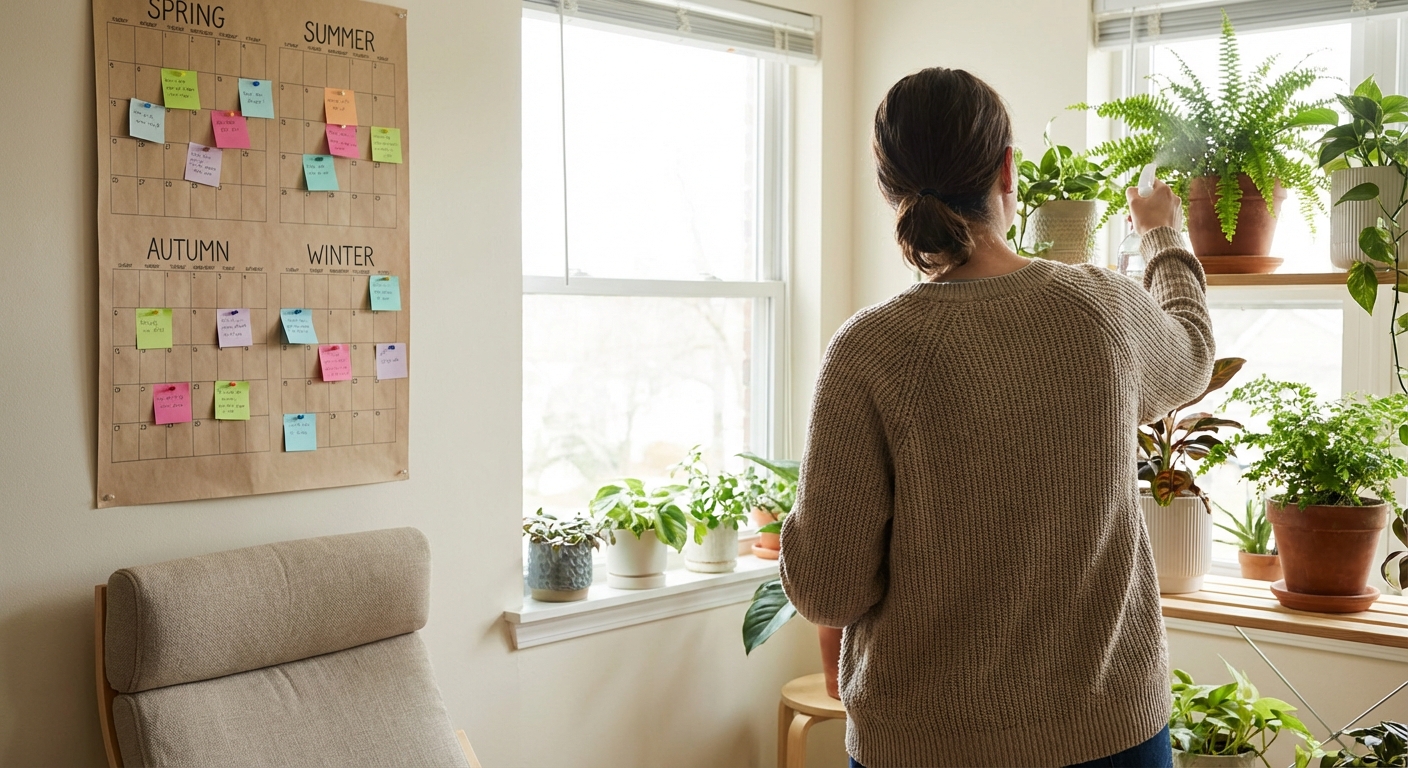
Even inside, your plants can feel the rhythm of the year—shifts in daylight, temperature, and humidity. Aligning your care with the seasons makes plant parenting easier and more intuitive.
Let Your Houseplants Move with the Seasons
This month-by-month guide offers a gentle framework. Treat it as a calm reference, not a rigid schedule. Your home’s climate and your individual plants may need small adjustments.
We’ll weave in seasonal notes for a few favorites: Monstera, Snake Plant, Peace Lily, and Hoya.
Winter (December–February): Rest, Light, and Protection
Overall Focus
- Support rest and recovery.
- Offer as much natural light as possible.
- Avoid overwatering and cold stress.
Light & Placement
- Move light-loving plants like Monstera and Hoya closer to windows for maximum brightness.
- Keep leaves away from cold glass and drafts.
- Rotate pots every few weeks for even light exposure.
Watering Rhythm
- Soil dries more slowly in cooler rooms.
- Test soil moisture before watering—most plants will want less frequent water.
- Snake Plants and other succulents might only need watering every 3–4 weeks.
Humidity Care
Winter heating can bring humidity below 30%.
- Group plants to create small humidity pockets.
- Place trays filled with pebbles and water under or near pots (keep pot bases above water line).
- Consider a small humidifier for tropicals like Peace Lily, Calathea, or Ferns.
Gentle Tasks
- Wipe leaves free of dust so they can use limited light more efficiently.
- Briefly inspect for pests when cleaning.
- Likely to develop brown tips in very dry air; increase humidity and water with room-temperature water only.
Species note – Peace Lily:
Early Spring (March–April): Awakening and Fresh Growth
Overall Focus
- Watch for signs of new growth.
- Refresh soil and consider repotting if needed.
Light & Growth
- Days lengthen; plants slowly wake up.
- Monstera may push out fresh, larger leaves.
- Hoya may start forming new vines or peduncles (flower spurs).
Spring Care Checklist
Assess pot size:
- Roots circling at the bottom? - Water running straight through the pot quickly? - Plant tipping over easily?
These are signs repotting may help.
Repot thoughtfully:
- Move up one pot size only. - Use a well-draining mix suited to the species (chunky mix for Monstera, airy mix for Hoya, etc.).
Resume light feeding:
- Start a gentle fertilizer routine: once every 4–6 weeks at half strength.
Watering Adjustments
- As sunlight and temperature increase, plants begin to use water more quickly.
- Check soil slightly more often, especially for Peace Lily and other moisture-loving plants.
- Prefers to be a bit snug in its pot.
- Avoid repotting too often; many Hoyas bloom best when slightly rootbound.
Species note – Hoya:
Late Spring (May): Shaping and Training
Overall Focus
- Encourage bushier growth.
- Provide support for climbers and trailers.
Pruning & Training
- Trim leggy stems on Pothos, Philodendron, and Tradescantia just above a leaf node.
- For Monstera and climbing Philodendron, add a moss pole or stake and gently secure stems.
- Pinch back tips on bushy plants to encourage branching (avoid heavy pruning on sensitive species like Fiddle Leaf Fig).
Light
- Sun is stronger now; watch for signs of leaf scorch on plants too close to hot windows.
- Can be divided now if the pot is extremely crowded: gently separate sections, ensuring each has roots and a fan of leaves.
Species note – Snake Plant:
Summer (June–August): Abundance and Protection from Extremes
Overall Focus
- Support active growth.
- Prevent heat and sun stress.
Light & Temperature
- Strong afternoon sun through glass can scorch leaves.
- Filter harsh light with sheer curtains if needed.
- Avoid placing plants directly against hot windows.
Water & Humidity
- Plants may need more frequent watering as soil dries faster.
- Always confirm with a finger test rather than guessing.
- Hot weather can also lower indoor humidity; mist the air around plants or use trays/humidifiers.
Feeding
- Continue diluted fertilizer every 4–6 weeks for actively growing plants.
- Skip fertilizer for:
- Dormant succulents in very hot, bright conditions.
- Stressed plants (wilting from heat or repot shock).
- May bloom more readily with longer days.
- Remove spent blooms by cutting the stalk near the base to encourage new growth.
- Many Hoyas may set buds in summer.
- Do not remove spent peduncles; new flowers often reappear from the same point.
Species note – Peace Lily:
Species note – Hoya:
Late Summer (September): Gentle Transition
Overall Focus
- Prepare plants for slower growth ahead.
- Observe and adjust before conditions change sharply.
Care Adjustments
- Begin spacing out watering slightly as nights cool.
- Watch for drafts from open windows on cooler evenings.
- Reduce fertilizer frequency as growth naturally slows.
Practical Tasks
- Take cuttings of Pothos, Philodendron, or Spider Plant babies if you want new plants to root indoors before winter.
- Inspect for pests like spider mites, which can thrive in late summer’s warmth and dry air.
- This is a good time to thin or rearrange stems if it’s outgrowing its space, before winter’s lower light arrives.
Species note – Monstera:
Autumn (October–November): Gentle Wind-Down
Overall Focus
- Gradually slow watering and feeding.
- Protect from drafts and fluctuating temperatures.
Light Changes
- Days shorten; consider moving plants closer to windows to capture more light.
- Clean windows to maximize brightness.
Water & Fertilizer
- Scale back fertilizer and stop entirely by late autumn for most plants.
- Test soil carefully; water will linger longer as temperatures drop.
- Begin transitioning to a winter pattern of low-frequency watering.
- Ensure soil dries fully between waterings.
Species note – Snake Plant & Succulents:
A Seasonal Care Table for Quick Reference
| Season | Watering Frequency | Fertilizer | Light Adjustments |
|---|---|---|---|
| Winter | Lowest; soil dries slowly | None | Move closer to windows, avoid cold drafts |
| Early Spring | Gradually increase | Start, low strength | Light increasing, good for repotting |
| Late Spring | Moderate, tied to faster growth | Regular, low strength | Watch for stronger sun, add support stakes |
| Summer | Highest; soil dries quickly | Regular, if growing | Filter harsh sun, monitor heat stress |
| Late Summer | Slightly decrease | Begin to reduce | Prepare for shorter days |
| Autumn | Decrease toward winter levels | Stop by late autumn | Move nearer windows, prevent drafts |
Always guided by soil dryness and species needs.
Troubleshooting Season by Season
Winter Worries: Yellowing or Drooping
Possible causes:
- Overwatering in cool, low-light conditions.
- Cold drafts near windows or doors.
- Let soil dry more between waterings.
- Move plants a bit further from icy glass but still near light.
Gentle response:
Spring Surprises: Sudden Growth Spurts
Possible causes:
- Longer days and improved light.
- Consider a larger pot if roots are tight.
- Begin gentle feeding.
Supportive actions:
Summer Stress: Crispy Edges or Faded Leaves
Possible causes:
- Too much direct sun.
- Heat and low humidity.
- Shift plants slightly back from intense windows.
- Increase humidity and monitor water more often.
Supportive actions:
Autumn Adjustments: Slower Growth
Likely cause:
- Natural response to decreasing light.
- Accept a calmer pace.
- Reduce fertilizer and adapt watering.
Supportive actions:
Let the Year Guide Your Care, Not Control It
Your home, climate, and plants form a unique ecosystem. This calendar is meant to be a soft guide—something to lean on while you learn your plants’ rhythms.
Notice the small signs: a new Monstera leaf unfurling in spring, a Snake Plant quietly stretching taller in summer, a Peace Lily resting more in winter. Over time, your indoor garden becomes less a collection of chores and more a living, seasonal conversation between you and the plants you’ve chosen to nurture.
Key Takeaway
The most important thing to remember from this article is that this information can change how you think about Houseplant Care.