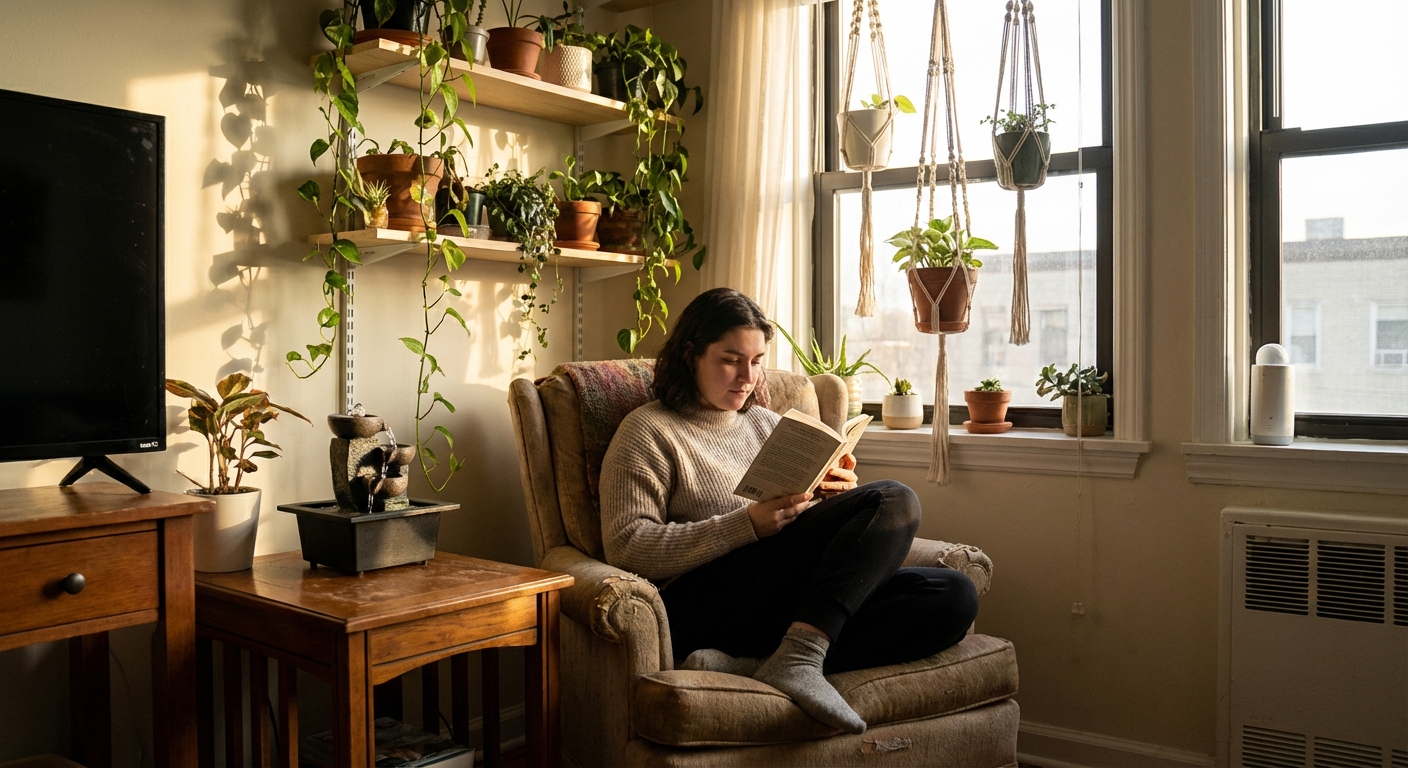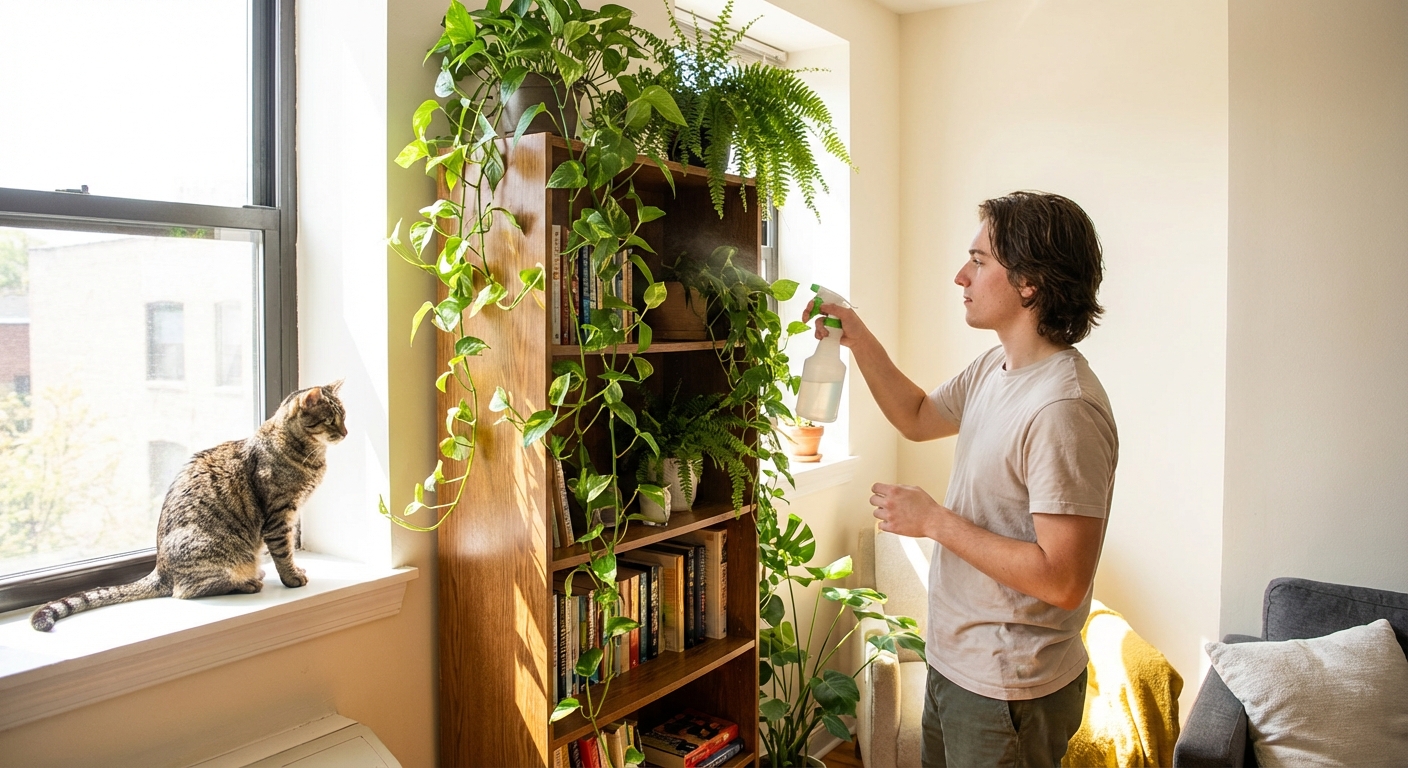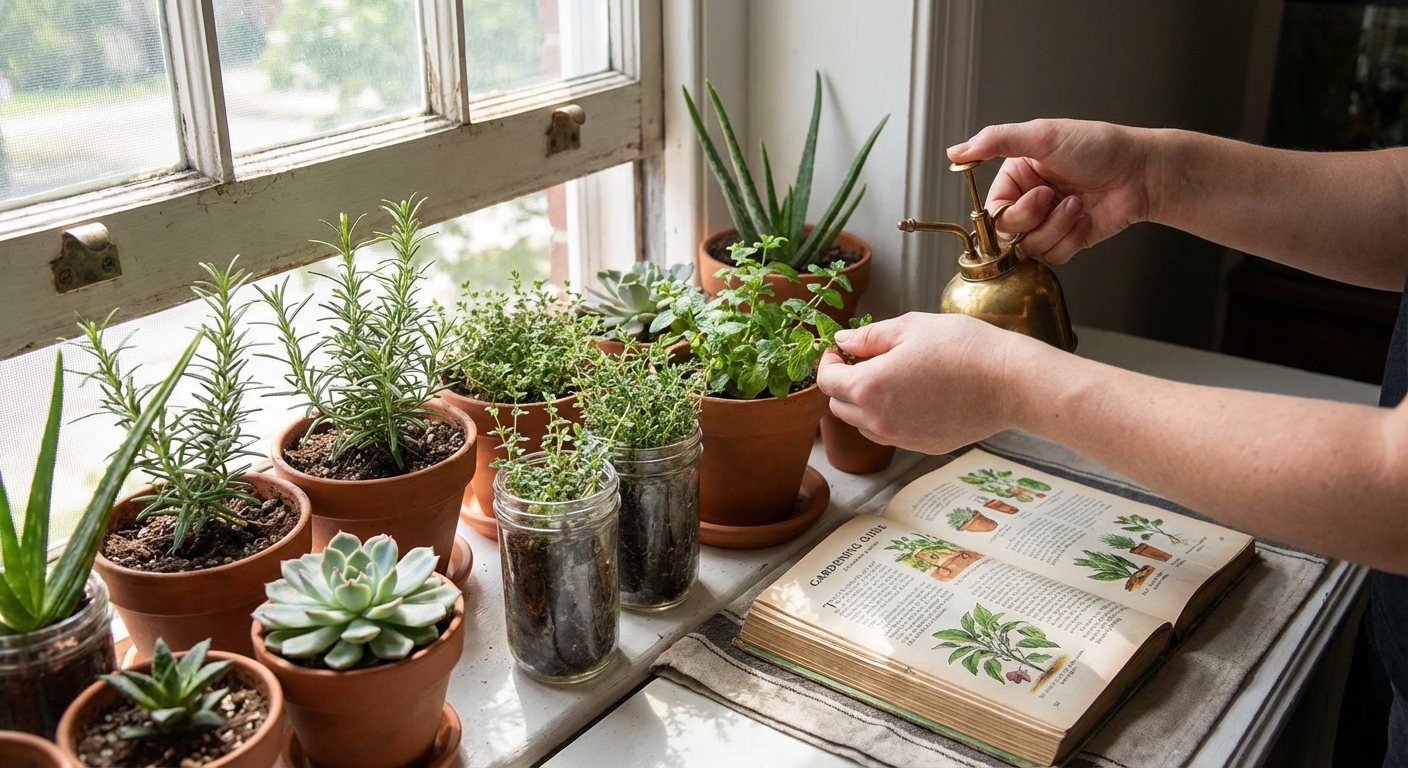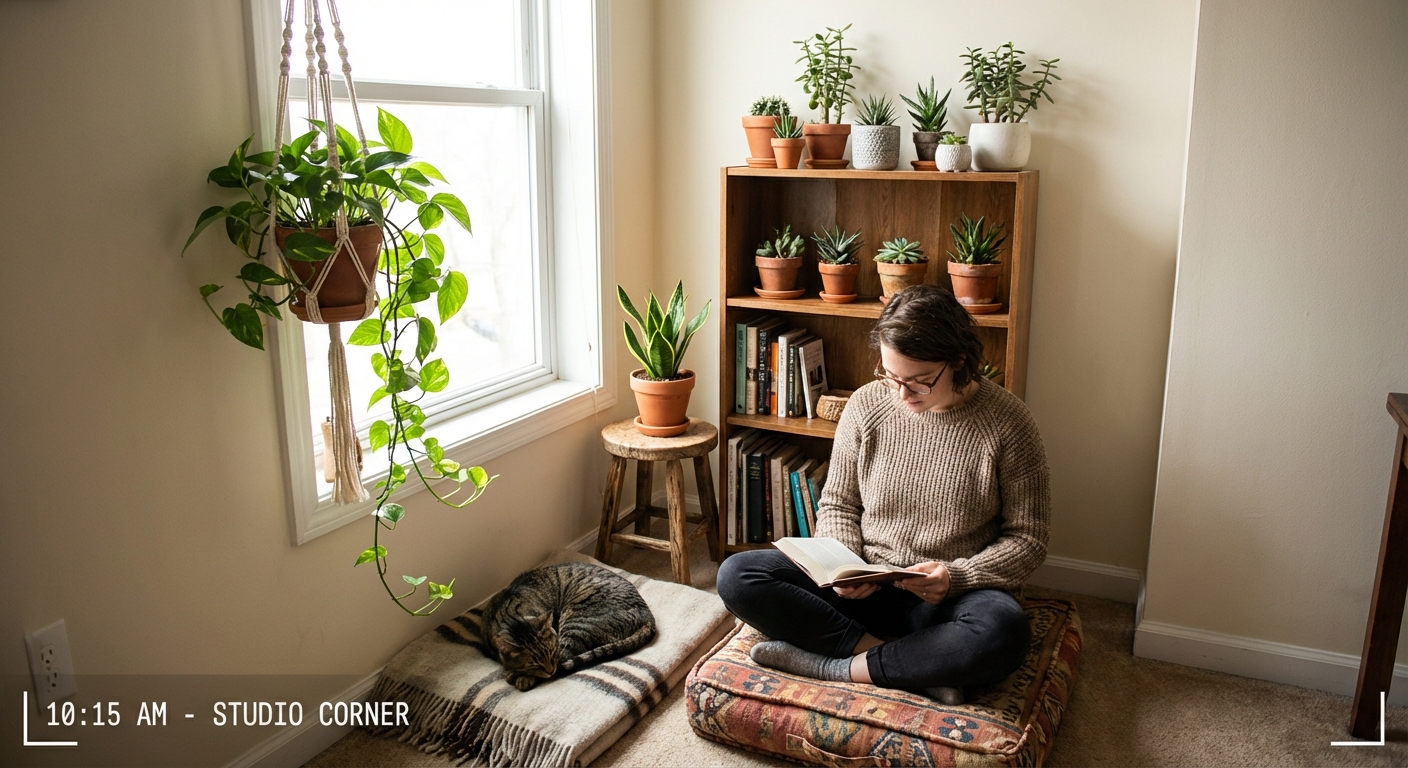
In a tiny apartment, every object shares space—and energy—with you. Choosing plants that coexist peacefully with your routines, light, and available surfaces can make your home feel more like a nurturing nest than a crowded shelf.
Choosing Plant Companions for Small-Space Living
Instead of collecting plants at random, think about companions: plants that share care needs, complement each other visually, and thrive in the same small-space conditions.
Companion Sets for Different Light Levels
Below are curated plant pairings (or trios) designed for common apartment conditions, with species-specific notes and gentle care comparisons.
1. Low-Light Calm: The Shaded Corner Trio
Perfect for hallways, bedrooms with small windows, or corners a few feet from a window.
Plants:
- Snake Plant (Dracaena trifasciata)
- ZZ Plant (Zamioculcas zamiifolia)
- Philodendron Brasil (Philodendron hederaceum 'Brasil')
Why they work together:
- All tolerate low to medium light.
- All accept some drying out between waterings.
- Shapes complement: upright swords, arching stems, and soft trailing vines.
Care Comparison:
- Snake Plant:
- Water when soil is dry at least 75% down.
- Very forgiving of neglect.
- ZZ Plant:
- Water only when the pot feels very light and soil is fully dry.
- Thick rhizomes store water; overwatering is the main risk.
- Philodendron Brasil:
- Water when top 2–3 cm are dry.
- Appreciates slightly more moisture than the other two.
Gentle tip: Place philodendron closer to the light source, with snake plant and ZZ slightly behind or beside it.
2. Medium-Light Serenity: The Desk or Console Pairing
Ideal for living rooms or workspaces with indirect light most of the day.
Plants:
- Pothos (Epipremnum aureum)
- Peperomia (your choice of variety)
Why they suit desks and consoles:
- Both stay relatively compact in small pots.
- Both tolerate missed waterings.
- Their different textures (vining vs. clustered) feel visually balanced.
Care Comparison:
- Pothos:
- Water when the top layer of soil is dry.
- Can trail or be trained onto a small trellis.
- Peperomia:
- Many prefer to dry about halfway before watering.
- Thick leaves indicate some drought tolerance.
Common mistake: Overwatering peperomia like a pothos in low light. If its leaves look translucent or mushy, let it dry more and ensure the pot drains freely.
3. Bright-Light Haven: The Sunny Window Companions
For south- or west-facing windows and bright sunrooms.
Plants:
- Jade Plant (Crassula ovata)
- Hoya (e.g., Hoya carnosa or Hoya pubicalyx)
- String of Hearts (Ceropegia woodii)
Why they pair well:
- All appreciate bright light.
- All prefer to dry out between waterings.
- They offer upright, vining, and cascading forms for visual harmony.
Care Comparison:
- Jade: Loves several hours of direct sun; water deeply when fully dry.
- Hoya: Bright, indirect light; allow soil to dry mostly between waterings.
- String of Hearts: Bright, indirect light with a bit of gentle sun; water when soil is fully dry.
Seasonal note: In winter, all three can be watered significantly less, especially in cooler rooms.
Arranging Companion Plants in Small Rooms
Use Shared Trays or Mats
Place companion plants on a single tray or mat:
- It catches drips and makes watering tidier.
- It visually unites the group, so it reads as one calm vignette instead of scattered pots.
Play With Levels
Use:
- A low plant stand.
- A stack of sturdy books (protected from water).
- A small riser or box.
This allows you to layer heights: a trailing plant at the top, an upright plant in the middle, and a compact plant at the front.
Gentle Seasonal Guidelines for Companion Sets
Spring
- Light increases; plants begin to grow more actively.
- Start gentle fertilizing for all companions once a month.
- Observe which plant grows fastest—trim back lightly to keep balance.
Summer
- Higher light and heat may stress some plants.
- Companions closest to the window may need to move back if leaves scorch.
- Watering frequency may diverge slightly within the group; that’s okay.
Autumn
- Growth slows; reduce feeding.
- Check if any plants are rootbound and need a slightly larger pot.
Winter
- Light decreases, especially for companions further from windows.
- Reduce watering for most plants; allow more drying time, especially for succulents and hoyas.
- Don’t worry if growth nearly stops; rest is normal.
Troubleshooting Companion Groups With Care
One Plant Thrives, Another Struggles
This is common and not a failure.
- Check light: Is one plant overshadowing another? Try rotating positions.
- Check water needs: You can still water at the same time, but tailor how much each receives.
- Adjust expectations: Some plants grow faster and will need more frequent pruning or repotting.
Yellowing Leaves Within the Group
- On drought-tolerant plants (snake plant, ZZ, jade): Often too much water.
- On more moisture-loving plants (philodendron, pothos): Could be underwatering or low light.
Respond plant by plant, but keep the group together if their basic needs still align.
Overcrowded Look
If your companion set starts to feel visually busy:
- Remove one plant and place it elsewhere to restore simplicity.
- Or prune trailing plants and propagate cuttings to share or pot separately.
It’s okay to edit your plant collections as your space and energy change.
Honoring Your Capacity
Tiny apartments often come with tiny pockets of free time. Companion planting for indoor pots is about kindness to yourself as much as it is about aesthetics.
- Choose plants that forgive missed waterings.
- Group plants so you can care for several at once.
- Allow your collection to grow slowly; observe first, then add.
The most peaceful small-space gardens are not the fullest, but the ones that match their caretaker’s rhythm. With a few well-chosen companions, your apartment can feel alive and supported—without ever feeling crowded.
Key Takeaway
The most important thing to remember from this article is that following these steps can lead to great results.