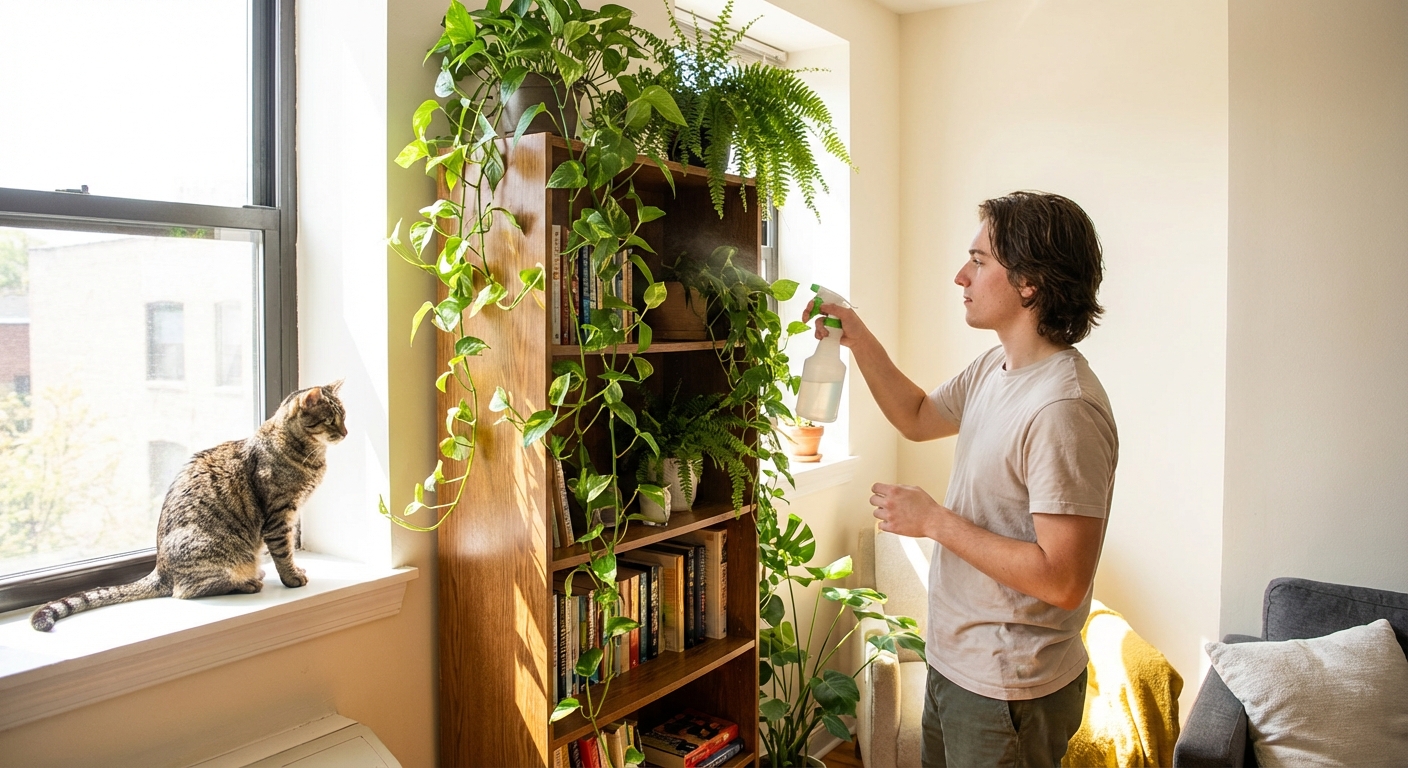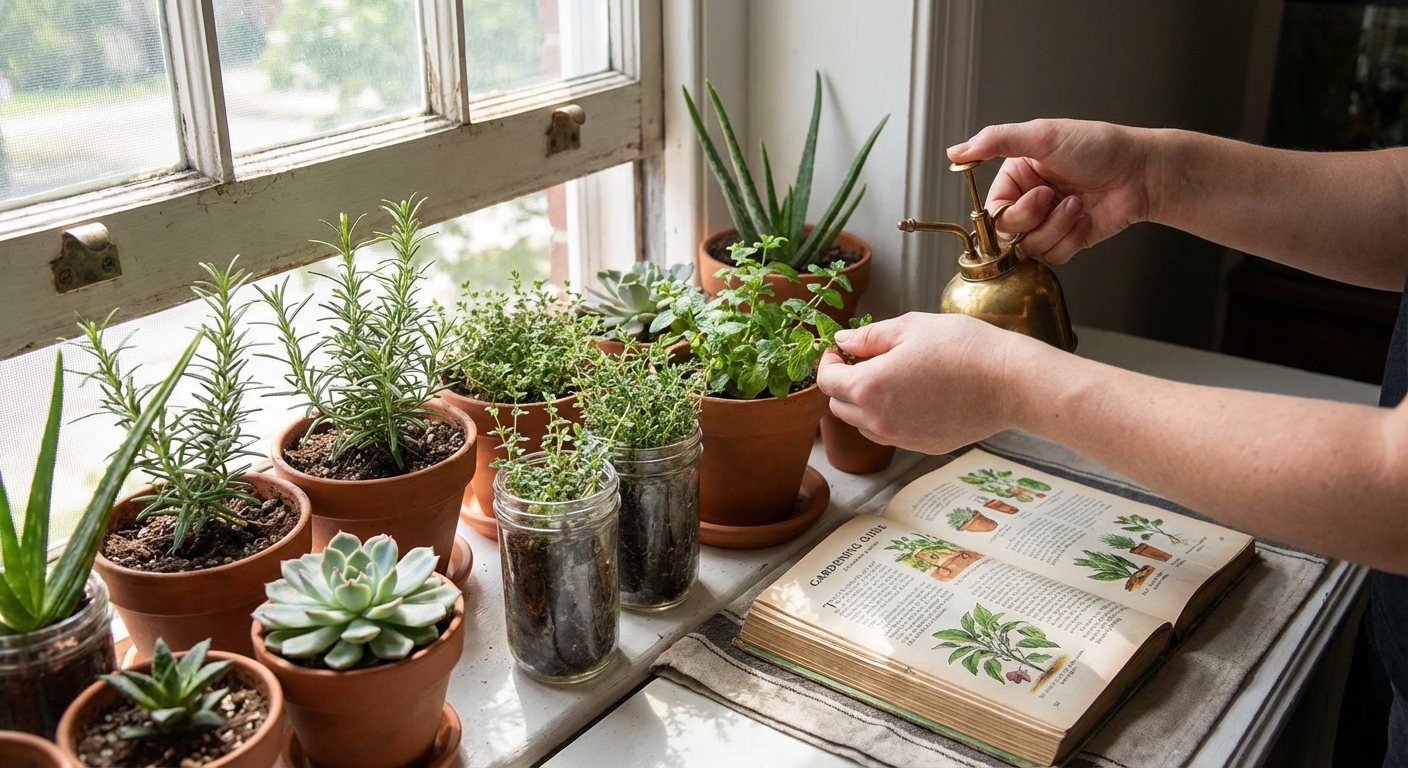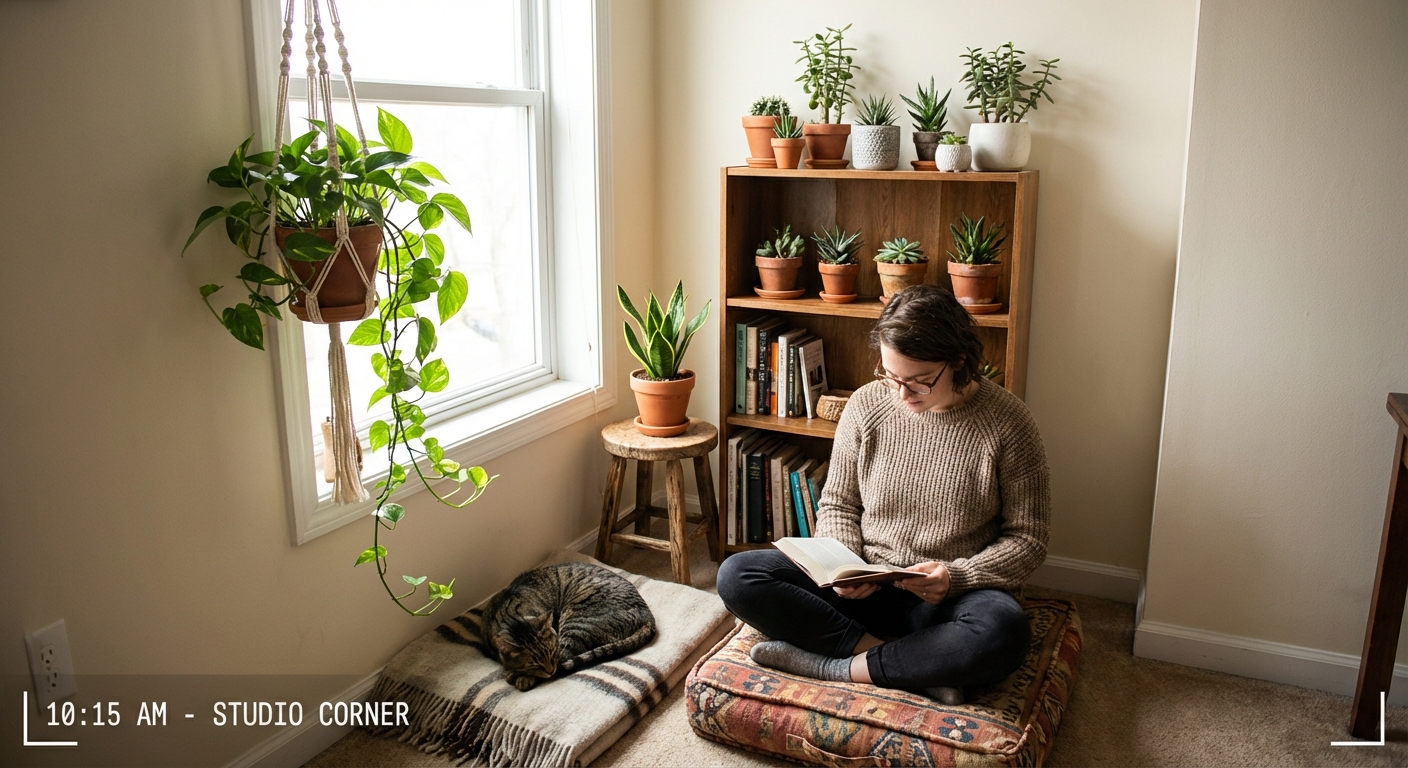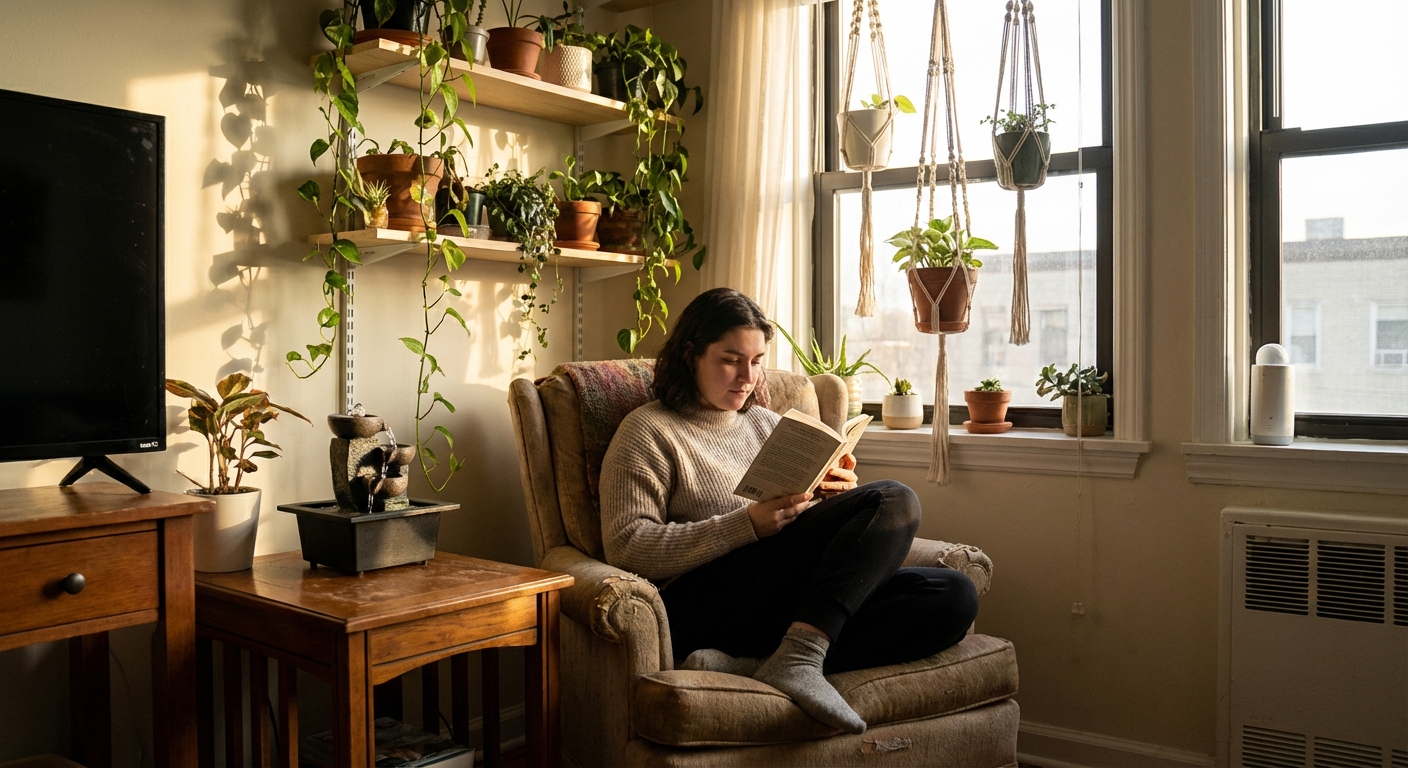
Small spaces can hold surprising amounts of peace. A single windowsill, a narrow console table, or the top of a bookshelf can become a restful green retreat—no yard required. The key is thoughtful plant choices, layered heights, and gentle routines that fit easily into your daily life.
Creating Calm in Limited Space
This guide will help you design a small-space indoor garden that feels calm rather than cluttered, with species-specific notes and soothing, realistic care advice.
Step 1: Read the Light, Not the Label
Before you buy plants, sit with your space for a day or two.
- South- or West-facing windows: Bright, often intense light.
- East-facing windows: Gentle morning light, kinder to many plants.
- North-facing windows or rooms: Low to medium light; great for foliage plants.
Stand where you plan to put plants and notice:
- Do you need to squint at midday? (Very bright.)
- Can you read comfortably without a light on? (Medium.)
- Is it dim except right next to the window? (Low.)
Resist the urge to "force" a plant into a spot it doesn't want. Matching plant to light creates a calmer, lower-maintenance garden.
Step 2: Choose Plants That Stay Graceful in Tight Spaces
In a compact home, slow-growing and vertical plants are your allies. Here are a few gentle, space-friendly choices.
1. Snake Plant (Sansevieria / Dracaena trifasciata)
- Light: Low to bright, indirect; tolerates a lot.
- Water: Allow soil to dry at least 75% before watering.
- Why it suits small spaces: Tall, narrow leaves create height without bulk.
Common mistake: Overwatering, especially in low light. If leaves feel mushy at the base, let soil dry longer and remove affected leaves.
2. ZZ Plant (Zamioculcas zamiifolia)
- Light: Low to medium, avoids harsh direct sun.
- Water: Infrequent; water only when soil is fully dry.
- Space perk: Upright, arching stems tuck easily onto shelves.
Troubleshooting: Yellowing leaves usually signal too much water. Brown, crispy tips may mean very dry air or underwatering. Adjust slowly rather than making big changes.
3. Pothos (Epipremnum aureum) for Vertical Greenery
- Light: Low to bright, indirect.
- Water: When top 2–3 cm (about 1 in) are dry.
- Space perk: Trails from shelves or climbs up a small trellis, using vertical space.
Gentle fix for legginess: If vines look sparse, trim just above a leaf node. You can root cuttings in water and replant them into the same pot for a fuller look.
4. Peperomia (Radiator Plants)
- Light: Bright, indirect for best growth.
- Water: Likes to dry slightly between waterings; many behave almost like succulents.
- Space perk: Compact rosettes and small leaves feel lush without taking over.
Common mistake: Treating them like thirsty tropicals. If leaves are soft and translucent, check for soggy soil and repot into a well-draining mix.
Step 3: Layer Your Garden Without Clutter
Think in vertical layers instead of spreading plants outward.
Use Three Heights
- Ground/low level: A squat snake plant or peace lily next to a reading chair.
- Middle level: A cluster of small peperomias or pileas on a side table.
- High level: Hanging pothos or philodendron trailing from a shelf.
Keeping each level simple—just one to three plants—maintains a sense of calm.
Group by Care Needs
- Place drought-tolerant plants (snake plant, ZZ, peperomia) together where you’re prone to forget watering.
- Group thirstier plants (like a peace lily or calathea) near the sink or somewhere you pass often.
This makes watering days quicker and less overwhelming.
Seasonal Care in Small Spaces
Spring: Gentle Growth Wake-Up
- Check roots: If roots circle tightly around the pot or emerge from drainage holes, consider moving up one pot size.
- Start light feeding: A diluted, balanced liquid fertilizer once a month is usually enough.
Summer: Watch for Heat Stress
Small rooms can warm up quickly.
- Signs of heat stress: Drooping during the hottest hours, dry soil 1–2 days after watering.
- Support: Move plants slightly back from hot windows and consider sheer curtains to soften harsh sun.
Autumn: Slow Down Together
- Reduce watering: As days shorten, most plants use water more slowly. Let the top layer of soil dry a bit more before you water.
- Rotate plants: Give each plant a chance at the brighter spots as light angles change.
Winter: Light and Dry Air
- Light: Move light-loving plants closer to windows, but away from drafts.
- Humidity: Place a shallow tray of pebbles and water near your plants, or group them closer together. Many will be content with this simple step.
Soothing Troubleshooting for Common Issues
Yellow Leaves
- Possible causes: Overwatering, not enough light, or the natural shedding of older leaves.
- Gentle approach:
- Check soil moisture first.
- If wet, let it dry out more before the next watering.
- If it’s a single, older leaf at the base, it may simply be aging.
Brown Tips
- Possible causes: Dry air, inconsistent watering, or fertilizer build-up.
- Try this:
- Trim only the brown edges with clean scissors.
- Water more evenly (not flooding, then forgetting).
- Flush the soil with plain water every few months if you fertilize often.
Stalled Growth
- Likely reasons: Low light, cool temperatures, or it’s simply winter rest.
- Kind response:
- Offer a slightly brighter spot if you can.
- Avoid heavy fertilizing in low light or winter.
- Trust the plant’s rhythm; stillness can be a healthy phase.
Creating Calm Rituals With Your Plants
Instead of viewing your small-space garden as a long to-do list, think of it as a set of gentle rituals:
- Weekly check-in: Spend a few minutes looking for new leaves, feeling the soil, and wiping dust.
- Monthly reset: Rotate pots, prune leggy growth, and clean trays.
- Seasonal reflection: Notice which plants are thriving where, and allow yourself to move or rehome plants that no longer fit the space or your energy.
Your small indoor garden doesn’t have to be perfect to be deeply soothing. With a few thoughtful choices and a calm, observant approach, even the tiniest corner can become a leafy refuge.
Let your space be the boundary, and let your plants fill it slowly, comfortably, and with ease.
Key Takeaway
The most important thing to remember from this article is that this information can change how you think about Small-Space Gardens.