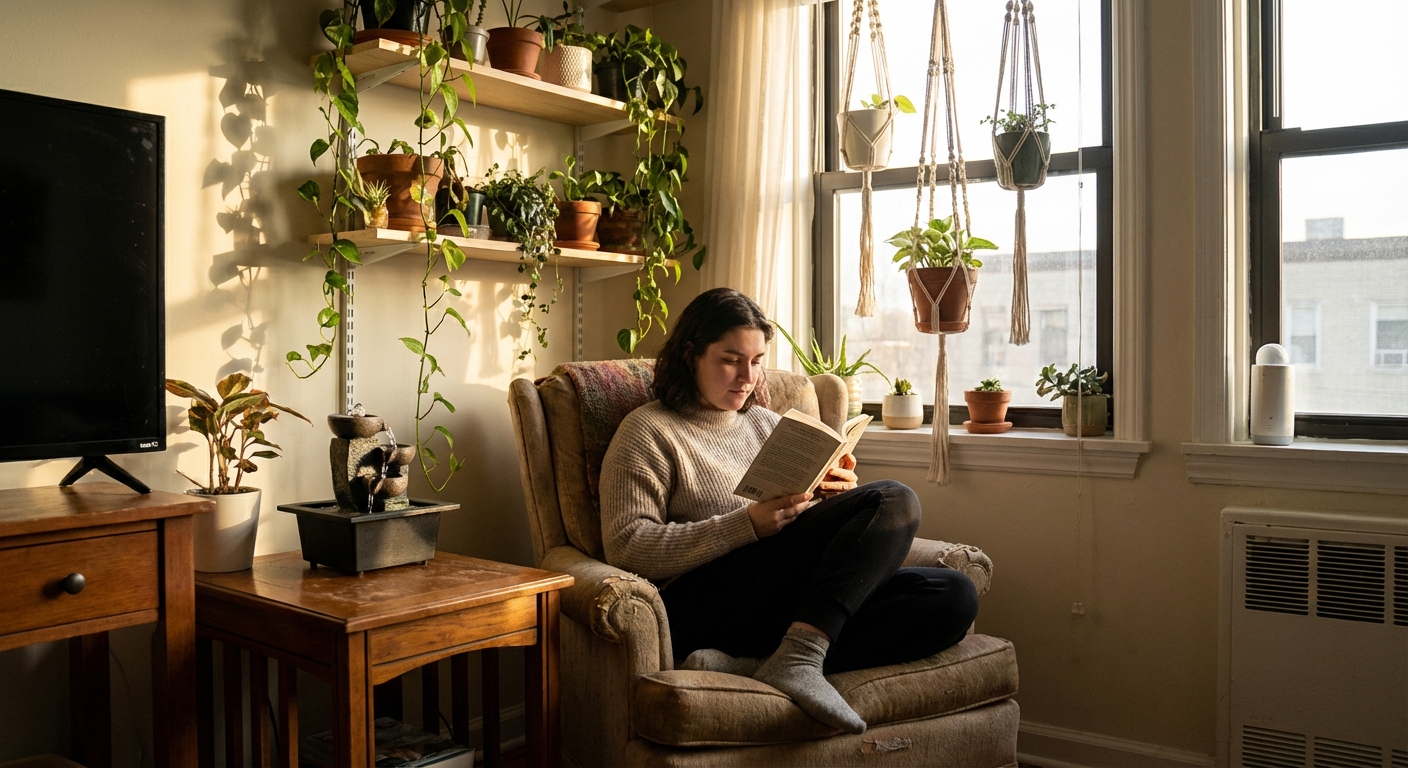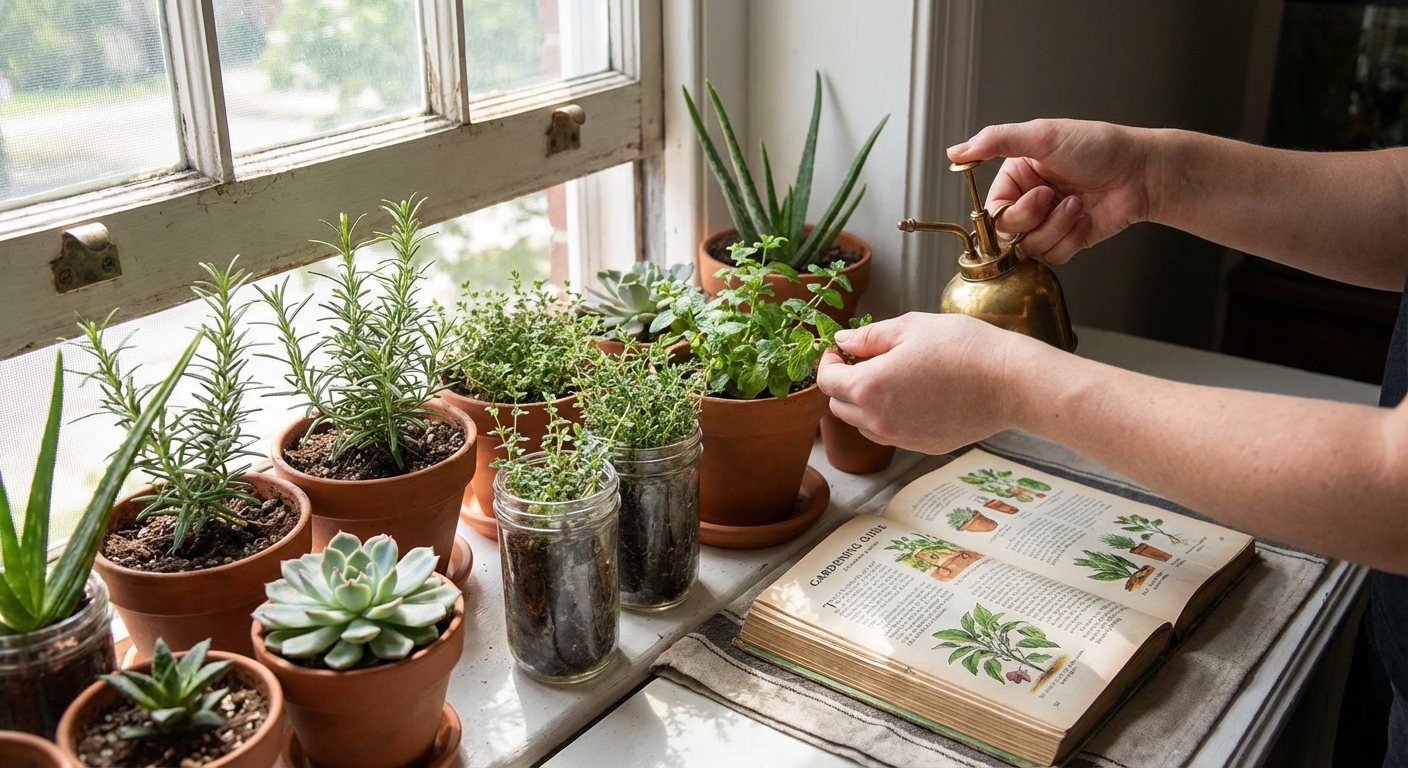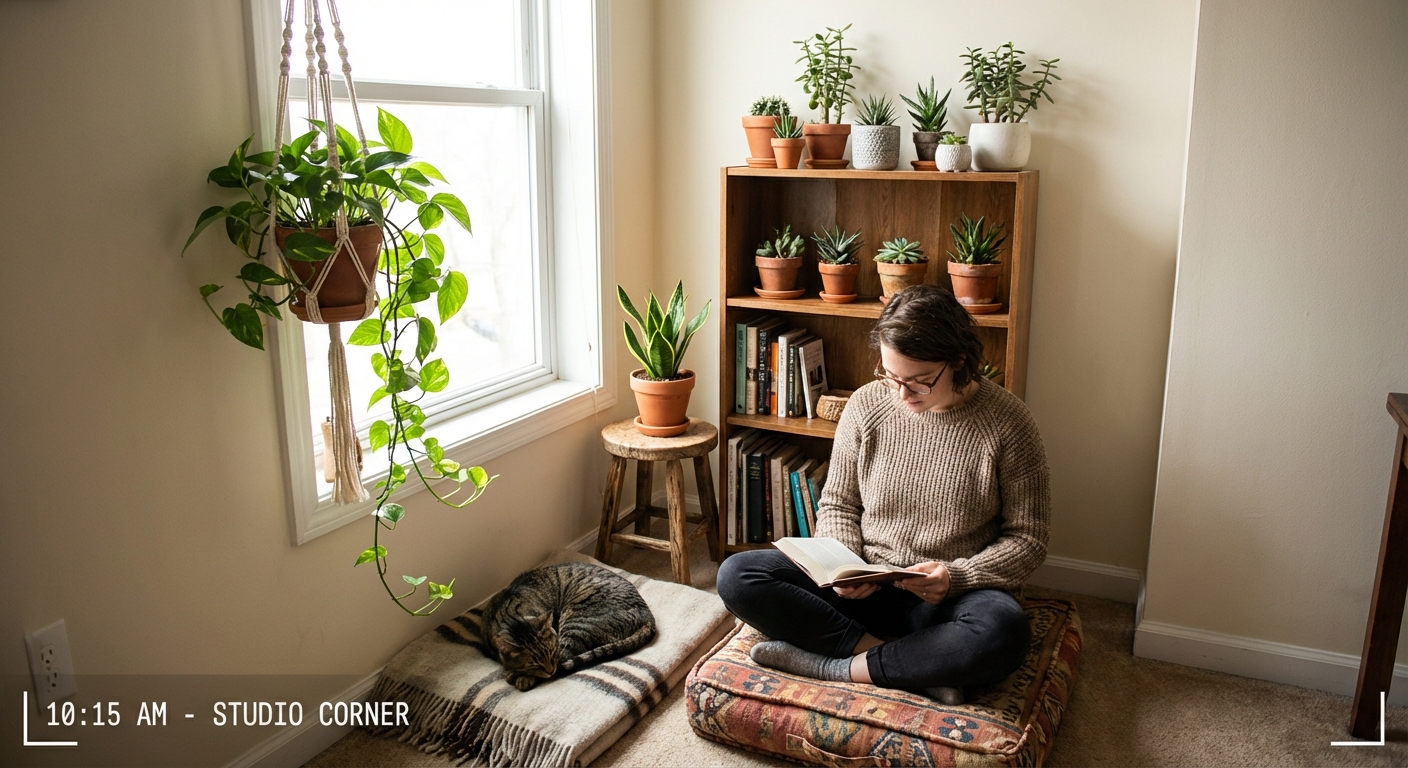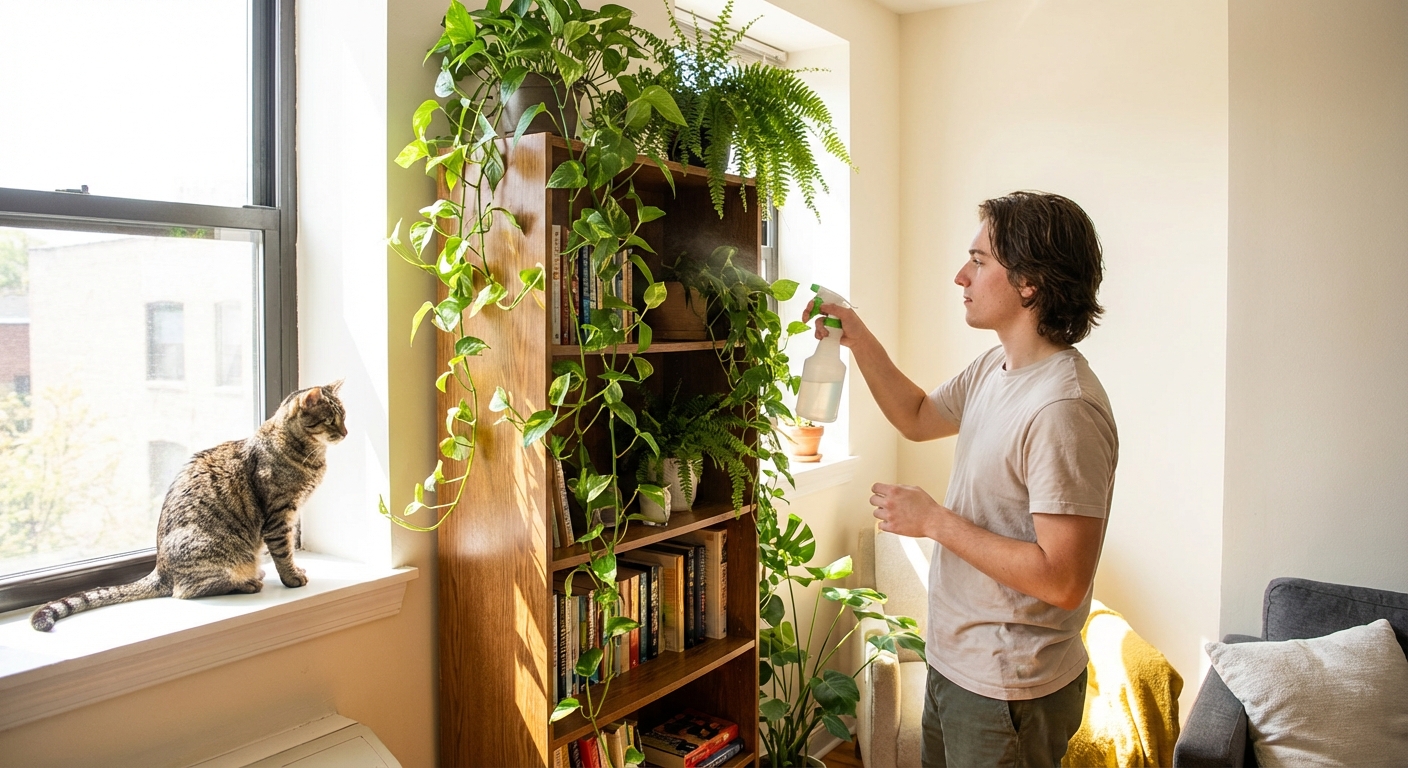
In a compact home, surfaces fill quickly. Vertical gardening—using your walls, shelves, and the air itself—allows you to grow more plants while keeping the floor open and the room peaceful.
Why Vertical Gardens Suit Small Spaces
A shelf-top or wall-mounted garden doesn’t need to feel busy. With a few carefully chosen trailing and upright plants, you can create a soft green curtain that frames your space rather than crowding it.
Planning Your Vertical Garden
Before adding plants, take a quiet moment to observe your chosen wall or shelf.
Ask:
- How many hours of natural light does this area receive?
- Is there a heat source, like a radiator or vent, nearby?
- Can you easily reach the plants for watering and pruning?
Vertical gardens work best when they are accessible. If you need a ladder every time you water, caring for your plants can quickly feel stressful rather than soothing.
Best Plants for Shelf-Top and Wall Gardens
Choose species that grow naturally down or up, and that tolerate slightly drier conditions (shelves and wall pockets often dry faster).
1. Heartleaf Philodendron (Philodendron hederaceum)
- Light: Low to bright, indirect.
- Water: Let the top 2–3 cm (about 1 in) dry before watering.
- Growth habit: Soft vines that trail or climb; ideal for high shelves.
Care note: If vines grow long but leaves stay small, they likely want more light. Gently move them a bit closer to a window over a week or two.
2. String of Hearts (Ceropegia woodii)
- Light: Bright, indirect; tolerates a little gentle direct sun.
- Water: Allow soil to dry almost completely between waterings.
- Space perk: Very thin, cascading vines that add texture without feeling heavy.
Common mistake: Treating it like a thirsty tropical. Overwatering leads to shriveled, yellowing leaves. If that happens, let the soil dry thoroughly and reduce frequency.
3. English Ivy (Hedera helix), Indoors With Care
- Light: Bright, indirect.
- Water: Keep soil lightly moist but not soggy.
- Growth habit: Climbing or trailing; works well on small trellises.
Important: Ivy prefers cooler rooms and good air circulation. If you notice mites or webbing, isolate the plant, rinse leaves gently with lukewarm water, and increase humidity slightly with a pebble tray.
4. Compact Upright Plants for Depth
Add a few upright plants among the trailers to create depth:
- Hoya (Wax plants): Thick leaves; likes bright, indirect light and drying out between waterings.
- Small Snake Plant cultivars: Excellent for low to medium light spots on the ends of shelves.
These act like anchors, giving the eye a place to rest among flowing vines.
Simple Structures for Vertical Greenery
You don’t need complex systems to grow up and down.
Wall Hooks and Hanging Pots
- Use sturdy wall hooks near windows.
- Choose lightweight pots with drainage trays or inner nursery pots.
- Hang plants at different heights for a gentle, cascading effect.
Ladder Shelves
Ladder shelves lean against the wall and provide multiple tiers of light.
- Place low-light tolerant plants on lower shelves.
- Give brighter spots at the top to sun-lovers like hoyas.
Mini Trellises and Moss Poles
Encourage upward growth by inserting a small trellis or moss pole into pots of philodendron, pothos, or ivy.
- Tie vines loosely with soft plant ties.
- Mist moss poles lightly if your plant likes higher humidity (avoid this for succulents or snake plants).
Watering and Humidity in Vertical Gardens
Plants up high often dry out faster, especially in heated or air-conditioned rooms.
Gentle Routine
- Check from top to bottom: Start with the highest plants—they dry the quickest.
- Use your finger or a moisture meter to avoid guessing.
- Water slowly until a little water drains out, then empty saucers.
For humidity:
- Group plants together to create a shared, slightly more humid microclimate.
- Place a shallow tray of water and pebbles on the shelf (keep pots above the water line).
Avoid misting directly onto wooden shelves or walls to prevent damage.
Seasonal Adjustments for Vertical Gardens
Spring
- Prune lightly: Trim trailing plants to maintain shape and prevent tangling.
- Feed gently: A diluted balanced fertilizer every 4–6 weeks supports new growth.
Summer
- Watch window heat: Glass can radiate heat onto nearby shelves.
- Tip: Shift plants a few centimeters back from the glass if leaves look bleached or crispy.
Autumn
- Slow watering: Most vertical setups benefit from slightly less frequent watering as days shorten.
- Rotate plants: Swap positions so each plant has a chance at the best light.
Winter
- Mind dry air: Shelves near heaters can be harsh.
- Move sensitive plants (like string of hearts) away from direct hot air and check soil moisture more often.
Gentle Troubleshooting for Vertical Setups
Tangled Vines
If vines become knotted and overwhelming:
- Work slowly, untangling one strand at a time.
- If you meet resistance, trim rather than pulling.
- You can propagate healthy cuttings in water and replant.
Dropping Leaves
- Top tiers only: Often heat or too much light.
- Lower tiers only: Possibly not enough light or airflow.
Adjust position one small step at a time, then watch for two weeks before changing again.
Uneven Growth
If one side of your vertical garden flourishes and the other lags:
- Rotate entire shelves (if possible) 180° every month or two.
- Or swap plants from left to right to equalize light access.
Keeping Your Vertical Garden Calm, Not Cluttered
To maintain a peaceful feel:
- Choose 2–3 main leaf shapes (heart-shaped, narrow, round) and repeat them.
- Leave breathing space between pots; empty space is part of the design.
- Start with fewer plants than you think you want. You can always expand slowly.
A vertical indoor garden turns your walls and shelves into living artwork. With patient observation and gentle, consistent care, your small home can hold a tall, tranquil jungle that grows alongside you, one soft vine at a time.
Key Takeaway
The most important thing to remember from this article is that this information can change how you think about Small-Space Gardens.