When a beloved houseplant starts to droop, brown, or shed leaves, it can feel urgent and discouraging. Instead of reacting with quick fixes, this guide offers a slow, step‑by‑step approach to help your plant recover—without overwhelm.
A Calm Rescue Plan for Struggling Indoor Plants
We’ll walk through a gentle "plant triage" process you can use with almost any indoor plant, from pothos to orchids.
Step 1: Stop and Stabilize
Before changing anything significant:
Pause extra treatments
- No sudden repotting unless the plant is clearly rotting or root‑bound. - Hold off on fertilizer; stressed plants rarely benefit from feeding.
Place the plant in steady, bright, indirect light
- A spot near an east or north window, or a few feet back from a south/west window with a sheer curtain, is ideal for recovery.
Gently clean the leaves
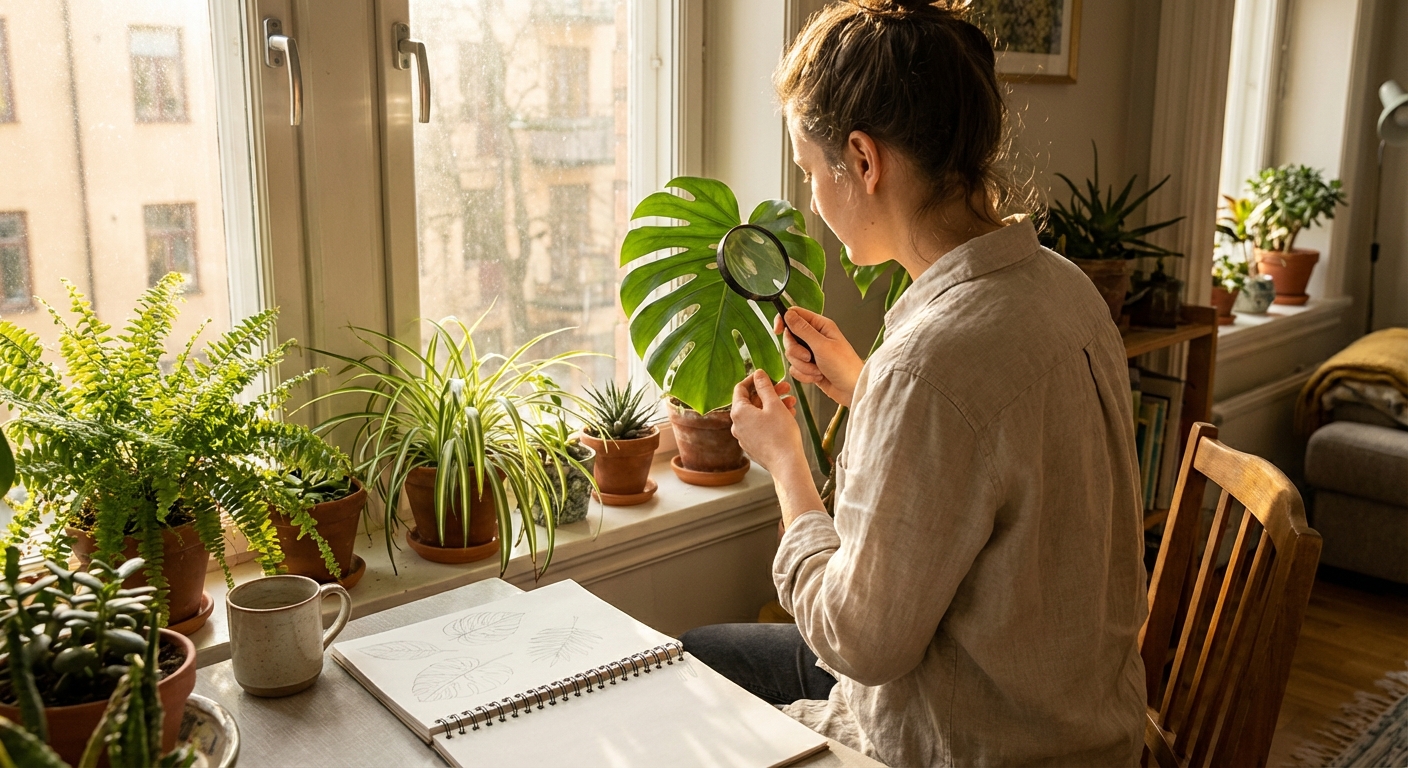
- Wipe with a soft, damp cloth to remove dust so the plant can photosynthesize more effectively.
Step 2: Water Check – Too Much or Too Little?
Water issues are behind most plant stress. You’ll assess, not guess.
Feel the soil
- Top 2–3 cm dry but slightly cool underneath: usually ready for a normal watering for many tropicals. - Completely dry through the pot and pulling away from the sides: underwatered. - Soggy, heavy, or smells sour: overwatered.
Signs of Underwatering
- Crisp, brittle leaves - Soil shrinking from pot edges - Pot feels very light
Signs of Overwatering
- Yellowing leaves that fall off easily - Mushy stems or foul odor - Soil stays wet for a week or more
Rescue Actions
- If underwatered:
- Water slowly until it runs from the drainage holes.
- Let excess drain fully; never leave the pot sitting in water.
- For extremely dry soil, submerge just the bottom 1/3 of the pot in a basin of water for 15–20 minutes, then drain.
- If overwatered:
- Tip the pot gently and let excess water run out.
- Move to a brighter location to help the soil dry.
- Only repot immediately if roots are clearly rotting (see Step 4).
- Snake plant & ZZ plant: Far more tolerant of drought than soggy soil. When in doubt, wait a few days before watering.
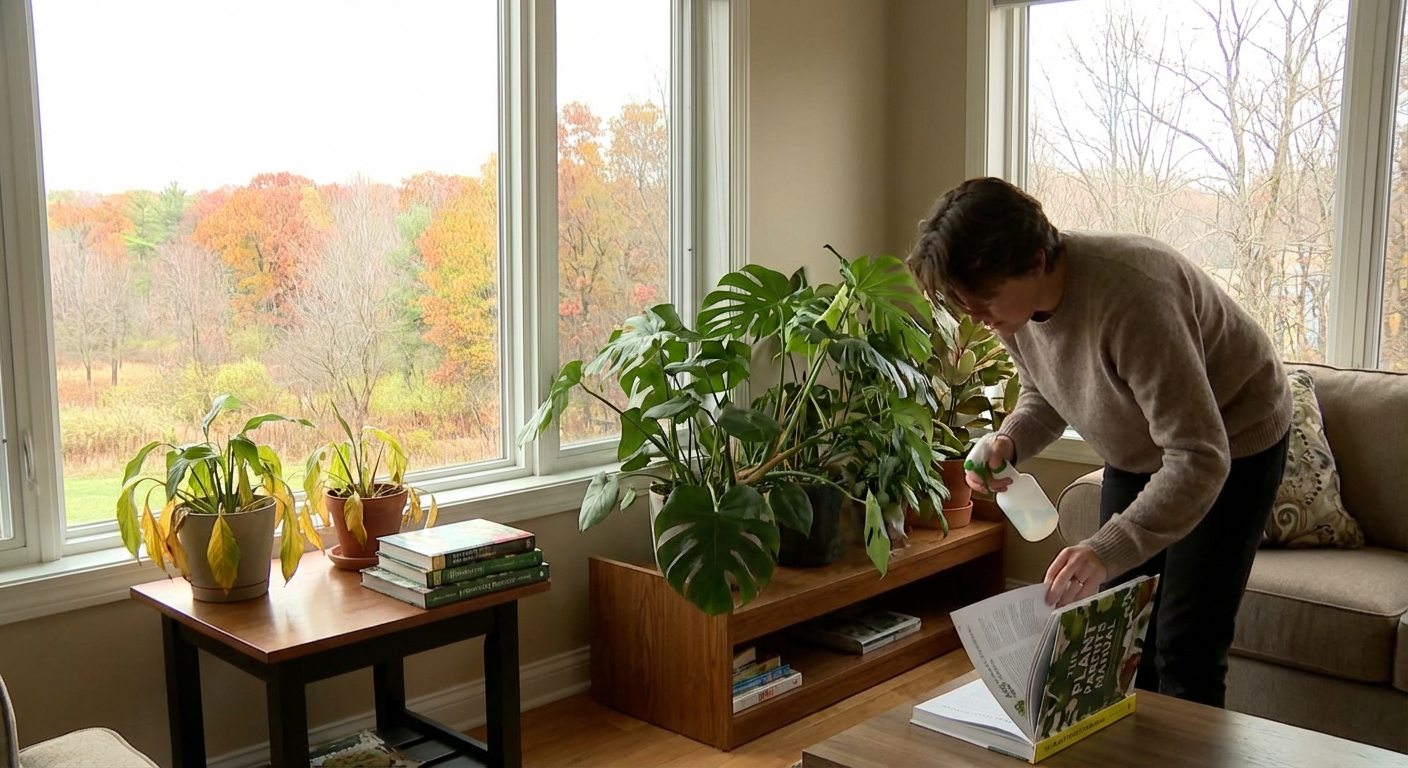
- Peace lily & ferns: Sensitive to underwatering; drooping is a common early warning.
Species notes
Step 3: Light and Placement Audit
Next, review where the plant lives.
Ask:
- Has the light changed with the season?
- Is there a new draft from AC, heaters, or frequently opened windows?
- Has furniture or curtains shifted the light level?
Rescue Actions
- Move the plant to a brighter, indirect light source if growth is slow or leggy.
- Pull plants a bit back from intense afternoon sun to prevent leaf scorch.
- Avoid placing plants directly above radiators or in front of heater vents.
- Fiddle leaf fig: Often dropped leaves are due to low consistent light. It prefers a bright, stable spot and dislikes frequent moving.
- Philodendron & pothos: Adaptable but get leggy and thin in very low light. More brightness usually means fuller vines.
Species notes
Step 4: A Gentle Root Check (If Needed)
If the plant still looks unwell after stabilizing light and water, it’s time to peek at the roots.
Slide the plant out
- Support the soil with your fingers across the top. - Tip the pot sideways and coax the plant out gently.
Assess the roots
- Healthy: white/tan, firm, earthy smell. - Unhealthy: dark brown/black, mushy, sour smell.
If roots are healthy but tightly packed
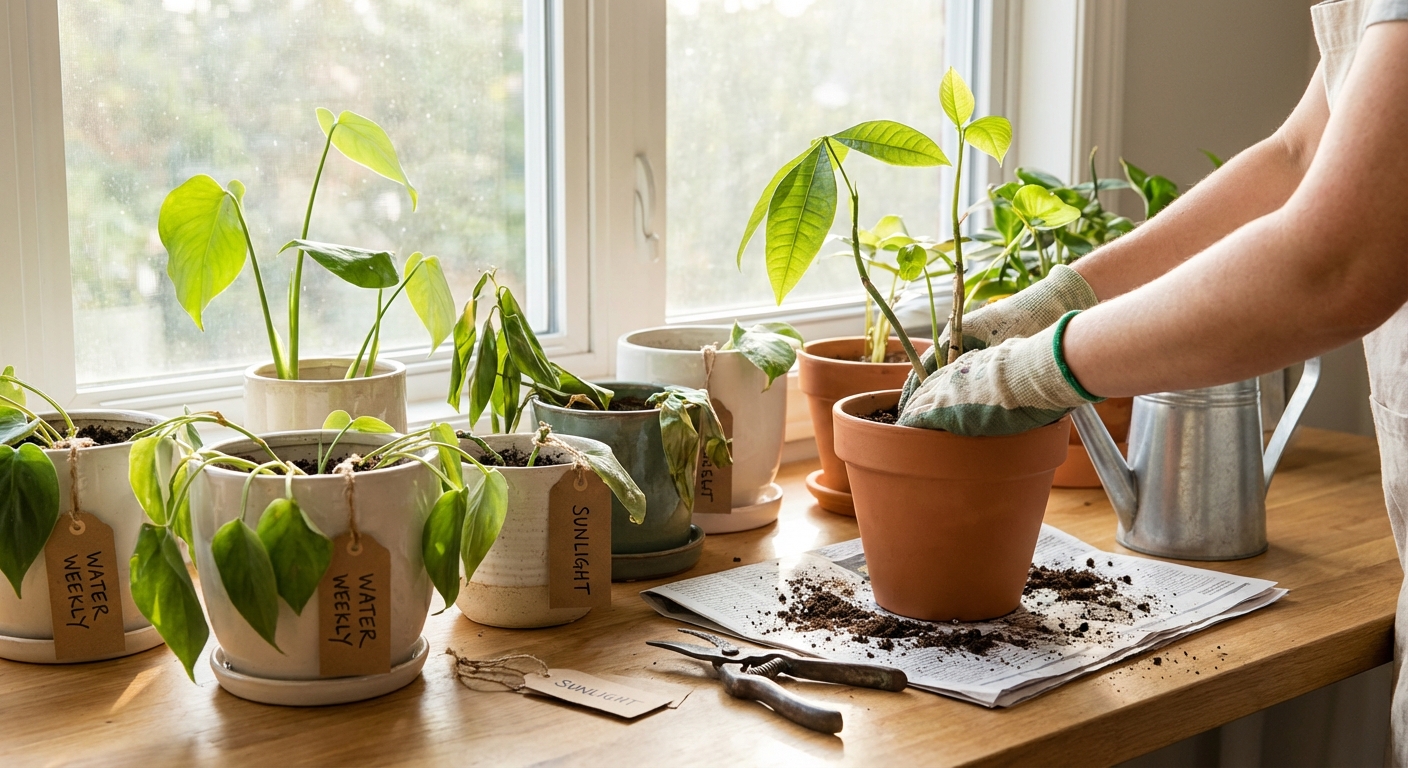
- You may see many roots circling the pot. This is root‑bound. - Choose a pot 2–5 cm wider in diameter with drainage. - Repot into a fresh, well‑draining mix, loosening roots gently.
If roots are rotting
- Use sterile scissors to snip away mushy, dark roots. - Remove most of the old, soggy soil. - Repot into a dry, airy medium. - Water lightly at first and then allow the top layer to dry between waterings.
Species notes
- Orchids (phalaenopsis): Roots should be silvery green. Brown, hollow roots can be trimmed. Use orchid bark rather than regular potting soil.
- Cacti & succulents: Very sensitive to compacted, wet soil; always use a gritty cactus mix.
Step 5: Quiet Pest Inspection
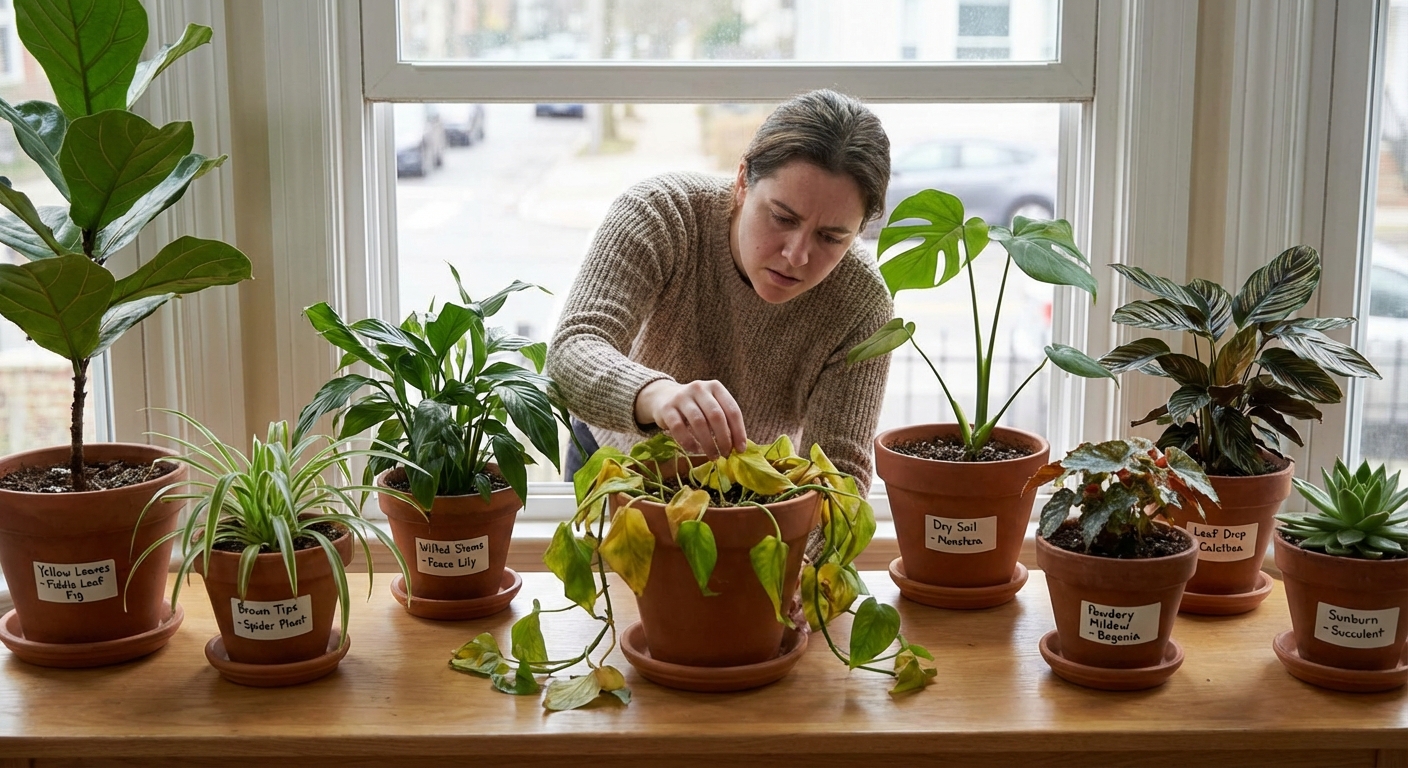
Pests often appear when plants are stressed. Look closely at:
- Leaf undersides and in crevices
- Stem joints and new growth
- Soil surface
- Tiny moving specks or webbing: spider mites
- Cottony white patches: mealybugs
- Sticky residue on leaves: aphids or scale
What to Watch For
Gentle Treatment Options
Physical removal
- Wipe leaves and stems with a soft cloth dampened in mild soapy water. - Rinse gently afterward.
Neem oil or insecticidal soap
- Test a small leaf area first. - Apply according to label, usually in the evening, avoiding harsh sunlight.
Isolation
- Temporarily move the plant away from others to prevent spread.
Species notes
- Calathea & maranta: Softer leaves can be sensitive; always patch‑test treatments.
- Rubber plant (Ficus elastica): Thick leaves tolerate gentle wiping very well; this alone can keep pests under control.
Step 6: Adjust Your Routine, Not Just This Moment
Once your plant stabilizes, use what you’ve learned to gently refine your ongoing care.
Watering Rhythm
- Match watering to season: more often in active spring/summer growth, less in winter.
- Use the finger test or a moisture meter rather than the calendar alone.
- Begin light fertilizing only when you see healthy new growth.
- Use a balanced, diluted houseplant fertilizer every 4–6 weeks during the growing season.
- Skip or halve feeding in autumn and winter.
- Winter: Drier air, less light—expect slower growth and be patient.
- Summer: Faster drying soil—check moisture more frequently.
Feeding
Seasonal Awareness
Species‑Specific Rescue Tips
Monstera Deliciosa
- Common issue: Yellow lower leaves, no new splits.
- Rescue: Check for overwatering and increase light. A moss pole or stake can encourage larger, fenestrated leaves.
- Common issue: Dramatic drooping, brown tips.
- Rescue: Deep, thorough watering when the top inch is dry. Move away from drafts and increase humidity.
- Common issue: Mushy, collapsing leaves.
- Rescue: Immediate root check. Trim rot, repot in gritty mix, and allow the soil to dry completely between light waterings.
- Common issue: Edges browning and curling.
- Rescue: Boost humidity, use filtered or dechlorinated water, avoid direct sunlight.
Peace Lily
Snake Plant
Calathea
Patience Is Part of the Treatment
Recovery is often slow and subtle. New leaves may emerge smaller at first. Some plants may drop damaged foliage before creating fresh, healthy growth.
Stay observant, keep changes gentle and gradual, and trust that your attentive care is more powerful than any quick fix. Your plant doesn’t need perfection—it needs consistency, time, and the calm presence you’re already offering.
Key Takeaway
The most important thing to remember from this article is that this information can change how you think about Plant Troubleshooting.