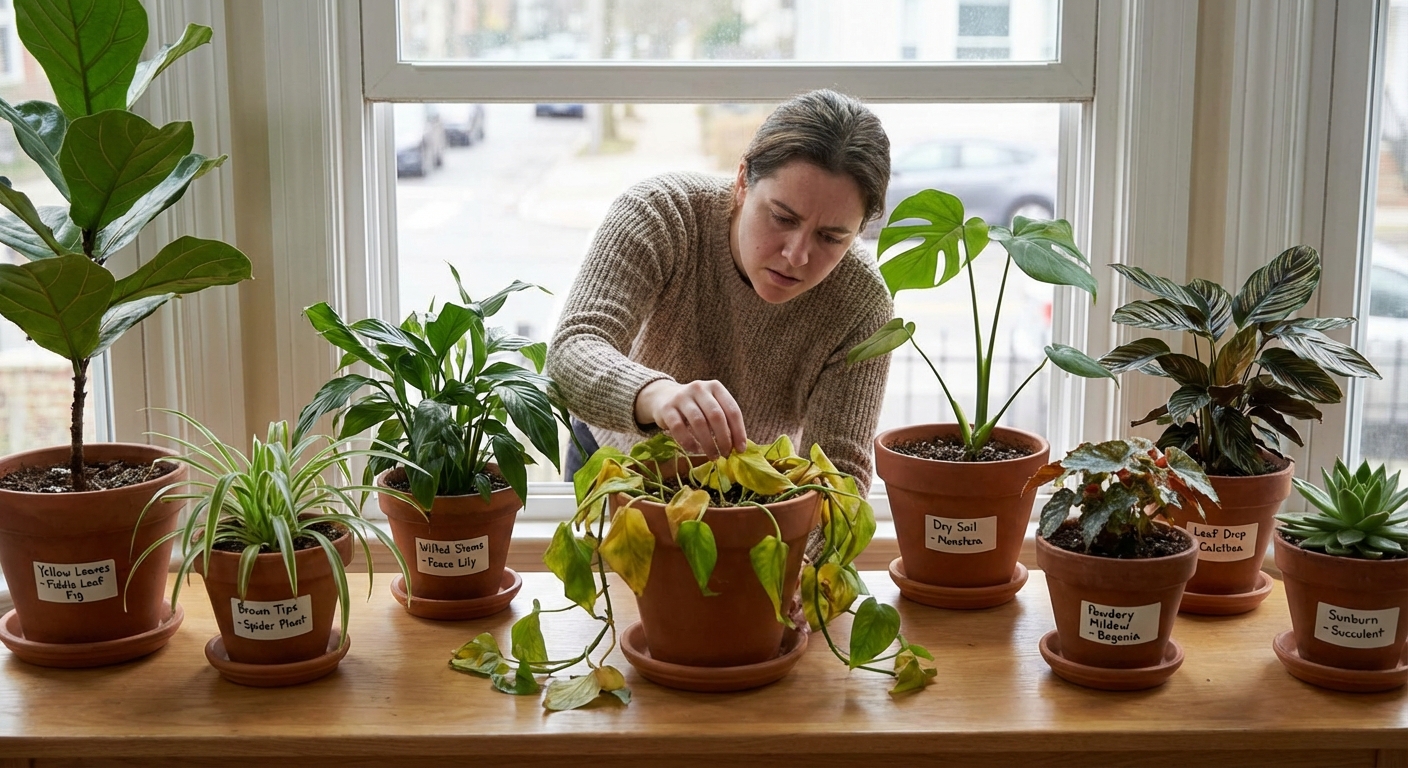
When you notice a "sad" plant—drooping, spotting, or dropping leaves—it helps to have a calm, species‑specific guide at hand. This article pairs common symptoms with likely causes and gentle fixes for seven beloved indoor plants.
A Compassionate Symptom‑Matcher for Indoor Favorites
You’ll find reassurance, not alarm, and practical steps tailored to each species’ personality.
1. Monstera Deliciosa: Yellow Leaves and No Splits
Common "sad" signs
- Lower leaves turning yellow and dropping
- New leaves small, solid (no holes or splits)
- Stems stretching toward the window
- Overwatering in heavy soil
- Insufficient light for strong growth
- Pot too tight, roots circling
- Let the top 3–5 cm of soil dry before watering again.
- Move to brighter, indirect light—near a large window with filtered sun.
- Check if the roots are dense and circling; if so, repot one size up into an airy mix (potting soil + perlite + orchid bark).
Most likely causes
Gentle troubleshooting
Seasonal note
In winter, expect fewer new leaves and fewer splits. Growth and fenestrations often increase in spring and summer with better light.
2. Fiddle Leaf Fig (Ficus lyrata): Brown Spots and Leaf Drop
Common "sad" signs
- Brown patches that start near leaf edges or mid‑leaf
- Lower leaves dropping one by one
- General sulky appearance after moving
- Overwatering leading to root stress
- Not enough bright, consistent light
- Environmental shock from being moved too often
- Confirm that the pot has drainage holes; if not, adjust as soon as you can.
- Let the top 5 cm of soil dry before watering again.
- Commit to one bright spot (near a window) and avoid relocating.
- Rotate the plant a quarter turn every few weeks for even light.
Most likely causes
Gentle troubleshooting
Seasonal note
In winter, it may drop a few older leaves as light declines. This can be normal, especially if new growth continues in spring.
3. Snake Plant (Sansevieria): Mushy Leaves and Faded Color
Common "sad" signs
- Leaves turning soft, bending, or collapsing at the base
- Yellowing or dull, faded appearance
- Soil staying wet for long periods
- Chronic overwatering
- Heavy potting mix that holds too much moisture
- Very low light combined with frequent watering
- Gently remove the plant from the pot and check roots.
- Trim away mushy, dark roots with sterile scissors.
- Repot into a gritty, fast‑draining cactus/succulent mix.
- Water sparingly—allow soil to dry completely between waterings.
Most likely causes
Gentle troubleshooting
Seasonal note
During winter, snake plants may only need water every 4–6 weeks indoors. More plants die from kindness (overwatering) than neglect here.
4. Pothos (Epipremnum aureum): Leggy Vines and Pale Leaves
Common "sad" signs
- Long spaces between leaves on vines
- Smaller, paler leaves than before
- Sparse, thin overall appearance
- Low light over several months
- Infrequent pruning
- Mild nutrient depletion in long‑used soil
- Move the plant closer to a bright window without harsh direct sun.
- Trim back overly long, bare vines to encourage bushier growth.
- In spring, consider repotting into fresh soil or gently top‑dressing with new potting mix.
- Start a light, diluted fertilizer routine during the growing season.
Most likely causes
Gentle troubleshooting
Seasonal note
Winter growth naturally slows; leggy growth is more likely in low‑light months. Adjust the position window‑by‑window as the sun shifts.
5. Peace Lily (Spathiphyllum): Constant Drooping and Brown Tips
Common "sad" signs
- Leaves frequently drooping, then reviving after watering
- Brown, dry tips on leaves
- Few to no flowers
- Underwatering or inconsistent watering
- Low humidity and dry indoor air
- Insufficient light for blooming
- Keep soil evenly moist, not soggy—water when the top inch feels dry.
- Group with other plants or add a humidity tray nearby.
- Move to a brighter spot; a few hours of gentle morning sun can encourage blooms.
- Avoid over‑fertilizing; use a balanced fertilizer at half strength during spring and summer only.
Most likely causes
Gentle troubleshooting
Seasonal note
Flowering may reduce in winter due to lower light, but leaves should still look lush if humidity and watering are consistent.
6. Calathea & Prayer Plants: Curling Leaves and Crispy Edges
Common "sad" signs
- Leaf edges browning and curling inward
- Faded patterns or color
- Occasional leaf folding even when watered
- Low humidity (especially in heated winter rooms)
- Tap water high in minerals or chlorine
- Direct sunlight bleaching patterns
- Increase humidity: pebble trays, grouping plants, or a small humidifier nearby.
- Try using filtered, distilled, or rainwater.
- Move to a warm, bright spot with no direct sun.
Most likely causes
Gentle troubleshooting
Seasonal note
Winter air is often too dry for these moisture‑loving plants. You may see more brown edges then; focus on comfort rather than perfection.
7. Phalaenopsis Orchid: Wrinkled Leaves and No Flowers
Common "sad" signs
- Leaves becoming wrinkled or limp
- Roots silvery and dry even after watering
- Long gaps between blooming cycles
- Underwatering or poor watering technique
- Low, inconsistent light
- Natural resting phase between blooms
- Water when roots appear silvery, allowing water to run through the bark mix thoroughly.
- Ensure no water sits in the crown (center) of the plant, which can cause rot.
- Place in bright, indirect light—east windows are ideal.
- Be patient; orchids often rest several months before spiking again.
Most likely causes
Gentle troubleshooting
Seasonal note
Many phalaenopsis orchids are triggered to spike by cooler nights in autumn. Keep them slightly cooler (but not cold) and steadily bright.
A Few Universal Comfort Practices
Regardless of species, these habits support nearly every plant’s well‑being:
- Dusting leaves regularly to help them breathe and photosynthesize.
- Checking undersides of leaves monthly for early signs of pests.
- Avoiding sudden changes in location, watering, or light.
- Adjusting care with the seasons, not using the same schedule year‑round.
You are not expected to get everything right from the start. Troubleshooting is part of the relationship you build with each plant. With observation, patience, and a bit of species‑specific knowledge, "sad" plants often return to thriving, sometimes more resilient than before.
Key Takeaway
The most important thing to remember from this article is that this information can change how you think about Plant Troubleshooting.