Indoor plants rarely fail suddenly. They usually whisper for help long before they "give up." Learning to read those quiet signals is the heart of gentle plant troubleshooting.
Listening to Your Leaves: A Softer Way to Troubleshoot
This guide will help you understand what leaves, stems, roots, and soil are trying to tell you—without panic, blame, or drastic measures. Think of it as a calm check‑in with your indoor jungle.
Step 1: Pause Before You "Fix"
When something looks wrong, the urge to act immediately is strong: more water, less water, fertilizer, repotting, moving the plant… all at once.
Instead, pause and:
Observe for a full week
- Take photos every few days. - Note light, temperature, watering dates, and any drafts.
Change only one thing at a time
This helps you understand what actually helped and avoids extra stress for the plant.
Remember: Some imperfection is normal
A few yellow or damaged leaves do not mean failure. Plants continuously shed older foliage.
Common Leaf Signals and What They Usually Mean
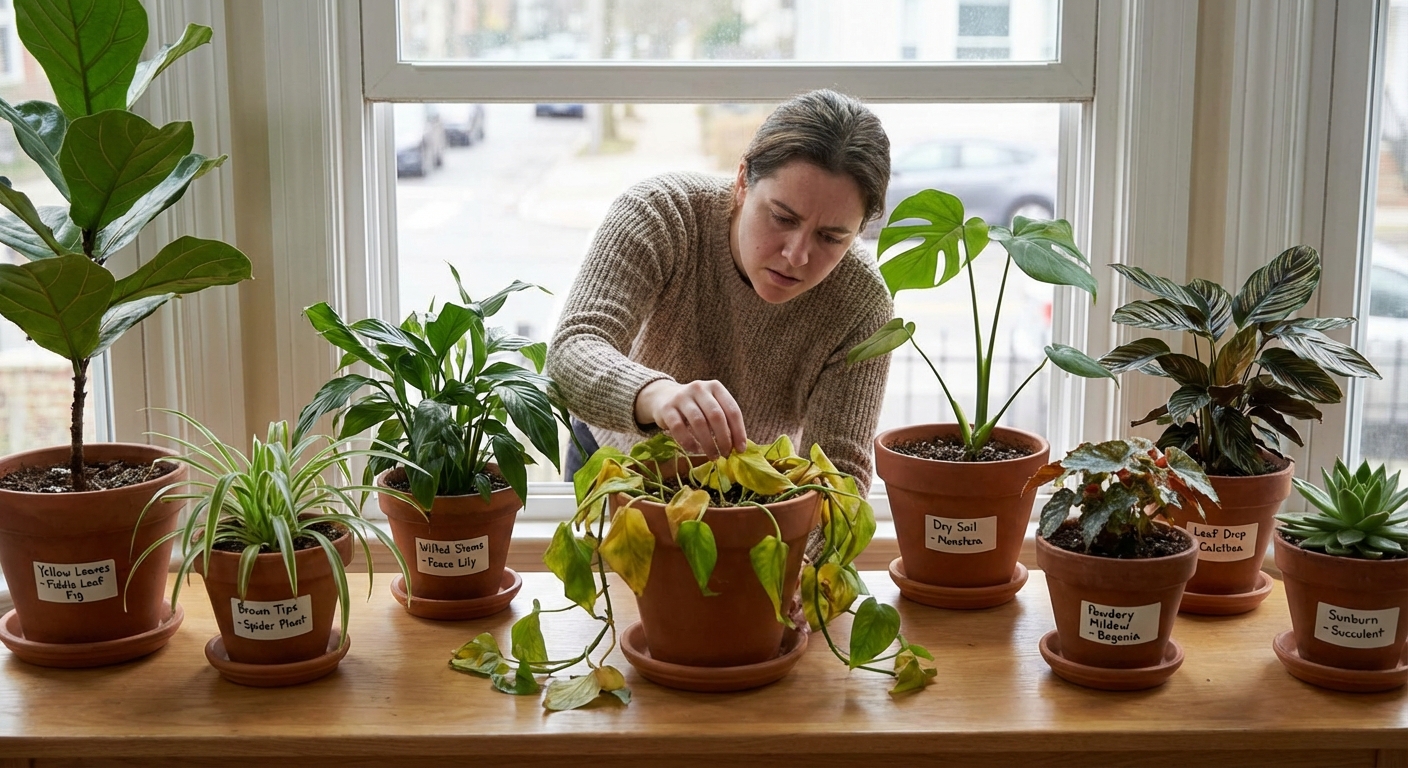
Yellow Leaves
Possible Causes
- Overwatering or poor drainage
- Natural aging (especially lower, oldest leaves)
- Sudden light change (too much or too little)
- Check soil moisture with your finger or a moisture meter. Soil should be slightly dry below the surface before watering for most houseplants.
- Ensure the pot has drainage holes and excess water can escape.
- If only a few old bottom leaves are yellowing on an otherwise healthy plant, calmly trim them off and continue normal care.
- Monstera deliciosa: Occasional yellowing of one old leaf is normal. Many yellow leaves at once usually indicate overwatering.
- Snake plant (Sansevieria): Yellowing plus mushy, bending leaves almost always means too much water. Let soil dry completely between waterings.
Gentle Response
Species notes
Brown Tips and Crispy Edges
Possible Causes
- Low humidity
- Underwatering or inconsistent watering
- Fertilizer buildup or hard tap water
- Check if the soil is staying dry for too long. If yes, water a bit more deeply or slightly more often.
- Add a shallow pebble tray with water under (but not touching) the pot, or group plants together to raise humidity.
- Flush the soil with clean, room‑temperature water every few months to remove fertilizer salts.
- Peace lily (Spathiphyllum): Extremely expressive—droops when thirsty, revives after watering. Brown tips are often from low humidity or fertilizing too frequently.
- Calathea and prayer plants: Naturally sensitive to tap water minerals and low humidity; consider filtered water and a regular misting routine around, not directly on, foliage.
Gentle Response
Species notes
Wilting and Drooping
Possible Causes (Opposites!)
- Underwatering — soil dry, pot very light
- Overwatering — soil soggy, roots suffocating
- Feel the soil and weigh the pot in your hands. Compare to how it feels on a known "watering day".
- If dry: Water slowly and thoroughly until water drains from the bottom. Allow excess to drain fully.
- If soggy: Stop watering, move to a brighter (but not harsh) spot, and let it dry out. Consider repotting if the soil is compacted.
- Pothos (Epipremnum aureum): Forgiving. Slight wilting with dry soil? A deep drink will perk it up. Persistent wilting with moist soil suggests root trouble.
- Fiddle leaf fig (Ficus lyrata): Drooping plus brown spots can be overwatering, especially in heavy soil. This species prefers bright light and well‑draining soil.
Gentle Response
Species notes
Root and Soil Clues (The Hidden Story)
Sometimes the trouble is underground. Gently slide the plant from its pot (supporting the soil surface with your fingers).
Healthy roots
- White to light tan
- Firm and fresh‑smelling
- Brown or black
- Mushy, foul or sour smell
Unhappy roots
Gentle Root Troubleshooting
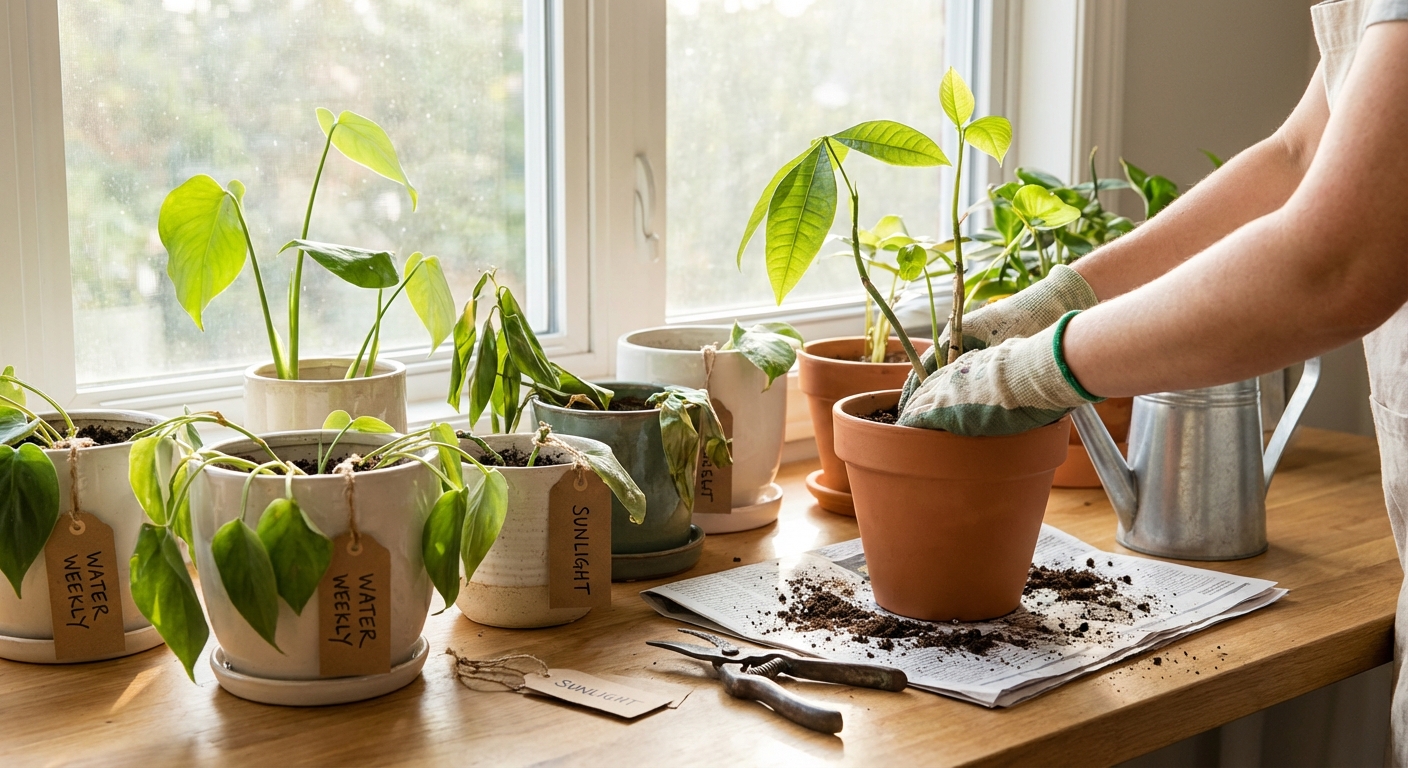
- Use clean, sterile scissors to trim away mushy, dark roots.
- Repot into fresh, well‑draining potting mix.
- Choose a pot only one size larger, with drainage holes.
- Water lightly at first and let the plant settle in bright, indirect light.
Species notes
- Philodendron and Monstera: Thrive in airy mixes (potting soil + perlite + bark). Roots rot quickly in heavy, waterlogged soil.
- Cacti and succulents: Need gritty, fast‑draining soil; even brief waterlogging can cause root damage.
Light: The Most Common, Quiet Problem
Many plant issues come from light that is either too low or too intense.
Signs of low light
- Slow or no new growth
- Leggy, stretched stems reaching toward windows
- Smaller, paler new leaves
- Sudden bleached or pale patches on leaves
- Crispy spots on areas facing the window
- Shift plants 1–3 feet closer to a window, or to a brighter room.
- Use sheer curtains to soften harsh direct sun.
- Rotate plants every few weeks for even growth.
- ZZ plant (Zamioculcas zamiifolia): Tolerates low light but grows best in bright, indirect light. In very low light, growth slows dramatically.
- Fiddle leaf fig: Often labeled as "difficult" but usually just light‑starved. Thrives in bright, filtered light near a large window.
Signs of too much direct light
Gentle Adjustments
Species notes
Seasonal Troubleshooting: What Changes Through the Year
Winter
- Growth slows; reduce watering frequency but don’t let most tropicals go bone‑dry for long.
- Dry indoor air from heaters can cause brown tips and leaf drop. Add humidity where possible.
- Avoid repotting unless it’s an emergency.
- Ideal time for repotting and pruning.
- Plants wake up and may need slightly more water and a gentle, diluted fertilizer.
- Rotate plants to balance renewed growth.
- Watch for leaf scorch near hot windows.
- Water more often as soil dries faster.
- Increase humidity care for thirsty species like ferns and calatheas.
- Gradually pull back on watering and feeding as growth slows.
- Expect some natural leaf shedding as light hours shorten.
Spring
Summer
Autumn
Gentle Troubleshooting Checklist
When something seems off, move calmly through this list:
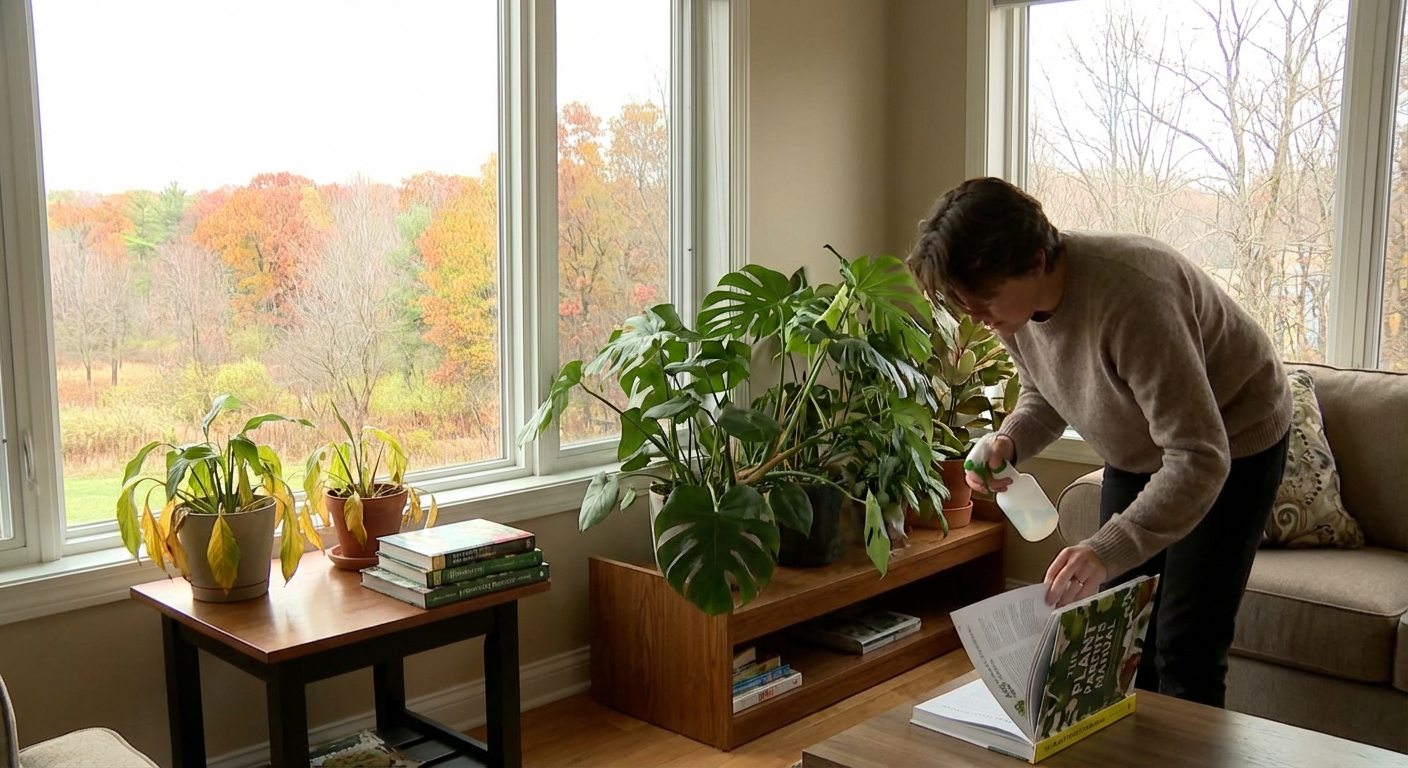
Check soil moisture – Is it bone‑dry, evenly moist, or soggy?
Examine the light – Has anything changed (seasons, curtains, moved furniture)?
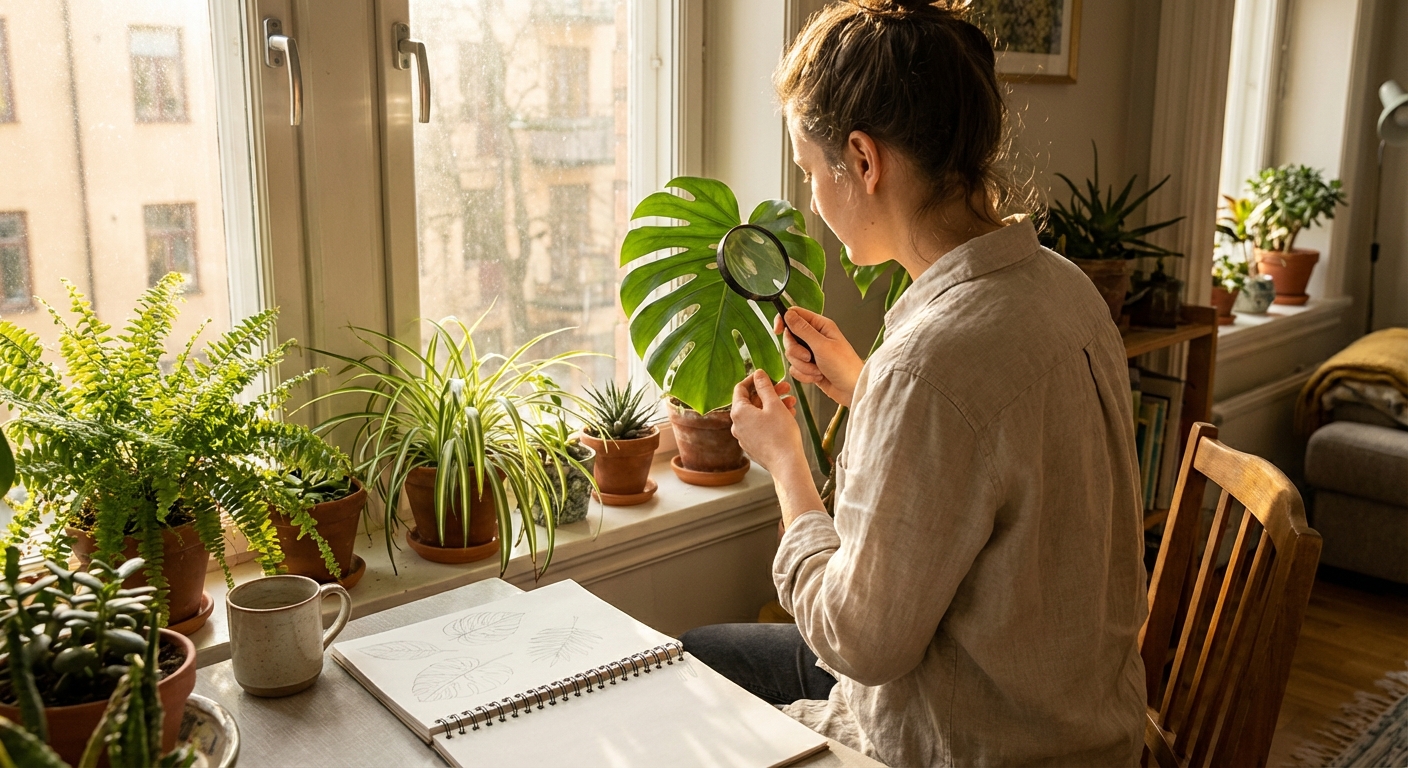
Inspect leaves closely – Any pests, webbing, sticky residue, or unusual spots?
4. Look under the pot – Roots coming out of drainage holes? Time to repot.
Reflect on recent changes – New location, draft, fertilizer, or heater turned on?
Write down what you notice. You’re not judging yourself or the plant—just gathering clues.
You and Your Plant Are Learning Together
Every spot, speck, and yellow leaf is information, not a verdict on your skills. Even experienced collectors lose leaves, misjudge watering, and adjust.
Approach troubleshooting as a quiet conversation with your plant. Over time, you won’t just keep them alive—you’ll understand them. And that gentle attention is what turns a home full of plants into a true indoor sanctuary.
Key Takeaway
The most important thing to remember from this article is that this information can change how you think about Plant Troubleshooting.