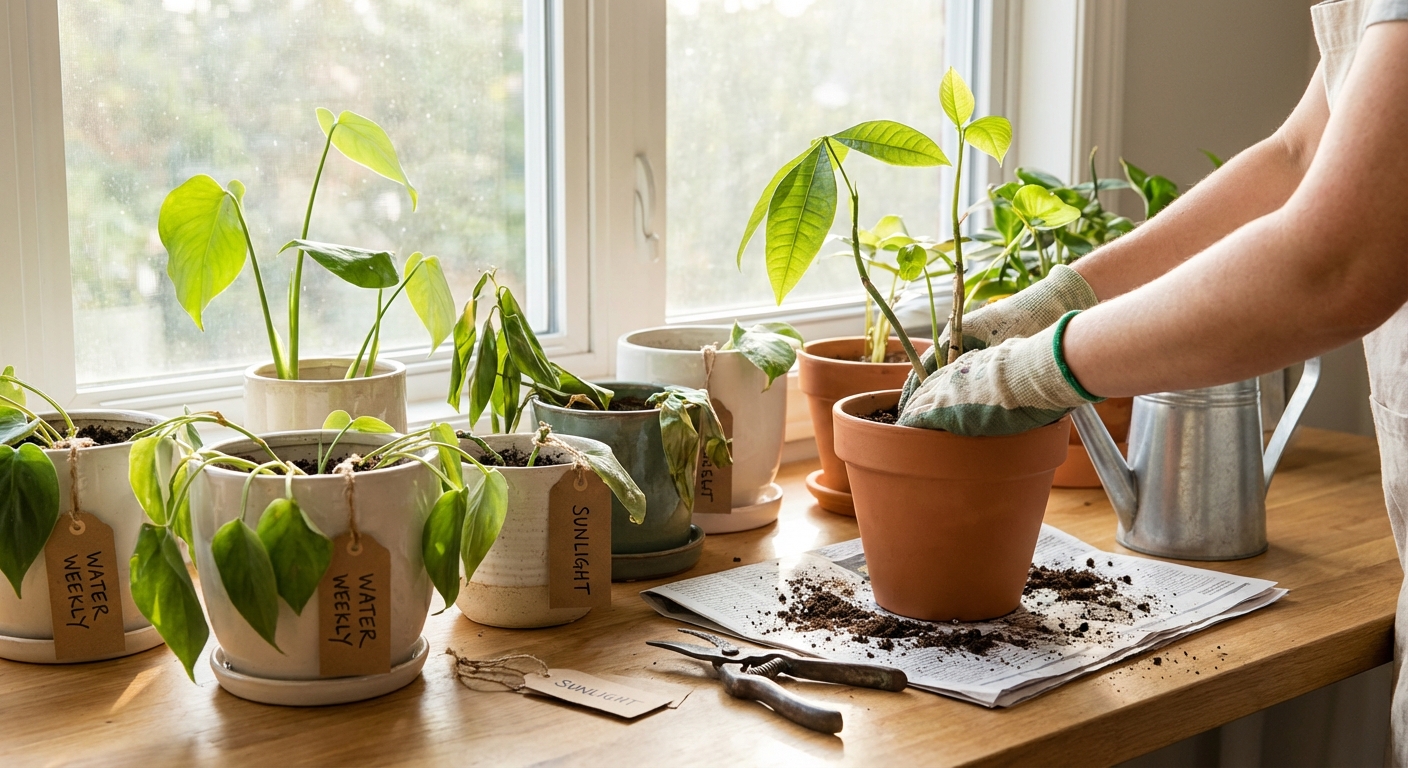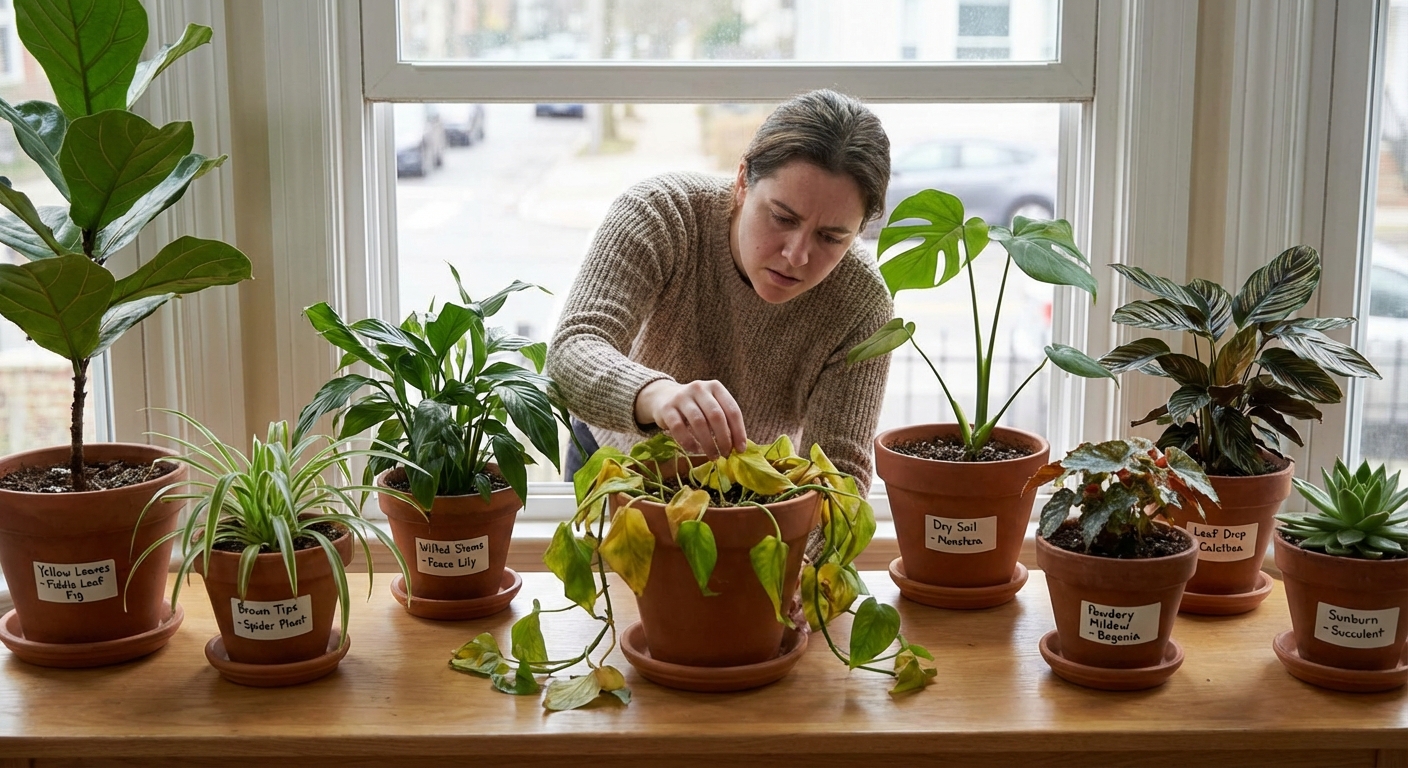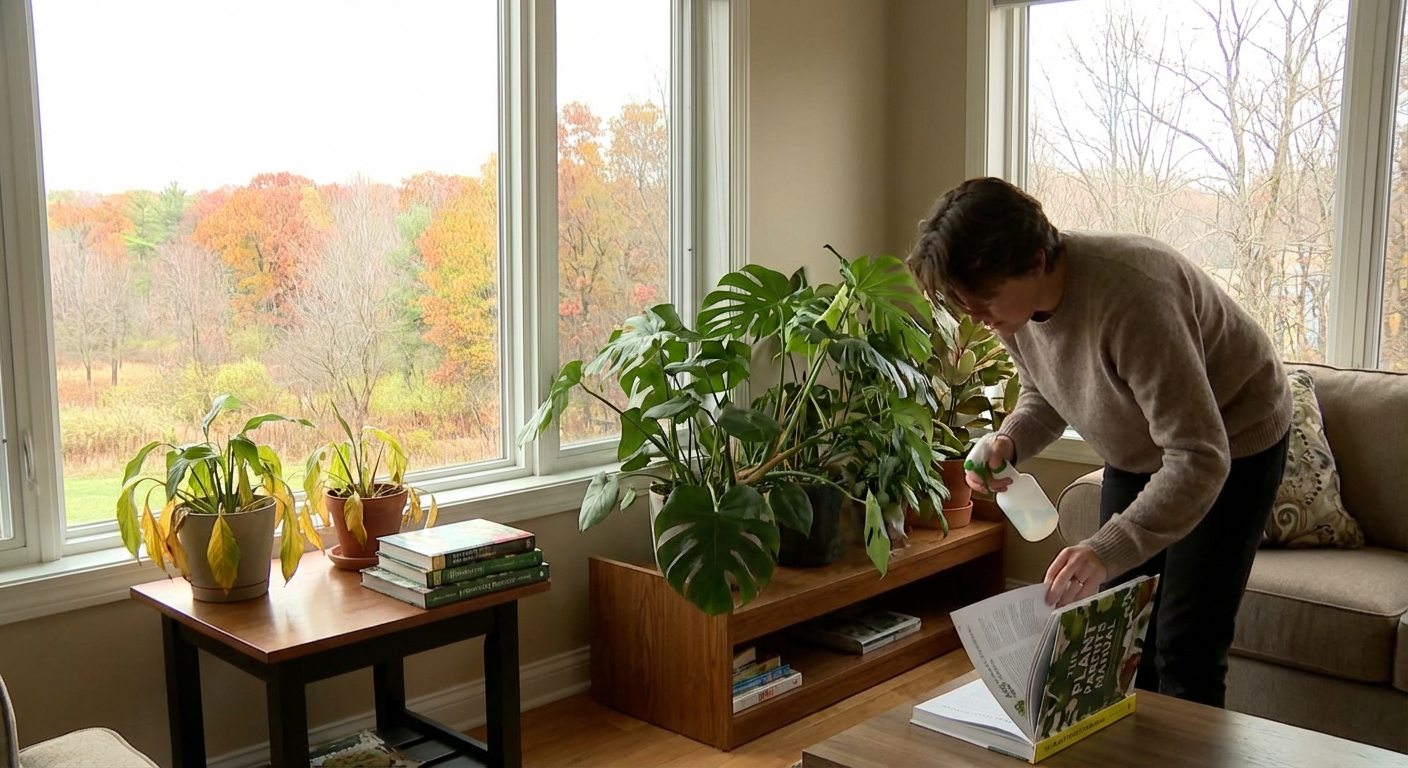
Indoor plants live in our human habitats, with heating, cooling, and artificial light. Still, they respond strongly to seasonal shifts in daylight hours, humidity, and temperature.
Why Seasons Matter Indoors (Even in Climate Control)
Understanding how their needs ebb and flow through the year makes troubleshooting calmer and simpler. This guide moves season by season, highlighting typical problems and offering gentle adjustments for common species.
Winter: Slow Growth, Dry Air, and Quiet Roots
Short days and indoor heating make winter a delicate time for houseplants.
Typical Winter Symptoms
- Slow or stopped growth
- Yellowing or dropping lower leaves
- Brown, crispy leaf tips
- Soil staying wet longer than usual
- Reduced light = less photosynthesis and slower water use
- Dry heated air = low humidity stress
- Overwatering out of habit rather than need
Likely Causes
Gentle Troubleshooting Steps
Light Support
- Move light‑loving plants (fiddle leaf figs, monstera, rubber plants) closer to windows. - Clean windows and dust plant leaves to maximize available light. - Consider a simple grow light for very dim spaces.
Watering Adjustment
- Check soil moisture more carefully; expect longer gaps between waterings. - For tropicals like pothos and philodendron, water when the top 2–3 cm is dry. - For succulents and cacti, allow soil to dry completely and then some.
Humidity and Comfort
- Keep sensitive species (calathea, ferns, peace lilies) away from heater vents. - Group plants together or add pebble trays with water under (not in) pots. - A small humidifier near your plant cluster can make a big difference.
Avoid Major Changes
- Unless there’s rot or an emergency, postpone repotting until spring. - Go easy on fertilizer; most plants are resting.
Species notes (Winter)
- Calathea: Brown tips are common in dry air. Focus on humidity and gentle watering rather than drastic interventions.
- Snake plant/ZZ plant: Very prone to winter overwatering; err on the dry side.
Spring: Gentle Wake‑Up and Renewal
As days lengthen, plants enter a growth phase. This is the best troubleshooting season.
Typical Spring Symptoms
- Pale new growth
- Roots peeking from drainage holes
- Plants outgrowing their shape or space
- Nutrient depletion from older soil
- Root crowding
- Surging growth after winter rest
Likely Causes
Gentle Troubleshooting Steps
Assess for Repotting
- Slide plants out of their pots: if roots circle tightly or fill the container, they’re likely ready. - Choose a new pot 2–5 cm larger and refresh with a species‑appropriate mix.
Refresh Soil and Food
- Top‑dress large plants (that are hard to repot) with fresh potting mix. - Begin light fertilizing—half‑strength balanced fertilizer every 4–6 weeks.
Prune and Shape
- Trim leggy winter growth on pothos, philodendron, and trailing plants to encourage fullness. - Remove any winter‑damaged leaves to encourage new growth.
Gradual Light Increases
- As the sun strengthens, watch for signs of leaf scorch. - Shift light‑sensitive species slightly away from south- and west‑facing windows if needed.
Species notes (Spring)
- Monstera & philodendron: Excellent time to add support poles or trellises; new growth will quickly adapt.
- Fiddle leaf fig: Spring pruning can encourage branching—make clean cuts and keep light strong.
Summer: Heat, Fast Growth, and Thirstier Roots
Summer often brings the most visible growth—and some specific stresses.
Typical Summer Symptoms
- Wilting in hot afternoons
- Brown, scorched patches on leaves near sunny windows
- Soil drying out much faster than usual
- High light and heat around windows
- Increased water evaporation
- Occasional underwatering during hot spells
Likely Causes
Gentle Troubleshooting Steps
Monitor Moisture More Often
- Use your finger or a moisture meter—plants may need water more frequently than your winter schedule suggests. - Water deeply, until extra drains out.
Protect from Harsh Sun
- Add sheer curtains to soften intense mid‑day light. - Move sensitive species (ferns, calathea, orchids) back from hot glass.
Maintain Humidity
- Air conditioning can dry the air. Balance with pebble trays or a humidifier. - Avoid placing plants directly in the AC stream.
Ongoing Feeding
- Continue light, regular fertilizing if plants are actively growing. - Stop feeding if leaves show fertilizer burn (browned tips, crust on soil); flush soil with clean water.
Species notes (Summer)
- Peace lily: May wilt on very hot days even if soil is moist; a slight move away from direct afternoon sun helps.
- Succulents: Love bright light but can burn behind hot glass—introduce intense sun gradually.
Autumn: Gentle Wind‑Down and Reset
Autumn is a transitional time: light fades, but indoor heating may not be fully on yet.
Typical Autumn Symptoms
- Slower growth compared to summer
- Occasional yellow leaves as plants adjust
- Missed waterings as routines change
- Shortening daylight
- Minor stress from temperature swings
- Care routines still set to summer pace
Likely Causes
Gentle Troubleshooting Steps
Reassess Watering Rhythm
- Gradually extend intervals between waterings as growth slows. - For most tropicals, you’ll still water more than in winter—but less than peak summer.
Light Optimization
- Nudge plants closer to windows as days shorten. - Consider starting or extending grow‑light use.
Reduce Fertilizing
- Begin spacing out feedings; many plants need very little fertilizer from late autumn onward.
Prepare for Indoor Heating
- Plan humidity boosts for sensitive plants before heaters turn on fully. - Move pots away from radiators and dry heat sources.
Species notes (Autumn)
- Phalaenopsis orchids: Many initiate flower spikes in response to slightly cooler nights; keep them bright and gently cooler (but not cold).
- Fiddle leaf figs & rubber plants: Expect a few leaf drops as light shifts; focus on consistent care.
Quick Seasonal Troubleshooting Table
| Season | Main Risk | Gentle Response |
|---|---|---|
| Winter | Overwatering, dry air | Less water, more humidity, brighter placement |
| Spring | Root crowding, nutrient gaps | Repot, top‑dress, start light feeding |
| Summer | Heat, fast drying soil | Deeper watering, sun protection, monitor scorch |
| Autumn | Routine mismatch, fading light | Adjust schedule, move plants toward light |
A Year‑Round Mindset: Adjust, Don’t Overcorrect
The most nurturing troubleshooting happens when you:
- Observe first, then make small changes.
- Expect some seasonal leaf loss and slower growth as natural.
- Adjust water, light, and feeding gradually as the year turns.
Your indoor plants are not asking for perfection—they’re asking for partnership. By moving with the seasons, you become attuned to their quiet shifts, and troubleshooting becomes less about "fixing problems" and more about offering steady, responsive care.
Key Takeaway
The most important thing to remember from this article is that following these steps can lead to great results.