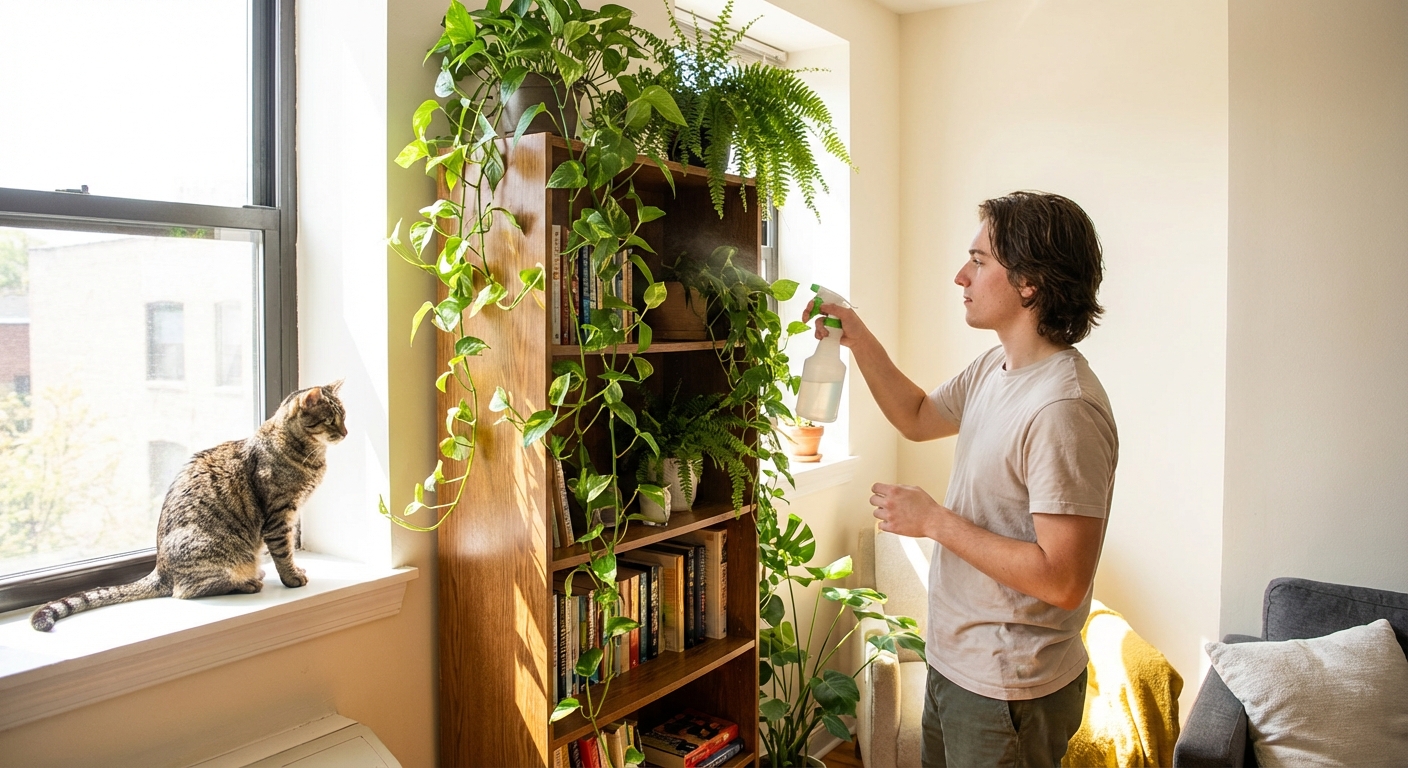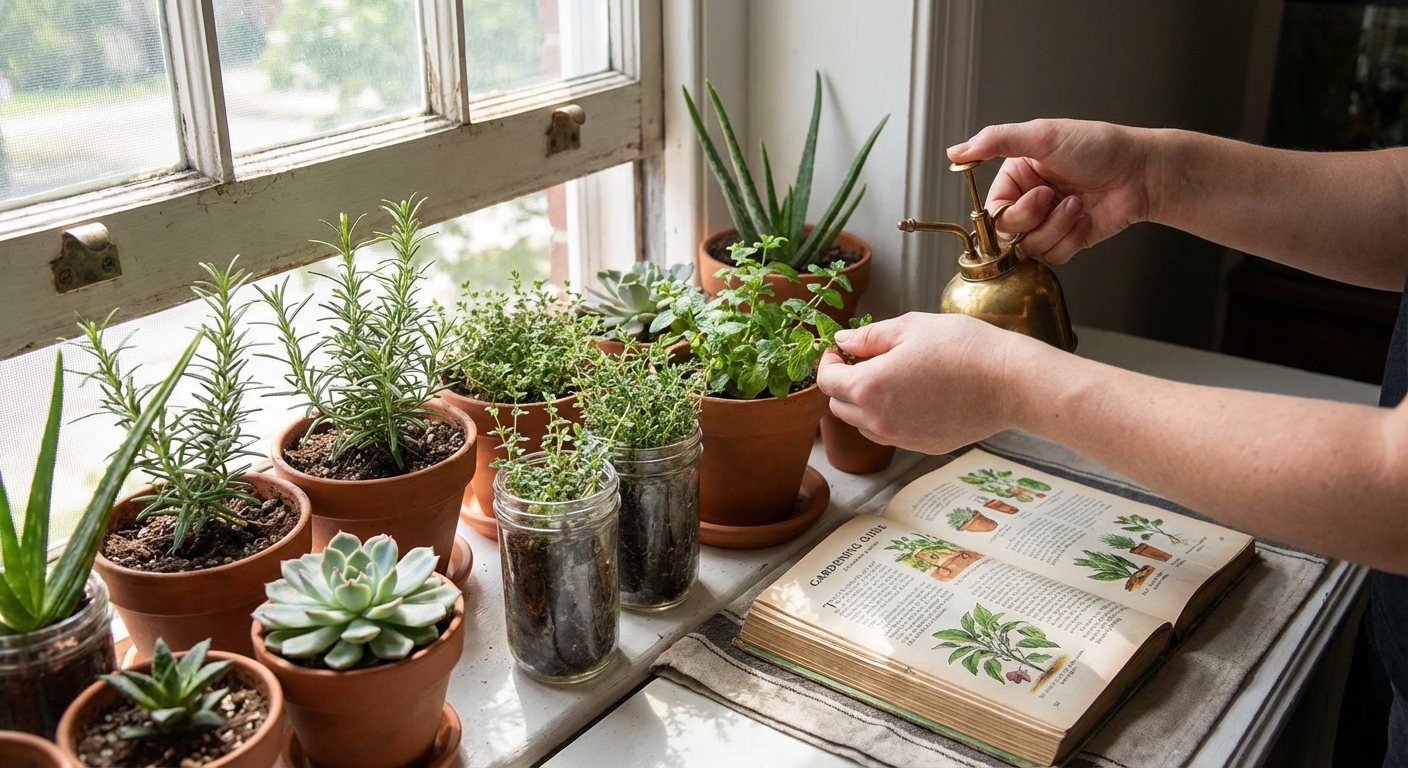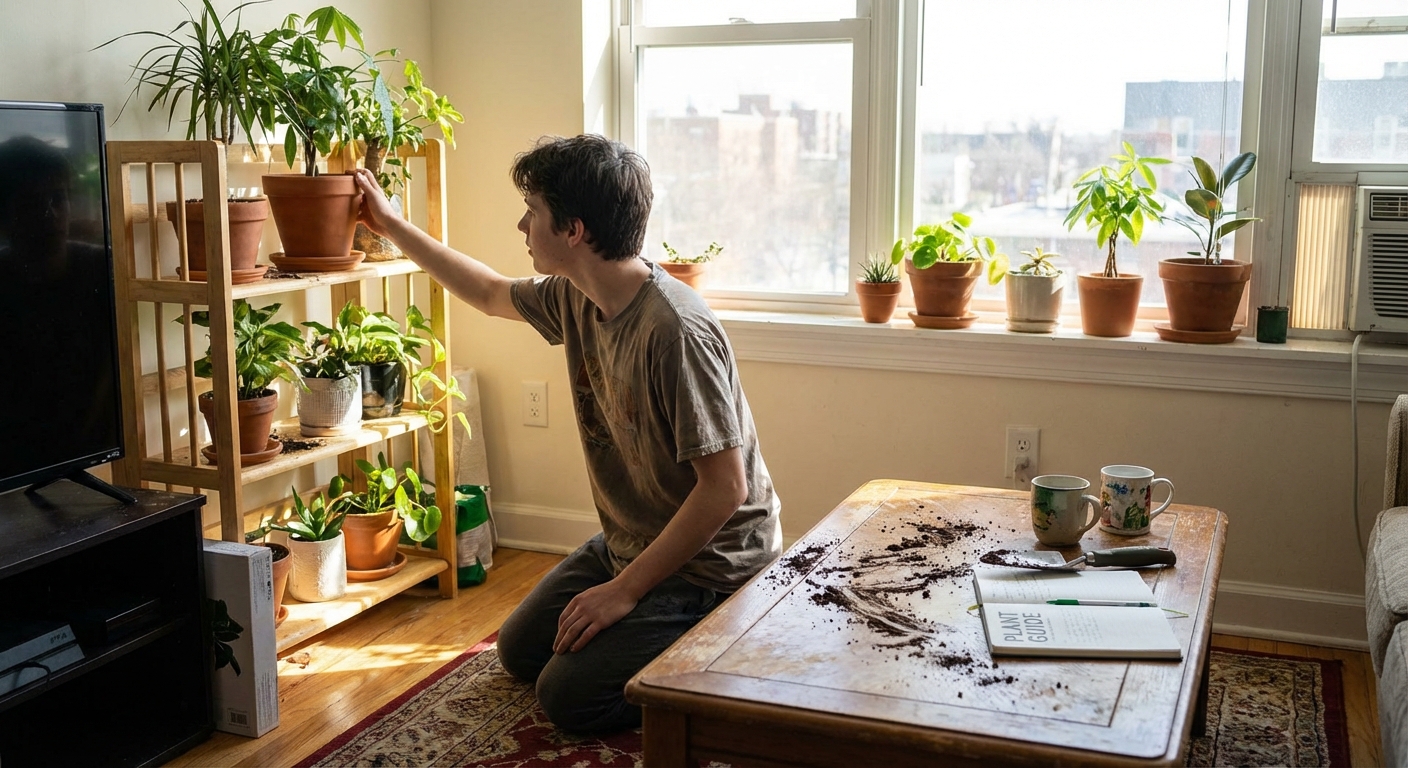
Many plant journeys begin with a single pot on a sill. Over time, one plant becomes two, then five, then a cozy cluster. In small homes, this growth needs to be thoughtful to stay soothing instead of overwhelming.
Growing a Collection Slowly and Kindly
This roadmap is designed for plant parents who want to expand gently—building a compact, harmonious collection that fits their space and their energy, with calm guidance at every step.
Stage 1: The First Plant – Learning Your Rhythm
Your first plant teaches you how you like to care.
Good First Choices
- Snake Plant (Dracaena trifasciata) for nearly any light.
- Pothos (Epipremnum aureum) if you enjoy visible, vining growth.
- ZZ Plant (Zamioculcas zamiifolia) if you’re often busy or traveling.
Focus skills:
- Learning to check soil with your finger.
- Noticing how light moves through your space.
- Getting comfortable with small imperfections.
Common early mistake: Overwatering out of enthusiasm. If you’re unsure, wait another day; most beginner plants prefer slightly dry soil to soggy conditions.
Stage 2: The Second Plant – Balancing Needs
Once your first plant feels stable, add a second that has similar needs but a different shape.
Examples of Harmonious Pairs
- Snake Plant + ZZ Plant
- Both tolerate low light and infrequent watering.
- Create a minimalist, upright pairing.
- Pothos + Heartleaf Philodendron
- Both enjoy medium to bright, indirect light.
- Offer two styles of trailing foliage.
- Peperomia + Small Fern (e.g., Asplenium nidus, bird’s nest fern) in medium light
- Both like consistent, but not soggy, moisture.
Guiding principle: Your second plant should work with your existing routine, not require an entirely new one.
Stage 3: The Third and Fourth Plants – Introducing Variety
Once you’re comfortably caring for two, you can begin to play with texture and height.
Add a Different Form
- If you have two upright plants, add a trailer (pothos, philodendron, string of hearts).
- If you have two trailers, add an upright anchor (ZZ, snake plant, compact rubber plant).
Species-Specific Ideas
Rubber Plant (Ficus elastica, compact varieties)
- Light: Bright, indirect; tolerates some morning sun.
- Water: When top 3–5 cm (1–2 in) are dry.
- Note: Wipe leaves occasionally to support photosynthesis in low-light apartments.
Bird’s Nest Fern (Asplenium nidus)
- Light: Medium, indirect; avoid harsh sun.
- Water: Keep soil slightly moist; never let it fully dry.
- Humidity: Appreciates a bit more humidity; a bathroom with a window is ideal.
Common mistake: Putting ferns next to radiators or AC units. Brown, crispy fronds often indicate dry air or inconsistent watering.
Stage 4: Creating Your First “Plant Zone”
Rather than spreading plants across every surface, cluster a few together into a defined zone.
Zone Ideas for Small Spaces
- Living Room Corner: One floor plant + two smaller plants on a side table.
- Bedroom Dresser: Three small to medium plants, leaving some open space.
- Kitchen Counter Niche: A herb pot (if you have enough light) + one foliage plant.
How to Arrange for Calm
- Use odd numbers (3 or 5) to create natural-looking groupings.
- Mix heights: tall, medium, and low.
- Keep a consistent color story—mostly greens with a few variegated leaves.
Grouping plants also creates a slightly more humid microclimate, which many species enjoy.
Stage 5: Seasonal Awareness as Your Collection Grows
As you add more plants, seasons matter more—both for the plants and for your time.
Spring
- Best time for repotting and gentle fertilizing.
- Let new plants settle for a few weeks before feeding.
Summer
- Heat and light intensify; water needs may increase.
- Watch for signs of stress: leaf curl, bleaching, or drooping at midday.
Autumn
- Reduce fertilizing; allow growth to slow.
- This is a good time to evaluate: Do you have the capacity for more plants?
Winter
- Light is lower; some plants may need to move closer to windows.
- Water less and deeply; overwatering in winter is a common issue.
Gentle Troubleshooting for Growing Collections
Feeling Overwhelmed
If tending your plants starts to feel like a chore:
- Pause acquiring new plants.
- Simplify by grouping plants with similar needs together.
- Consider rehoming any plant that consistently struggles in your space.
Your well-being comes first; your plants will reflect the calm you give yourself.
Pest Concerns in Small Spaces
With more plants in close quarters, pests can spread easily—but they can be managed quietly and methodically.
- Spider mites: Look for fine webbing and stippled leaves.
- Mealybugs: White, cottony clusters in leaf joints.
Calm response:
- Isolate the affected plant, if possible.
- Gently wipe leaves with a soft cloth and mild soapy water.
- Rinse with lukewarm water.
- Repeat weekly as needed.
Avoid harsh chemicals indoors, especially in very small spaces. Consistency is often more effective than intensity.
Uneven Growth Across the Collection
Some plants will race ahead while others linger.
- Rotate plants every few weeks to share available light.
- Accept that some species are naturally slower; slow growth can still be healthy.
Stage 6: Honoring a Healthy Limit
There is a quiet, personal number of plants that feels just right in your home. It may be 5, 10, or more—but it doesn’t need to match anyone else’s collection.
Signs you’re near your healthy limit:
- You remember each plant’s basic needs without strain.
- Watering feels like a peaceful routine, not a race.
- You have time to notice new leaves, not just dry soil.
If you’re tempted to add more, ask:
- Do I have a comfortable spot with suitable light?
- Will this plant fit my existing routine?
If the answer is no, it’s perfectly okay to admire from afar.
Growing With Grace
Expanding an indoor plant collection in a small space is less about the number of plants and more about the quality of your relationship with them.
Move slowly between stages. Sit with each new addition until it feels familiar. Let your plants teach you patience, observation, and acceptance.
From one pot to many, your small-space garden can remain a soft, living backdrop to your life—always there, always growing, at a pace that feels just right for you.
Key Takeaway
The most important thing to remember from this article is that this information can change how you think about Small-Space Gardens.