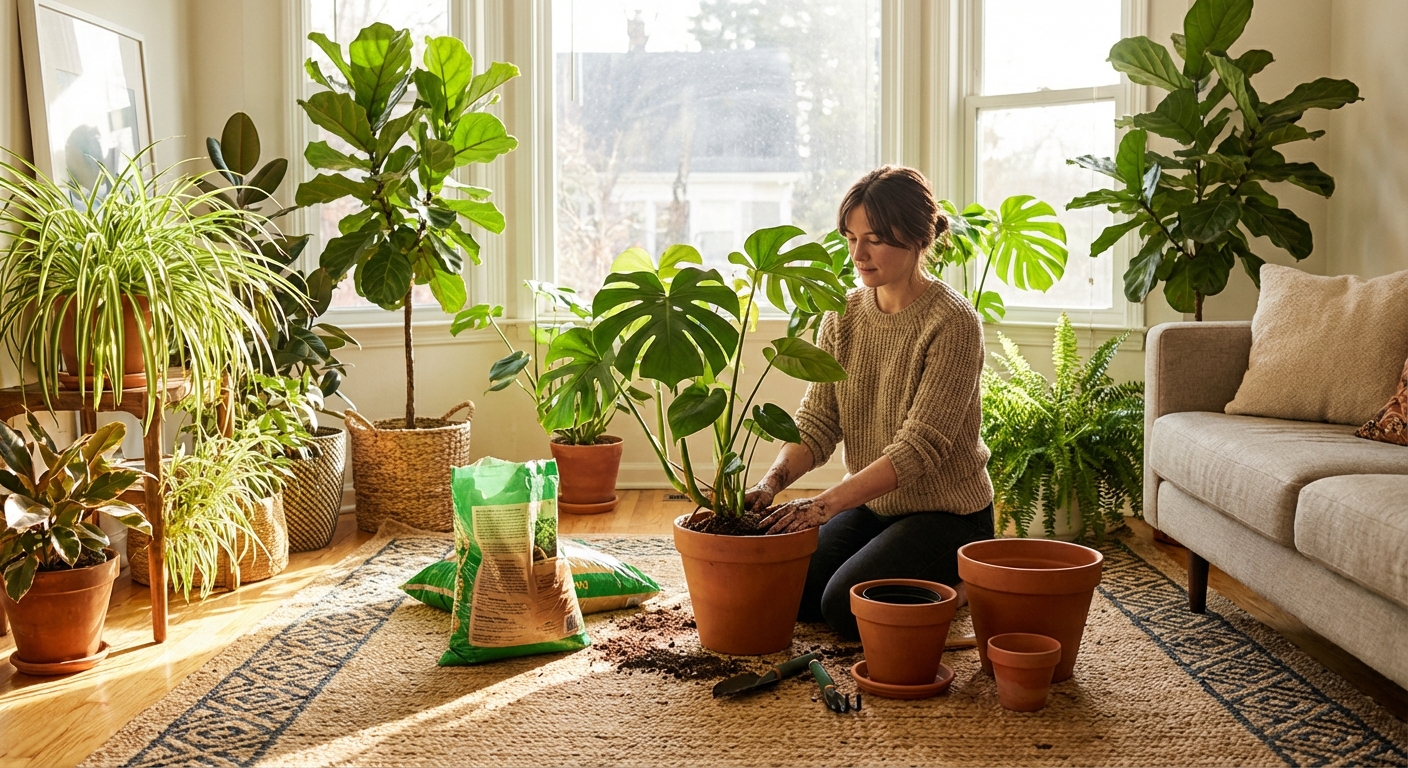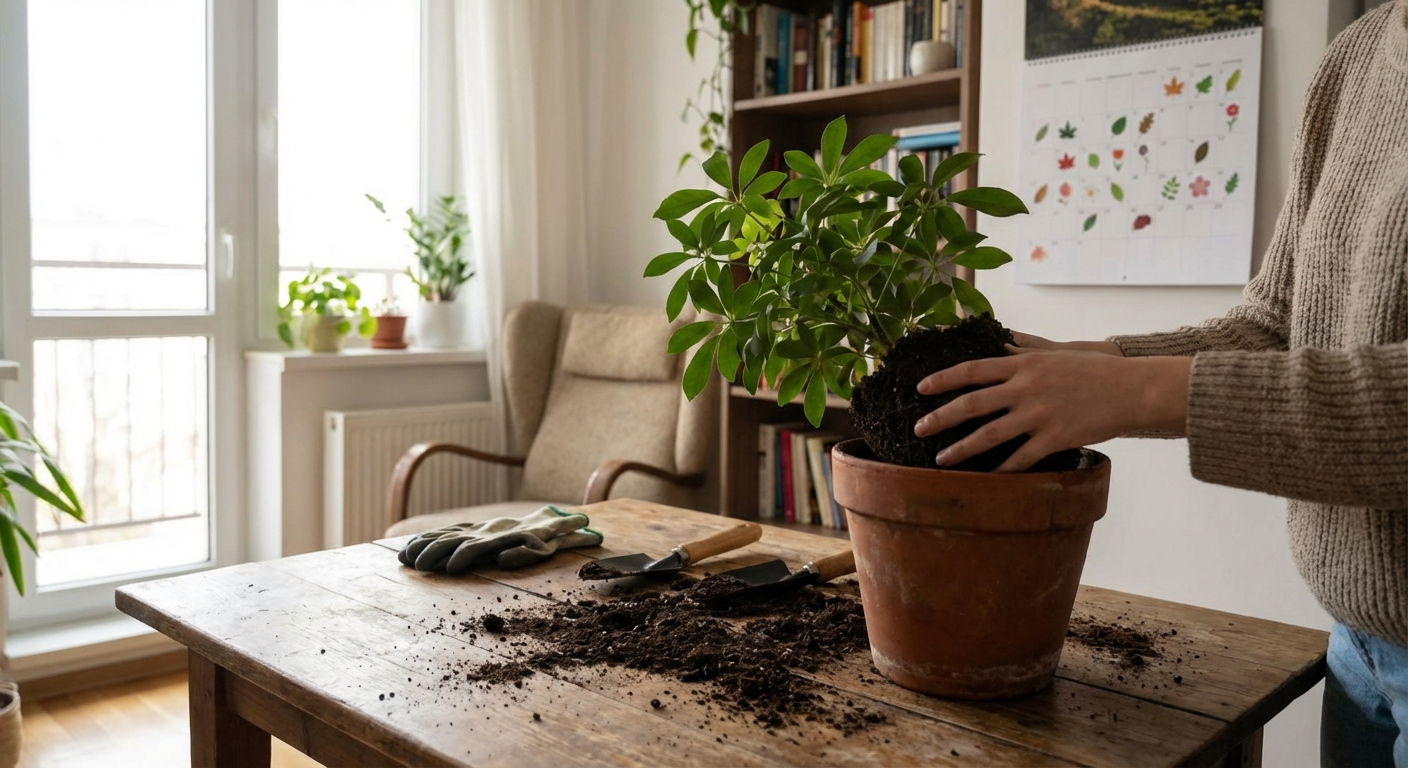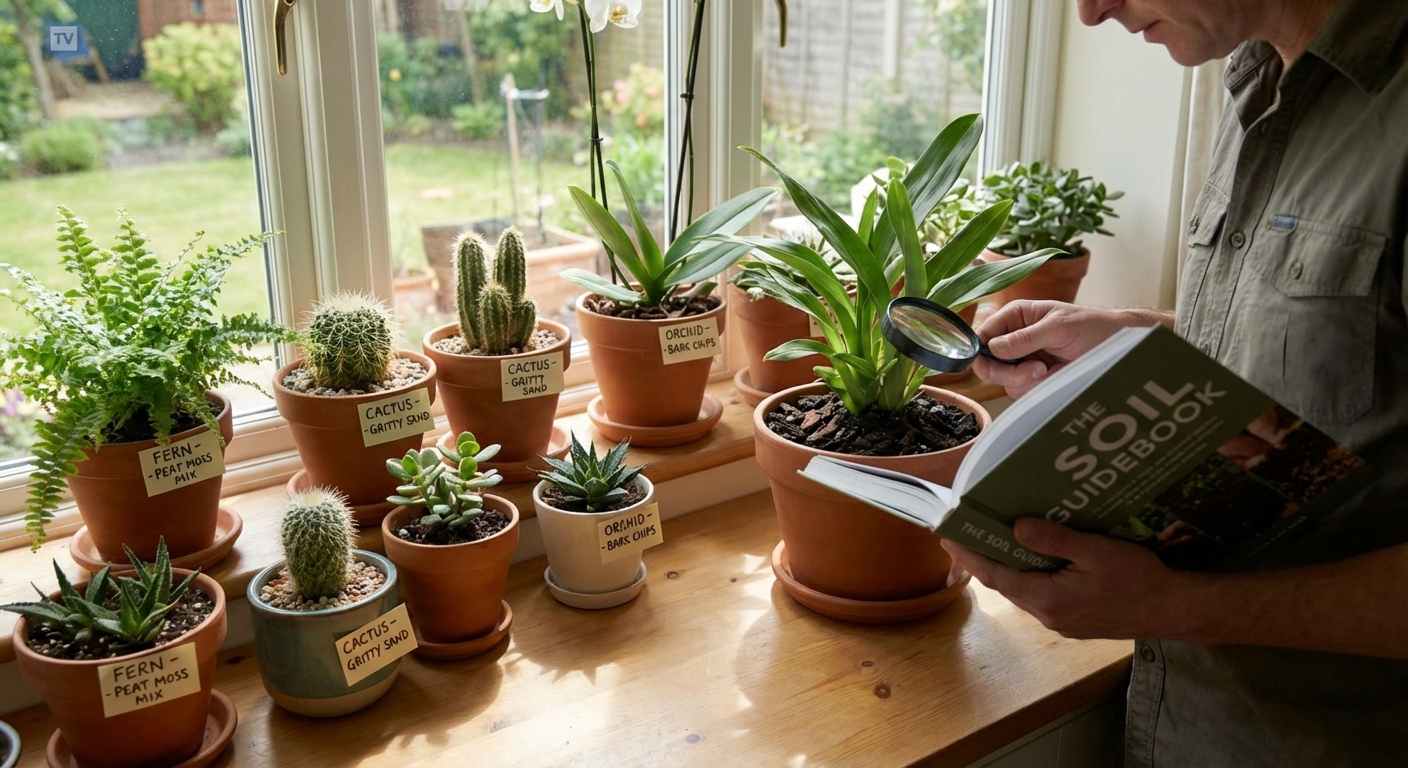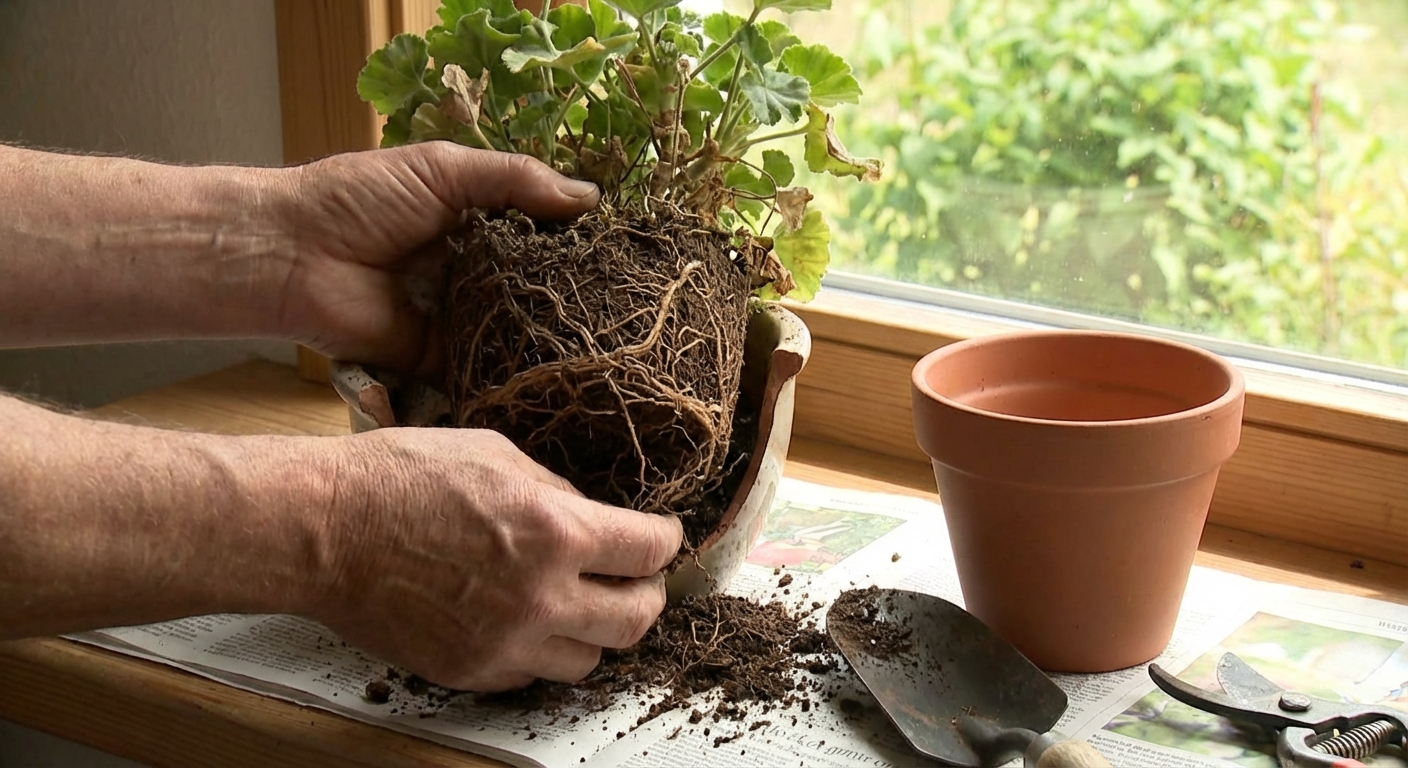
Even when we repot with great care, some plants respond with drooping leaves, yellowing, or slowed growth. This isn’t a failure—it’s simply a response to change. Roots that were used to one level of moisture, oxygen, and space suddenly need to recalibrate.
Understanding Repotting Stress With Compassion
This guide offers gentle, practical troubleshooting for repotting‑related issues, along with species‑specific hints to help your plants move from root‑bound to root‑balanced with minimal drama.
Before You Repot: A Quick Self‑Check
Sometimes, the best way to avoid repotting stress is to pause and ensure it’s truly time.
Ask yourself:
Is my plant actually root‑bound?
- Roots strongly circling, thickly matting the rootball, or pushing through drainage holes.
Is there a clear reason to repot now?
- Severe crowding, poor soil quality, root rot, or a pot that cannot structurally contain the plant.
Is this the right season?
- Spring and early summer are gentlest; winter is best reserved for emergencies.
If the answer to any is uncertain, it may be kinder to wait and observe a bit longer.
Common Repotting Symptoms—and What They’re Telling You
1. Wilting or Drooping Leaves
Likely causes:
- Temporary root disturbance
- Overwatering in a new, more moisture‑retentive mix
- Heat or light stress immediately after repotting
Gentle responses:
- Provide bright, indirect light—avoid harsh direct rays.
- Check soil with your finger or a moisture meter before watering again.
- Increase humidity around the plant (tray with pebbles and water, grouping plants) without drenching the soil.
Most plants perk up in 1–3 weeks if conditions are stable.
2. Yellowing Leaves Post‑Repot
Possible meanings:
- Normal shedding of older leaves in response to stress
- Roots staying too wet in a larger pot
- Fertilizer shock if soil is very rich or fertilizer was added directly to roots
What to do:
- Remove only the most yellowed or mushy leaves; let slightly yellow leaves remain if they still contribute to photosynthesis.
- Ensure there’s no standing water in saucers.
- Avoid fertilizing for 4–6 weeks post‑repot; fresh soil usually has enough nutrients.
If yellowing moves rapidly through newer growth, gently check the root zone for rot.
3. Soil Staying Wet for Days
Possible meanings:
- Pot size was increased too much.
- Mix is too dense or water‑retentive for the species.
- Cooler temperatures or low light are slowing evaporation.
Gentle responses:
- Increase airflow: use a small fan on a low, indirect setting nearby.
- Let the plant dry more thoroughly before the next watering.
- For moisture‑sensitive species (succulents, snake plants), consider carefully lifting and amending the top layer with perlite or bark until a full repot is safer.
If rot is already present, a more direct intervention is needed.
4. Root Rot After Repotting
Root rot can be scary, but early action is often effective.
Signs to watch for:
- Sour or swampy smell from soil
- Soft, black or dark brown roots
- Sudden collapse of stems or leaves despite moist soil
Step‑by‑step emergency care:
- Gently unpot the plant.
- Rinse roots lightly in lukewarm water.
- With sterilized scissors or pruners, trim away all mushy, dark roots.
- Dust cuts with cinnamon powder (a natural, mild antifungal) if available.
- Repot into a smaller, well‑draining pot with a lighter mix.
- Water sparingly and place in bright, indirect light.
Then, wait. New growth may take a few weeks or more, but many plants recover with patience.
Species‑Specific Repotting Sensitivities
Fiddle Leaf Fig (Ficus lyrata)
- Tendency: Dislikes sudden change—especially in light, soil, and pot size all at once.
- Signs of stress: Drooping, brown spots, leaf drop.
- Gentle strategy:
- Move up only one pot size.
- Avoid heavy root teasing unless rot is present.
- Keep it in the same light position post‑repot to minimize variables.
Peace Lily (Spathiphyllum)
- Tendency: Shows stress with drooping but usually rebounds.
- Signs of stress: Limp leaves, failure to flower for a while.
- Gentle strategy:
- Use a moisture‑retentive mix, but avoid standing water.
- If droopy after repotting, check that roots haven’t been buried too deep and that the crown is above soil level.
Snake Plant (Sansevieria / Dracaena trifasciata)
- Tendency: Slow to react, but overpotting can silently cause rot.
- Signs of stress: Yellowing or mushy leaves from the base upward.
- Gentle strategy:
- Choose a pot just barely larger than the previous.
- Always use a gritty, fast‑draining mix; treat them more like succulents than leafy houseplants.
Monstera deliciosa
- Tendency: Generally tolerant but vulnerable to heavy, compacted soil.
- Signs of stress: Persistent droop, yellow lower leaves, blackened stems near soil.
- Gentle strategy:
- Use a chunky aroid mix with bark and perlite.
- Provide a support (stake or moss pole) during repotting so roots feel anchored.
A Calm, 10‑Step Repotting Checklist
Use this nurturing checklist to reduce stress for both you and your plants:
- Choose the right moment (preferably spring or early summer).
- Select a pot just one size bigger, with drainage.
- Prepare an appropriate mix for the plant species.
- Water the plant lightly a day before repotting.
- Gently remove from the old pot; support stems and loosen sides.
- Inspect and prune roots only where clearly dead, rotten, or excessively circling.
- Set the plant at the same depth as before—crown above soil.
- Fill in with soil without compacting too firmly; tap pot to settle.
- Water thoroughly once, then let it drain fully.
- Place in stable conditions with bright, indirect light and no drafts.
This sequence supports root health and helps plants adjust with minimal shock.
When Repotting Isn’t the Answer
It can be tempting to see repotting as a remedy for every issue, but often the root of the problem (literally and figuratively) lies elsewhere.
Consider waiting instead of repotting if:
- A new plant is adjusting to your home (give it a few weeks in its nursery pot).
- Only the top leaves are struggling while new growth looks healthy.
- Light, humidity, or watering are likely causes of distress.
Small actions can bring big relief:
- Adjusting the plant closer to a window.
- Adding a humidity tray for tropicals.
- Ensuring complete drying between waterings for drought‑loving species.
Creating a Calm Recovery Environment
After repotting, your plant needs time and consistent care more than anything.
Support recovery with:
- Stable light: Bright, indirect light is soothing and effective for most species.
- Steady temperature: Avoid drafts, frequent temperature swings, or direct blasts from heaters and AC units.
- Moderated watering: Resist the urge to “nurse” your plant with extra water; balance is more helpful than abundance.
Talk to your plants if it feels natural; many plant parents find it relaxing. While your words won’t alter biology, your calmer presence often leads to more thoughtful, gentle care.
Trusting Time and Small Signs of Progress
Repotting is a short event, but recovery unfolds over weeks. Look for small signs that your plant is adjusting:
- A new leaf, however tiny
- Firmer stems after a droopy phase
- Roots appearing at drainage holes months later, showing healthy growth
With each repot, you build a quieter understanding of what your plants need below the soil line. Over time, moving them from root‑bound to root‑balanced becomes less about fixing problems and more about honoring growth—offering space, support, and the patience to let them adapt at their own pace.
Key Takeaway
The most important thing to remember from this article is that this information can change how you think about Repotting & Soil.