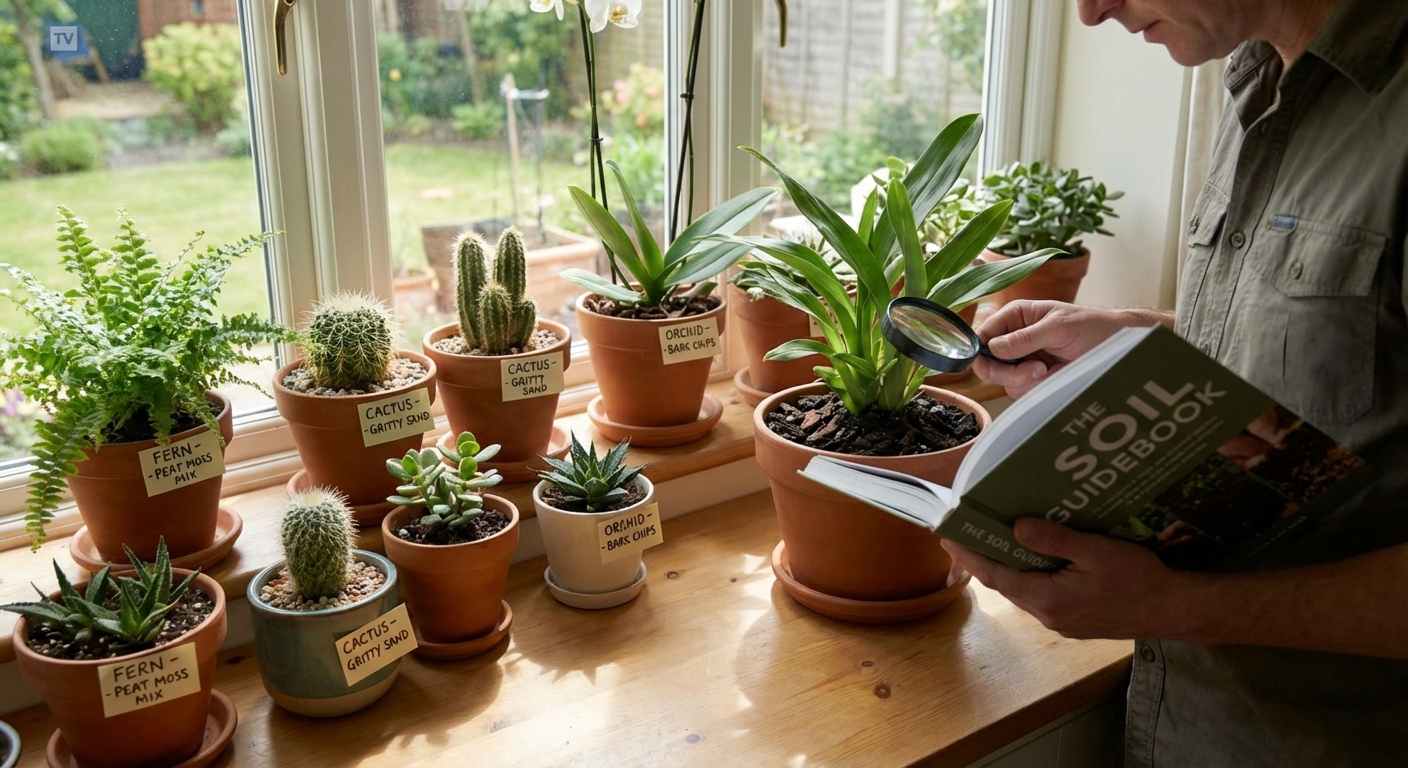
Just as each plant has its own leaf shape, growth habit, and light preference, it also has a distinct relationship with soil. Some crave constant moisture, others want their roots to dry quickly, and many prefer an airy balance somewhere in between.
Why One‑Size‑Fits‑All Soil Rarely Fits Anyone
Think of soil as your plant’s home and pantry: it supports, anchors, hydrates, and nourishes. When we tailor that home to the plant’s natural habits, repotting becomes far less stressful and everyday care feels easier.
This guide explores soil "personalities" and helps you choose or blend potting mixes for specific indoor plant groups—with a calm emphasis on observation and gentle adjustment.
The Three Traits That Define Soil Personality
Before diving into specific plants, it helps to understand soil by three key traits:
- Drainage – How quickly water moves through and out of the pot.
- Aeration – How much air space exists between particles for roots to breathe.
- Moisture Retention – How much water the mix holds onto for later use.
Different plant species evolved with different combinations of these traits. A rainforest epiphyte and a desert succulent will never agree on the "perfect" mix—and that’s okay.
Aroids: Monstera, Philodendron, Pothos & Friends
Natural habitat: Many aroids grow as climbers or epiphytes in tropical forests, with roots in loose, decomposing organic matter rather than compact ground soil.
Soil personality: Airy, chunky, and rich—but never waterlogged.
Ideal Aroid Mix
A soothing, reliable starting blend:
- 40% high‑quality indoor potting mix (peat‑free if possible)
- 30% orchid bark (medium grade)
- 20% perlite or pumice
- 10% compost or worm castings
Species Notes
- Monstera deliciosa & Monstera adansonii: Appreciate extra bark and chunky texture; they like to send roots into airy pockets.
- Philodendron (heart‑leaf, Brazil, micans): Similar to Monstera but can tolerate slightly finer textures; avoid heavy, soggy mixes.
- Pothos (Epipremnum aureum): Quite forgiving; does well in standard indoor mix with added perlite and a bit of bark.
Common Aroid Soil Mistakes
- Using dense, garden‑style soil with little drainage.
- Repotting into a much larger pot, causing prolonged wetness.
Gentle fix: Add bark and perlite on your next repot. Until then, water less often and ensure the top few centimeters fully dry between waterings.
Prayer Plants & Their Kin: Calathea, Maranta, Stromanthe
Natural habitat: Tropical forest floors with consistently moist, humus‑rich soil and high humidity.
Soil personality: Evenly moist, soft, and rich in organic mater—never bone‑dry, never swampy.
Ideal Mix for Prayer Plants
Try this peaceful, moisture‑balanced blend:
- 50% fine‑textured potting mix
- 25% coco coir (for stable moisture)
- 15% perlite
- 10% fine bark or leaf mold
Species Notes
- Calathea orbifolia, medallion, rattlesnake: Sensitive to salts and chemicals; avoid soils heavily enriched with synthetic fertilizers.
- Maranta leuconeura (Prayer Plant): Likes consistently damp soil; a slightly more aerated version of the above mix works well.
Common Mistakes
- Letting soil dry completely, causing crisp edges and leaf curl.
- Over‑compensating with very wet soil, leading to root issues.
Gentle fix: Think "damp sponge" rather than "wet cloth." Water when the top 2–3 cm feel just barely dry, not dusty.
Desert Dwellers: Cacti & Succulents
Natural habitat: Arid regions with intense light, sandy or rocky soil, and infrequent but thorough rainfall.
Soil personality: Fast‑draining, lean, and gritty—water should move through quickly and not linger.
Ideal Cactus & Succulent Mix
A basic, trustworthy blend:
- 50% commercial cactus/succulent mix
- 25% pumice or coarse perlite
- 25% coarse sand or small-grain grit
If you only have regular potting soil, you can approximate by mixing:
- 1 part potting mix
- 1 part coarse perlite or pumice
- 1 part coarse sand
Species Notes
- Aloe vera & Haworthia: Prefer bright light and a very well‑draining mix; they are prone to root rot if overwatered.
- Echeveria: Rosette succulents that resent moisture near their crowns; good drainage plus top watering directly onto soil is key.
Common Mistakes
- Planting succulents in decorative, non‑draining containers.
- Using regular indoor potting mix that holds too much water.
Gentle fix: Next repot, switch to a gritty mix and a pot with drainage. In the meantime, let soil dry fully and water less frequently.
Tropical Humidity Lovers: Ferns
Natural habitat: Shady, humid understories or tree trunks with constant moisture and airflow.
Soil personality: Light, fluffy, moisture‑retentive, and rich in organic matter.
Ideal Fern Mix
A soothing, soft blend:
- 60% peat‑free potting mix or coco coir base
- 20% perlite (for some aeration)
- 20% fine bark or chopped sphagnum moss
Species Notes
- Boston fern (Nephrolepis exaltata): Likes high humidity and evenly moist soil; avoid allowing the rootball to dry out.
- Maidenhair fern (Adiantum): Particularly sensitive to dryness; benefits from smaller pots, frequent gentle watering, and consistently moist soil.
Common Mistakes
- Letting them dry out completely between waterings.
- Placing them near heaters or drafts that strip humidity.
Gentle fix: Increase humidity around the plant and ensure the soil mix holds moisture without becoming heavy. Short, frequent checks are kinder than long gaps.
Sturdy Architectural Plants: Snake Plants & ZZ Plants
Natural habitat: Regions with seasonal drought and lean soils, often in bright shade.
Soil personality: Very well‑draining, slightly sandy, and low in organic density.
Ideal Mix for Snake & ZZ Plants
- 50% regular potting mix
- 25% perlite or pumice
- 25% coarse sand or fine grit
Species Notes
- Snake Plant (Sansevieria/Dracaena trifasciata): Tolerates a wide range, but thrives in a gritty mix. Likes to dry fully between waterings.
- ZZ Plant (Zamioculcas zamiifolia): Stores moisture in rhizomes; appreciates a similar, well‑draining, low‑frequency watering regime.
Common Mistakes
- Overly rich, moisture‑heavy soil causing root and rhizome rot.
- Large pots that stay wet for too long.
Gentle fix: Move to a slightly smaller or better‑draining pot next time. Until then, water less often and verify dryness deep in the pot before watering.
Orchids & Epiphytes: Roots That Want to Breathe
Natural habitat: Growing on trees with roots exposed to air, rain, and brief drying periods.
Soil personality: Hardly "soil" at all—these plants prefer barky, airy, fast‑drying substrates.
Ideal Epiphyte Mix
For many common indoor orchids and epiphytes:
- 60% orchid bark (medium to large pieces)
- 20% sphagnum moss (used sparingly around roots)
- 20% perlite or pumice
Species Notes
- Phalaenopsis orchids: Enjoy bark mixes with pockets of moisture but lots of air; repot every 1–2 years as bark breaks down.
- Hoya: Like aroid mixes with extra bark and perlite; aim for airy and quick‑draining.
Common Mistakes
- Planting orchids in regular potting soil.
- Keeping moss constantly soaked, suffocating roots.
Gentle fix: Gradually transition to a bark‑based mix during the growing season and adopt a soak‑and‑dry approach.
Recognizing When Soil Personality and Plant Don’t Match
Your plant will often show you when its soil isn’t quite right:
- Consistent wetness + yellowing leaves: Too much moisture retention, not enough air.
- Very fast drying + limp, thin leaves (on moisture‑loving plants): Too gritty for that species.
- Mushroom or mold growth: Often a sign of consistently wet, organic‑heavy soil; usually harmless but a clue to reassess watering and drainage.
You don’t always need to repot immediately. Sometimes small adjustments—allowing more drying time, improving drainage in the cachepot, or gently aerating the top layer—can ease the mismatch until the next ideal repotting window.
A Calm Approach to Custom Mixes
You don’t need dozens of ingredients or complex recipes. Start with a simple base and a few amendments:
- A good potting mix for general structure
- Perlite or pumice for drainage and aeration
- Bark for chunkiness and epiphytes
- Coco coir or compost for moisture and nutrients
Observe how your plant and soil behave together:
- Does the soil stay wet too long? Add more drainage (perlite, pumice, bark).
- Does it dry out too quickly for your schedule? Add a little coco coir or compost.
Gentle, incremental changes over time will teach you more than any single recipe. Trust what you notice. Your plants will let you know when their soil home feels just right.
Key Takeaway
The most important thing to remember from this article is that this information can change how you think about Repotting & Soil.