Drooping, yellowing, and browning are often blamed on "too much" or "not enough" water—but telling the difference can feel confusing. This calm comparison guide helps you read the signs so you can respond with confidence, not guesswork.
When Leaves Droop, Which Is It?
We’ll look at how overwatering and underwatering differ in symptoms, feel, and timing, with species‑specific notes to guide your care.
The Big Picture Difference
- Overwatering is usually about frequency and drainage, not just the amount in one session. Roots sit wet too long and begin to suffocate or rot.
- Underwatering happens when roots go dry for longer than they can comfortably manage, causing cells to lose turgor (firmness).
Both can cause wilting—but the clues around them are different.
How the Soil Feels: Your First Clue
Gently press a finger 2–5 cm into the soil or use a moisture meter.
Overwatered Soil
- Feels cool, heavy, and consistently damp
- May smell sour or swampy
- Often compacts, pulling away from pot edges less
- Feels dry, dusty, and sometimes warm
- May pull away from the pot edges
- Pot feels very light when lifted
Underwatered Soil
Gentle tip: If the soil is still moist several days after watering and the plant looks worse, suspect overwatering.
Leaf Symptoms Side by Side
Color Changes
Overwatered
- Yellowing leaves that are soft or easily fall off
- Sometimes brown spots that appear water‑soaked or mushy
- Yellowing may appear but is often accompanied by crisp, papery texture
- Brown tips and edges that feel dry and brittle
Underwatered
Texture and Feel
Overwatered
- Leaves may be limp but still feel swollen or soft
- Stems can turn mushy at the base
- Leaves feel thin, papery, or wrinkled
- Entire plant may look smaller or slightly shriveled
Underwatered
Timing and Behavior
Overwatering Patterns
- Decline can be gradual and persistent.
- Plant doesn’t recover much after watering; sometimes looks worse.
- Older leaves often yellow first.
- Plant perks up noticeably soon after a deep watering.
- Wilting appears most in hot, bright periods and eases after watering.
- Soil clearly dry when symptoms appear.
Underwatering Patterns
If your plant bounces back quickly after water, it was likely underwatered. If it continues declining or worsens, overwatering or root issues may be involved.
Species‑Specific Clues
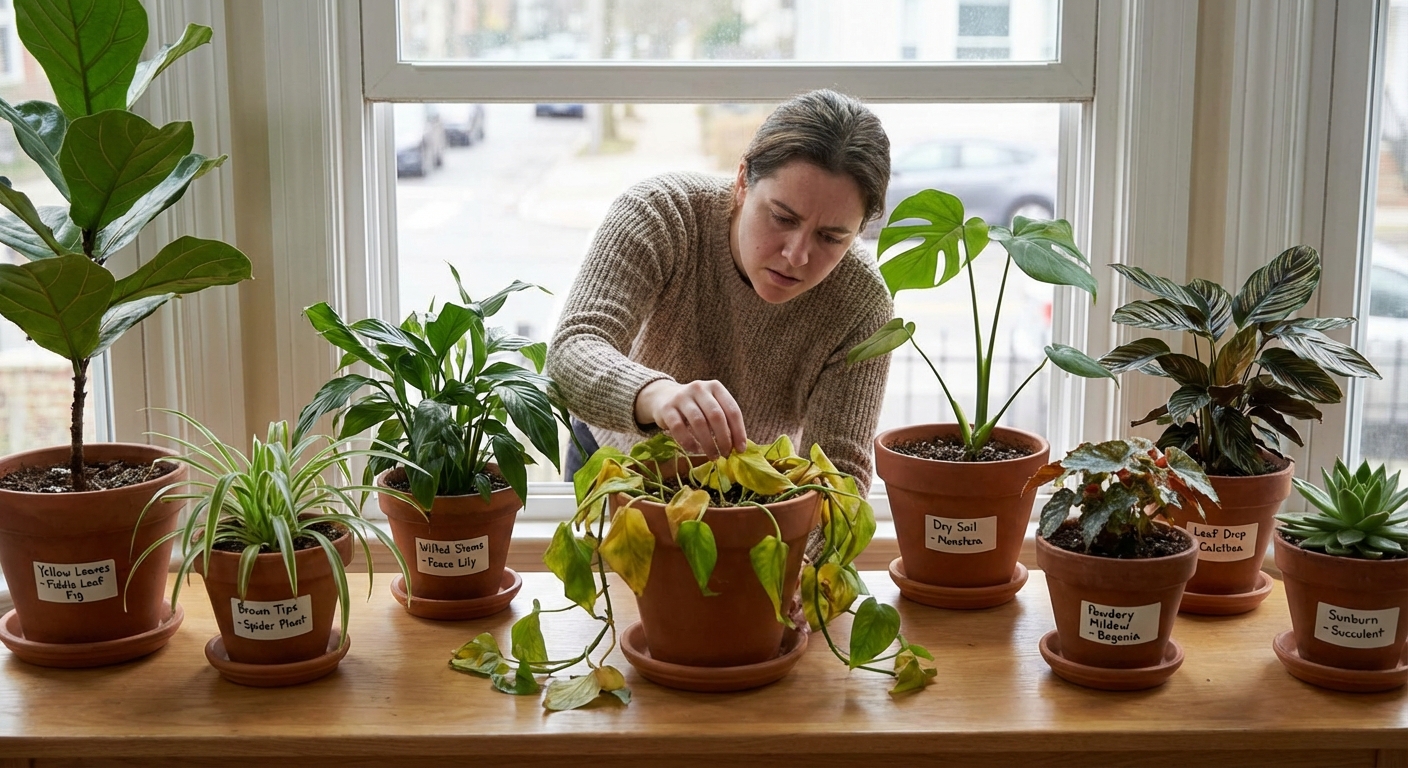
1. Peace Lily (Spathiphyllum)
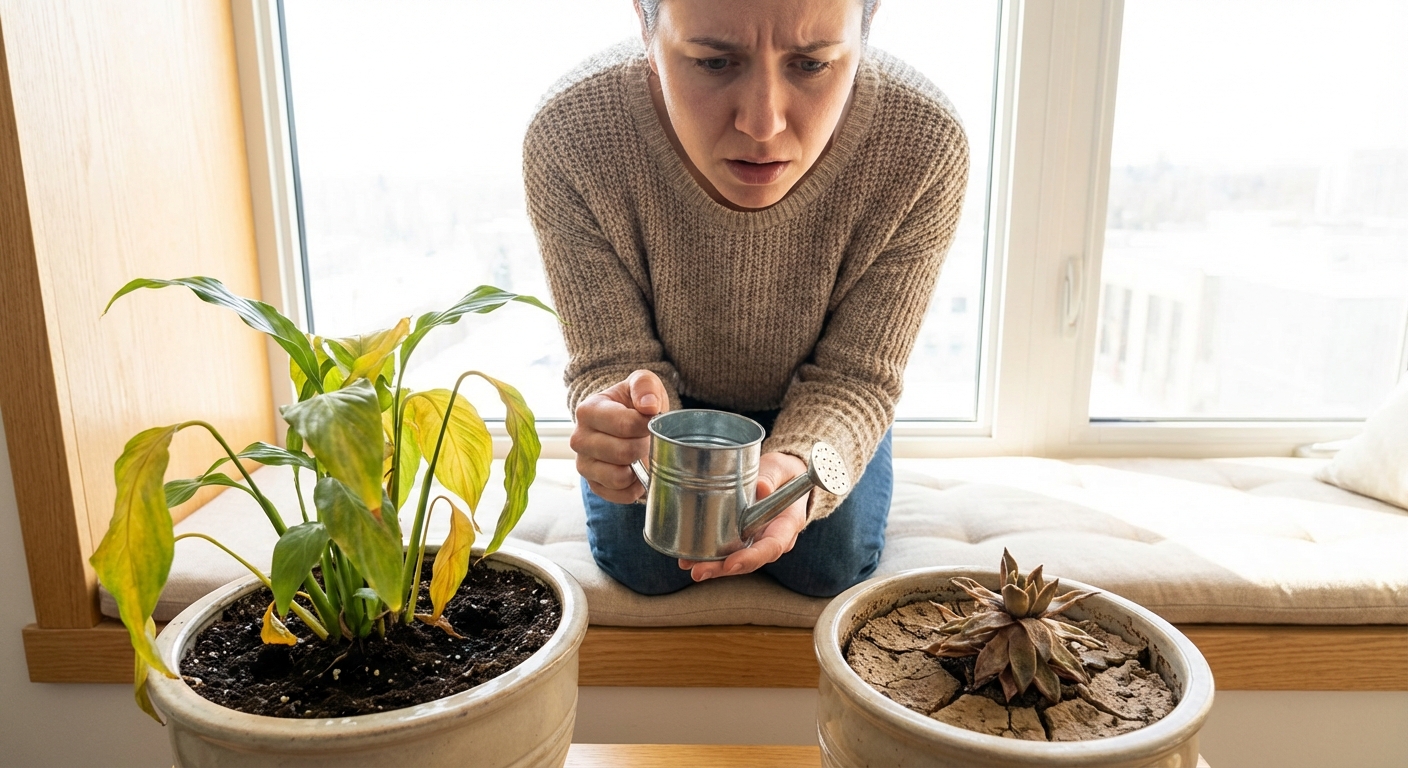
- Underwatered: Dramatic drooping but quick revival within hours of watering; brown, crispy tips possible.
- Overwatered: Yellowing leaves, drooping that doesn’t fully recover, and soil that stays wet for days.
Gentle approach: Keep soil evenly moist, allowing just the top centimeter to dry before watering again.
2. Snake Plant (Sansevieria)
- Underwatered: Leaves may wrinkle slightly or lean but remain firm. This plant tolerates quite a lot of dryness.
- Overwatered: Mushy leaves, often collapsing at the base; roots dark and rotten.
Gentle approach: Err strongly on the dry side. Use a gritty mix and water deeply but infrequently.
3. Fiddle Leaf Fig (Ficus lyrata)
- Underwatered: Leaves can droop and edges brown slightly, especially in very bright light. Soil clearly dry.
- Overwatered: Brown spots, often in the center or edges of leaves; multiple leaves yellowing and dropping; soil staying moist.
Gentle approach: Let the top 5 cm of soil dry before watering. Keep light bright to help the plant process moisture.
4. Pothos & Philodendron
- Underwatered: Vines look limp, leaves curl slightly inward, soil very dry; plant usually perks up after a thorough drink.
- Overwatered: Pale yellow leaves, especially older ones; may drop; stems at soil level could soften.
Gentle approach: Water when the top 2–3 cm are dry and the pot feels lighter, especially in lower light.
Root and Pot Signals
If symptoms are unclear, the roots can tell you more.
How to Check Gently
- Support the soil surface with your fingers.
- Tip the pot sideways and slowly slide the plant out.
- Brown or black, soft, sometimes foul‑smelling
- May break easily when tugged
- Dry and brittle, or thin and wiry
- Soil may crumble away easily
Overwatered Roots
Underwatered Roots
What to Do Next
- For overwatered plants:
- Trim away mushy, dark roots with sterile scissors.
- Repot into fresh, well‑draining soil and a pot with drainage holes.
- Water lightly at first, then allow some drying between waterings.
- For underwatered plants:
- Soak the soil thoroughly, allowing water to drain fully.
- If soil is hydrophobic (water runs off), bottom‑water by placing the pot in a tray of water for 20–30 minutes.
- Consider repotting in fresh mix if the soil has degraded and no longer holds moisture evenly.
Seasonal Context: Same Plant, Different Needs
Your watering pattern should flex with the seasons:
- Winter: Less light = slower drying soil; overwatering is common.
- Summer: Faster evaporation = more frequent watering; underwatering more likely.
- A monstera that needed water every 5–7 days in summer might only need watering every 10–14 days in winter.
Example:
Adjust your routine, not just your diagnosis.
A Gentle Watering Framework
Instead of a strict schedule, use this calm, three‑step ritual:
Check
- Feel the soil. Lift the pot. Notice leaf posture. - Compare with your plant’s usual "thirsty" cues.
Decide
- If the top layer is still moist and the plant doesn’t look thirsty, wait. - If dry to the depth your species prefers, plan to water.
Water Deeply, Then Rest
- Water until it drains from the bottom. - Discard excess water from saucers. - Let roots breathe before the next watering.
Over time, you’ll learn your plants’ rhythms: a peace lily’s dramatic wilt, a cactus’s stoic silence, a calathea’s leaf curling. With patience and gentle observation, "Is it too much or too little?" becomes a quiet, answerable question—not a source of stress.
Key Takeaway
The most important thing to remember from this article is that this information can change how you think about Plant Troubleshooting.