When a plant seems tired or its soil looks worn out, it’s easy to assume a full repot is the only option. In reality, you often have two kinder choices:
Two Gentle Paths: Full Repot vs. Simple Soil Refresh
- Repotting – Changing the pot size and much of the soil.
- Refreshing – Leaving the pot (and most roots) in place while renewing the soil around them.
Knowing which path to choose—and when—can reduce stress for your plants and for you. This comparison guide helps you decide calmly, with species‑specific notes and seasonal tips.
What Is a Full Repot?
A full repot means your plant moves into a new pot and typically receives new soil as well.
Best For
- Root‑bound plants: Roots circling, pot shape warping, roots pushing out drainage holes.
- Severe soil issues: Rotten, foul‑smelling, or extremely compacted soil.
- Major size changes: When the plant can’t stand upright or dries out within a day.
Pros
- More space for root growth.
- Opportunity to correct drainage or soil composition.
- Chance to prune damaged roots and examine overall health.
Cons
- Higher stress for the plant.
- Short‑term slowdown in growth or drooping.
- Requires more time, materials, and cleanup.
What Is a Soil Refresh?
A soil refresh means gently removing and replacing the top layer of soil (and sometimes opening up pockets around the pot edges) while keeping the plant in its existing pot.
Best For
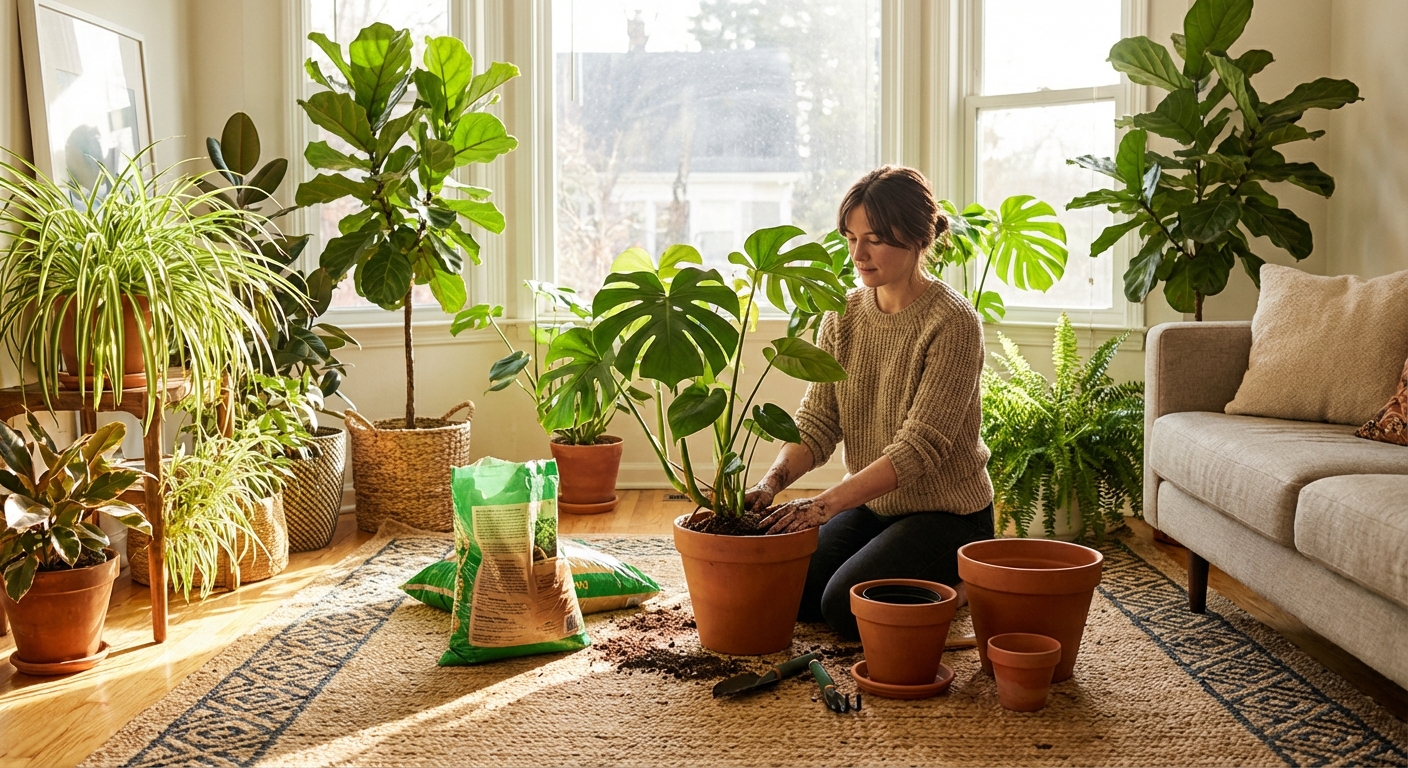
- Large plants that are hard to move (big Monsteras, indoor trees).
- Mild nutrient depletion without major root crowding.
- Off‑season care, such as autumn or winter when a full repot might be too disruptive.
Pros
- Minimal root disturbance.
- Quick mood and nutrient boost for the plant.
- Safer to do outside the peak growing season.
Cons
- Doesn’t solve severe root‑bound conditions.
- Won’t fully correct deep soil problems (like advanced rot).
Comparing Signs: Repot or Refresh?
Here’s a calm way to read your plant’s signals.
Signs Pointing to a Full Repot
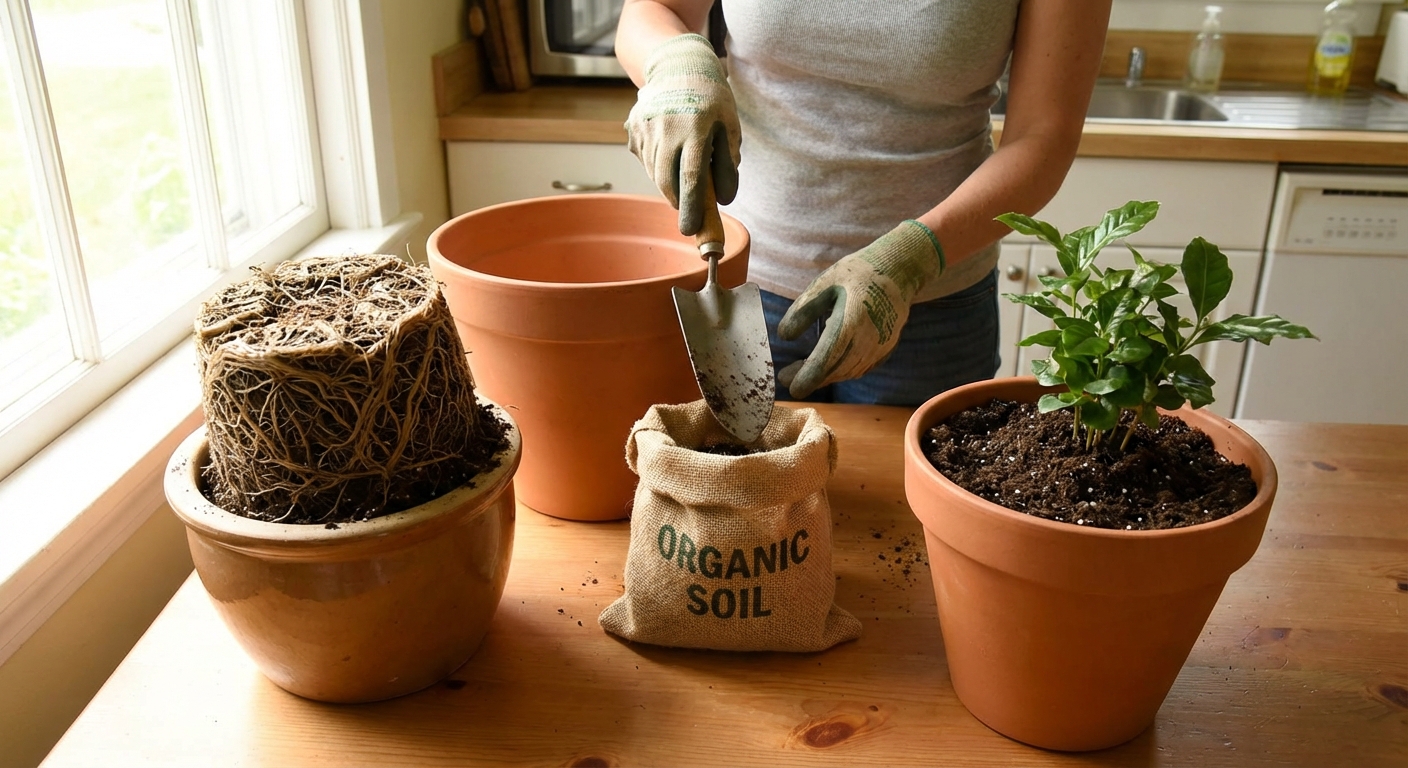
- Roots form a thick mat or spiral when you slip the plant out.
- Water runs straight through and soil pulls away from the edges.
- The plant is top‑heavy or frequently tipping over.
- There’s a sour smell, mold deep in the soil, or visible root rot.
Signs Pointing to a Soil Refresh
- Soil surface is crusted, hard, or covered with salt/mineral deposits.
- The plant has been in the same soil 2–3 years but isn’t showing severe crowding.
- Growth is a bit slow, but roots aren’t escaping the pot.
- You see fungus gnats mostly at the soil surface but roots appear healthy.
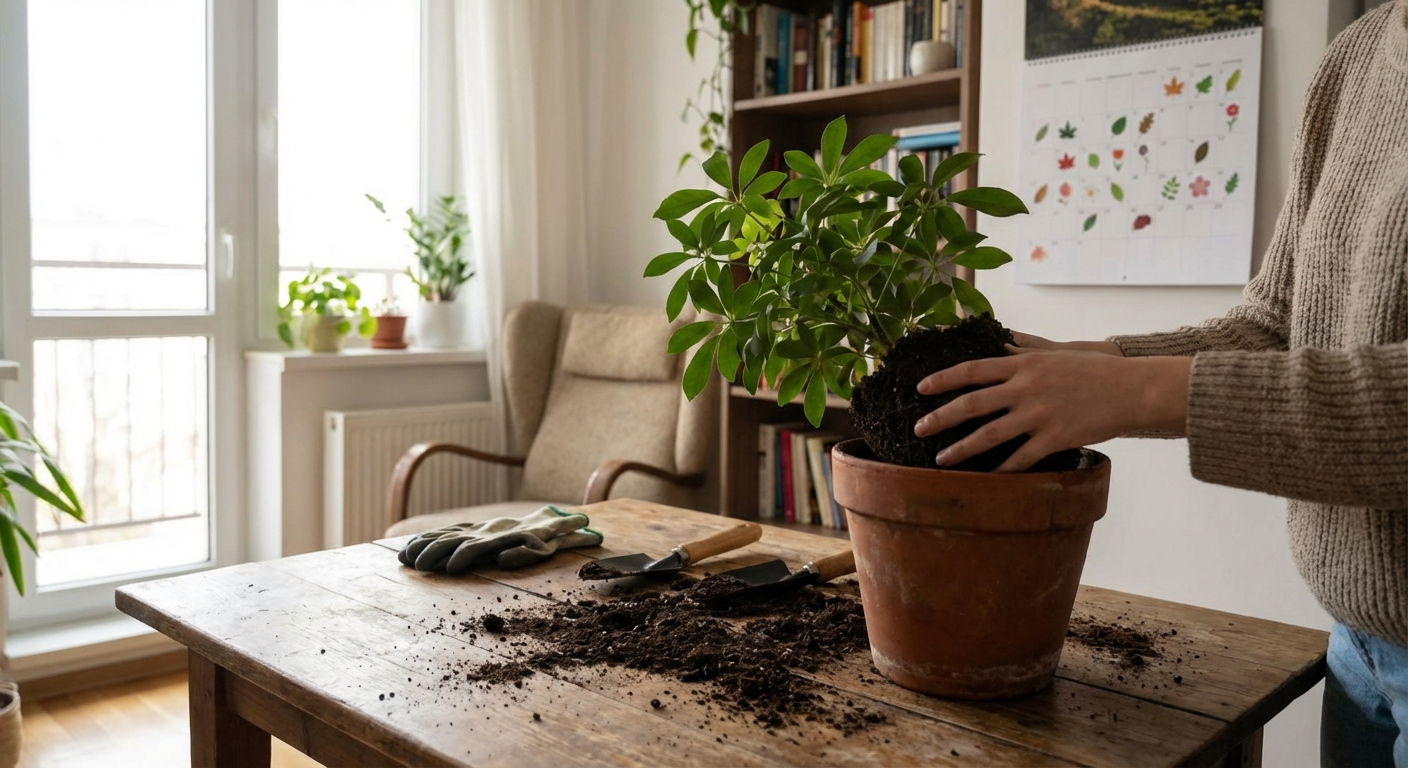
If you’re unsure, a gentle peek can help: tilt the pot, slide the plant partway out, and quickly assess root density. Then return it to the same pot if a full repot isn’t needed yet.
How to Do a Calm Soil Refresh
Step 1: Prepare Your Workspace
- Use a tray, newspaper, or compostable mat to catch debris.
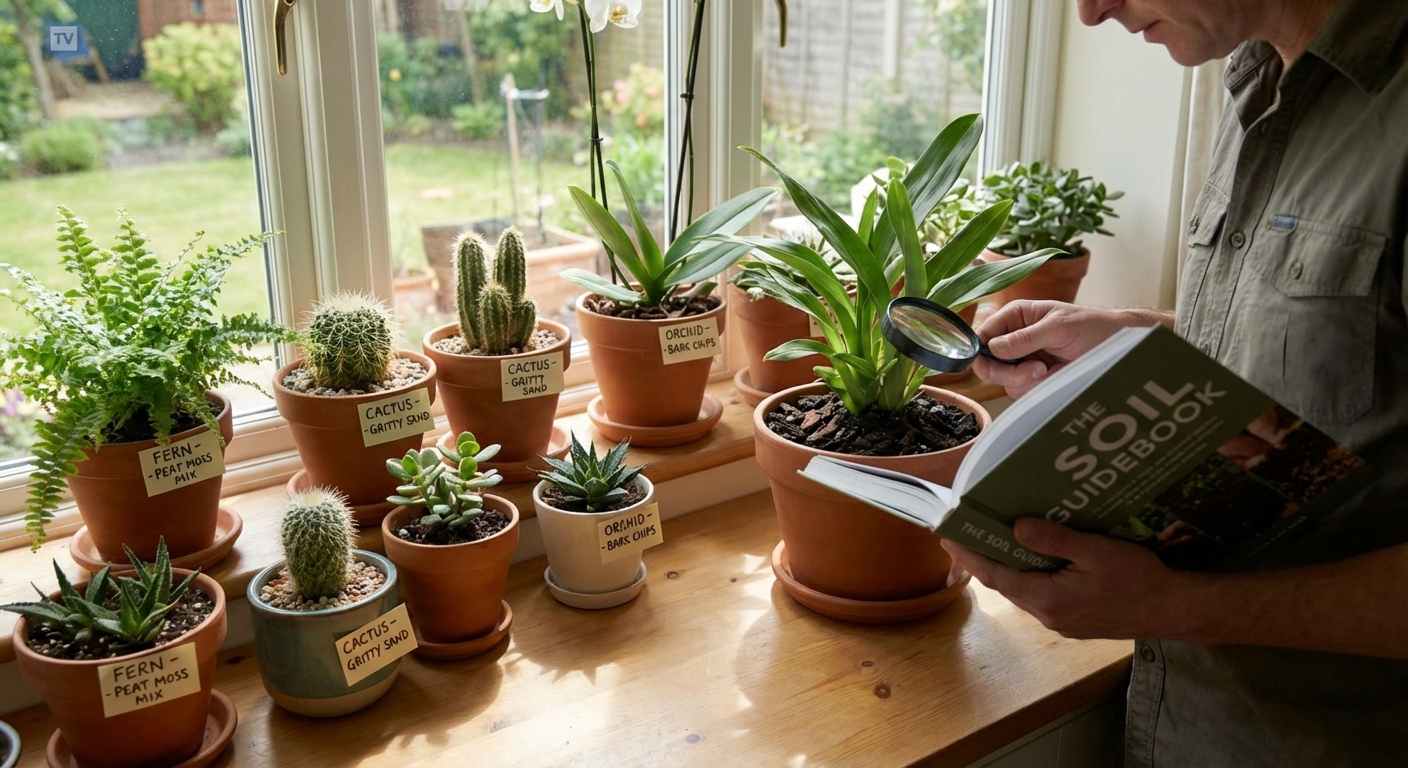
- Have fresh potting mix suitable for your plant type ready.
- Keep a small hand tool (like a spoon or dull knife) nearby.
Step 2: Loosen the Top Layer
- Gently scrape away 2–3 cm (about 1 inch) of soil from the top.
- Avoid tugging on roots; if you encounter them, stop at that depth.
Step 3: Remove Debris
- Take out dead leaves, twigs, and any visible salt crusts.
- If fungus gnats are present, removing this layer can disrupt their life cycle.
Step 4: Add Fresh Mix
- Top with a fresh, appropriate mix for the species.
- Firm lightly with your fingers but don’t compact it too hard.
Step 5: Water Thoughtfully
- Water to settle the new layer, but avoid soaking if it’s the plant’s dormant period.
- Observe how the plant responds over the next few weeks.
This simple ritual can be done once or twice a year to keep soil life active and supportive.
Species‑Specific: Repot vs. Refresh
Monstera deliciosa
- Repot: Every 1–2 years in spring when roots fill the pot or start to circle heavily.
- Refresh: Yearly, especially for large floor specimens; remove surface soil and top up with fresh chunky mix and a bit of compost.
Fiddle Leaf Fig
- Repot: Only when clearly root‑bound or the pot’s stability is compromised.
- Refresh: Ideal for light nutrient support and improved moisture behavior, particularly if it reacted poorly to past repots.
Calathea
- Repot: When roots fill the pot and the plant dries out more quickly than usual, preferably in spring.
- Refresh: Helpful if the soil surface has compacted or salt buildup is visible; they appreciate gentle changes.
Snake Plant
- Repot: When the pot cracks or roots burst through; they like slightly snug conditions.
- Refresh: Occasionally remove and replace the top layer to counter salts from tap water and fertilizer.
Peace Lily
- Repot: If it wilts daily even with good watering and roots are dense.
- Refresh: Pleasant booster after blooming periods, or if growth slows but roots aren’t tightly packed.
Seasonal Guidance: When to Repot vs. Refresh
Spring
- Best time for full repots for most indoor plants.
- Great moment to refresh soil for large plants you can’t move easily.
Summer
- Still safe to repot, but be mindful of heatwaves.
- Soil refreshes are ideal for ferns, calatheas, and thirsty plants as temperatures climb.
Autumn
- Prefer refreshing over repotting unless there’s a clear problem.
- Focus on gentle top‑dressings and root inspections for planning spring changes.
Winter
- Reserve full repots for emergencies like root rot or severe pest issues.
- Soil refreshes can be done carefully if your home has stable temperatures and good light, but avoid major root disturbance.
Combining Both: A Hybrid Approach
In some cases, a mix of both methods is soothing and effective:
- Slightly root‑bound but sensitive species (like Fiddle Leaf Figs or large Dracaenas) may appreciate small pot upgrades plus a partial soil replacement rather than complete bare‑rooting.
- For plants with mild soil issues (like minor compaction), you can gently loosen soil from the sides and bottom while keeping most of the rootball intact and then place it back into the same pot with a refreshed mix.
The goal is always balance: enough change to support health, not so much that the plant feels shocked.
Common Mistakes—And Softer Alternatives
- Mistake: Repotting a plant immediately after purchase.
Softer alternative: Let it acclimate for a few weeks in its nursery pot; refresh the top soil only if needed.
- Mistake: Full repot in deep winter due to minor cosmetic issues.
Softer alternative: Use a soil refresh, adjust light and watering, and save major repotting for spring.
- Mistake: Jumping up multiple pot sizes "to avoid repotting again soon."
Softer alternative: Move up one size and revisit in a year. This keeps soil moisture more predictable.
- Mistake: Stripping all old soil from the roots without cause.
Softer alternative: Only remove what’s loose or diseased; preserving familiar soil helps reduce shock.
A Gentle Decision Flow for Plant Parents
When you’re unsure, ask yourself:
Are the roots clearly crowded or unhealthy?
- Yes → Plan a full repot in the next suitable season (or sooner if rot). - No → Go to question 2.
Is the soil itself causing trouble (smell, severe compaction, pests)?
- Yes → Consider a repot; if mild, try a thorough soil refresh first. - No → Go to question 3.
Is this the right season for a major change?
- Yes → Repot if truly needed; otherwise, a refresh may be enough. - No → Refresh soil and adjust care; wait for spring for bigger steps.
Trust that small, thoughtful interventions can be just as powerful as big changes. Your plants don’t need perfection—they benefit most from your steady attention, patient observation, and a willingness to make space when they clearly ask for it, whether that means a brand‑new pot or just a fresh, nourishing layer of soil.
Key Takeaway
The most important thing to remember from this article is that this information can change how you think about Repotting & Soil.