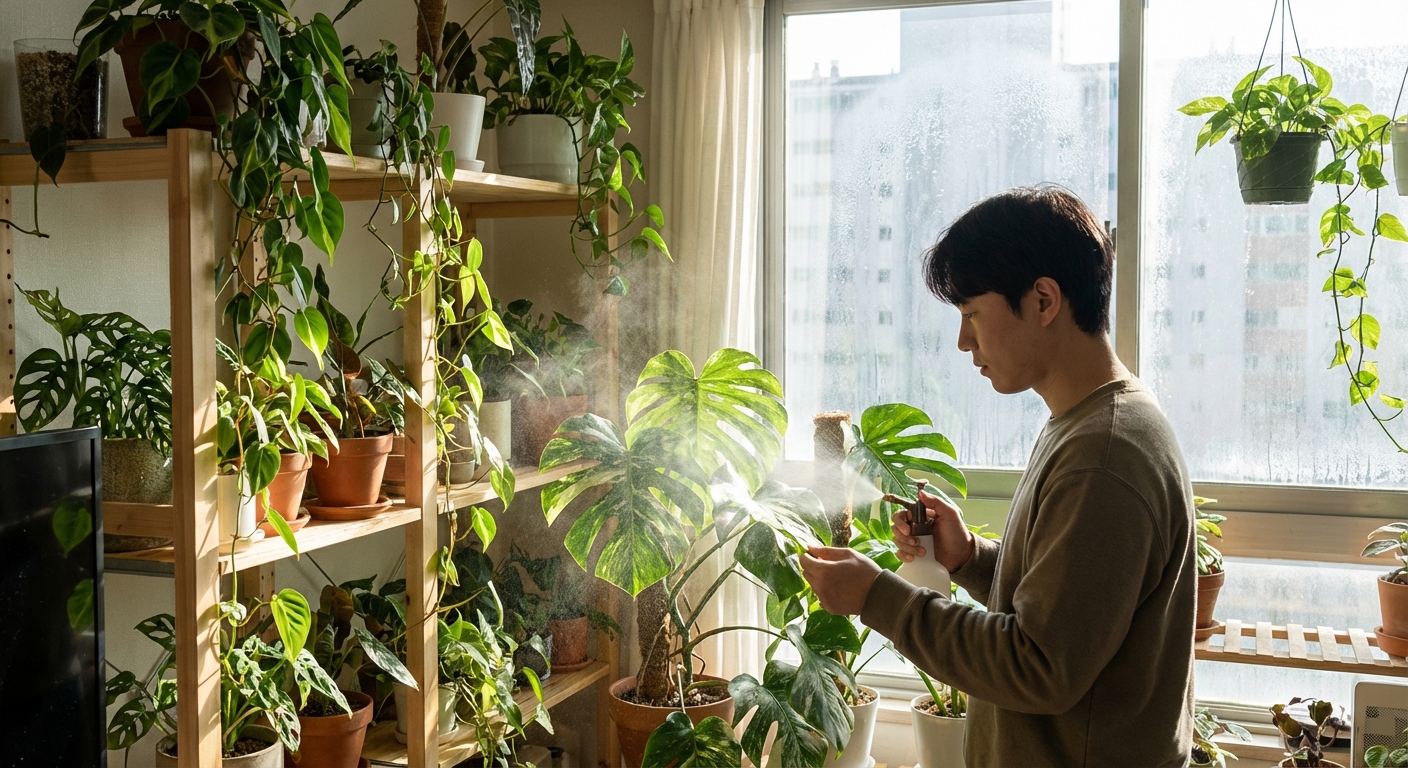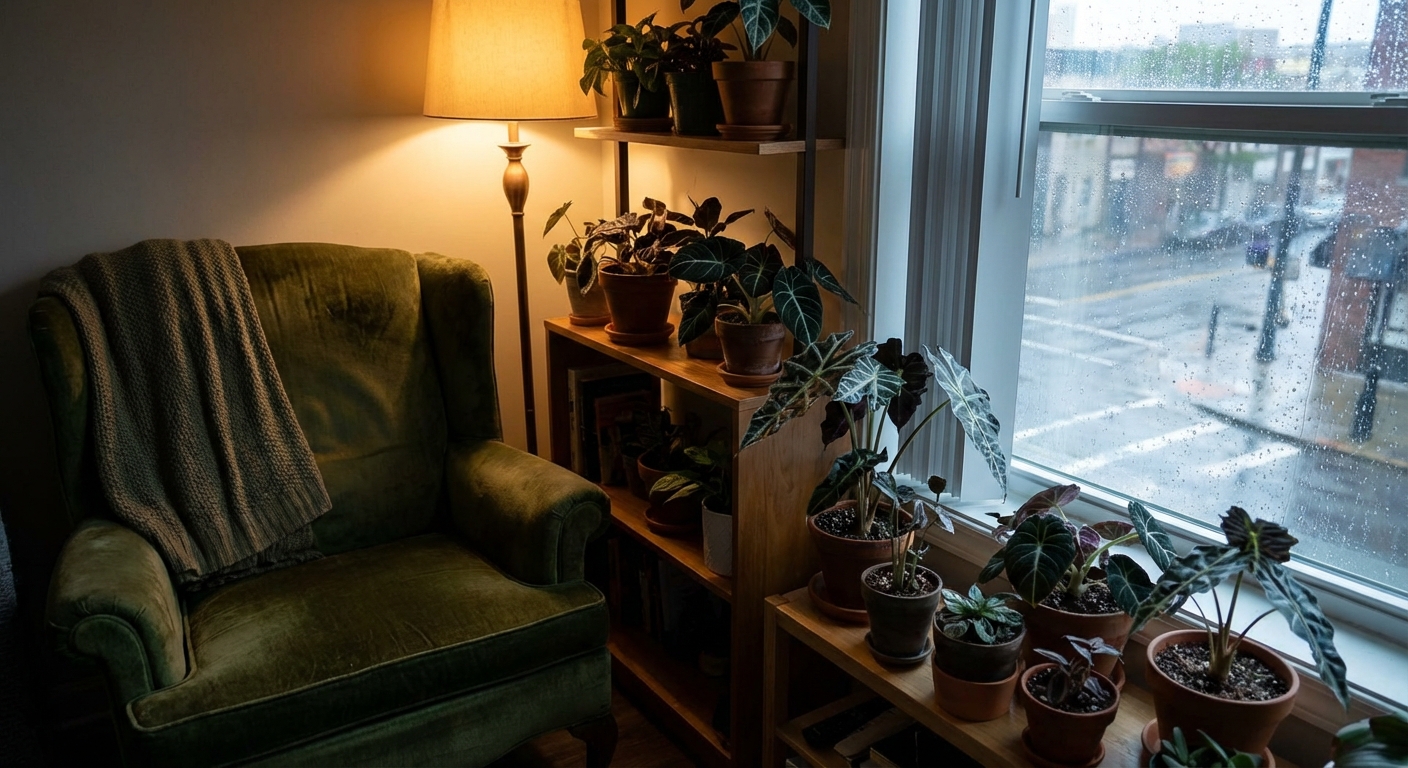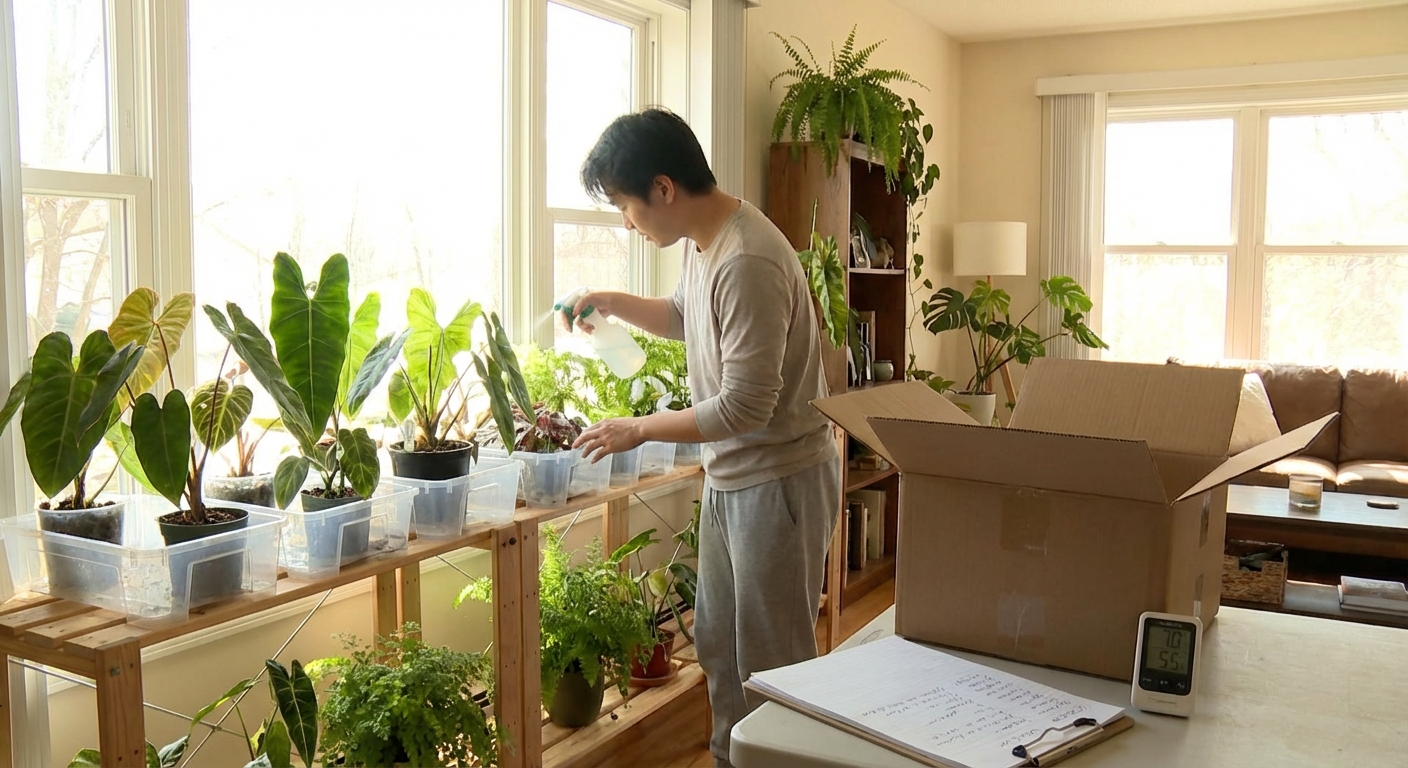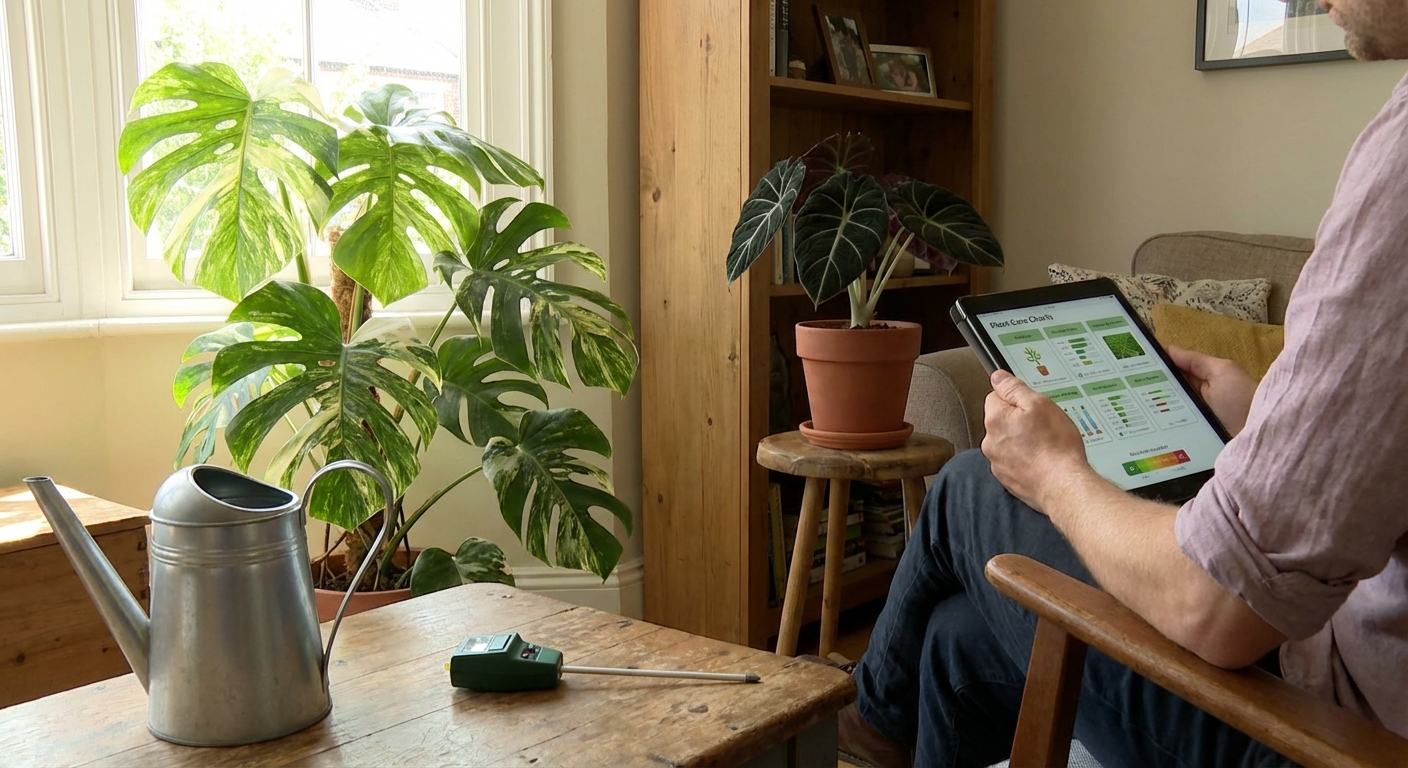
Many indoor plant lovers feel drawn to rare plants for two main reasons: striking variegation (patches of white, cream, or yellow) and luxurious velvety texture. Both create a sense of depth and drama on the windowsill, but they ask for care in slightly different ways.
Two Kinds of Rarity, Two Kinds of Beauty
If you’re unsure whether a variegated Monstera or a velvety Philodendron suits your home and lifestyle better, this calm comparison will help you decide.
We’ll walk through light, water, humidity, common mistakes, and seasonal care – with specific plant examples along the way.
Understanding Variegated Rare Plants
Variegation reduces chlorophyll in the leaf, meaning these plants have less capacity to capture light than solid green varieties. This often makes them more sensitive to both too little and too much light.
Common Variegated Rarities
- Monstera deliciosa ‘Albo Variegata’
- Philodendron ‘White Princess’ / ‘Pink Princess’
- Syngonium podophyllum ‘Albo’
- Scindapsus pictus ‘Exotica’ variegated forms
Light Requirements
- Prefer bright, indirect light – brighter than many velvety species.
- Too little light can lead to reverted leaves (more green, less variegation).
- Direct sun, especially midday, can scorch white sectors quickly.
Guideline: Place 0.5–1.5 meters (2–5 feet) from a bright window or use a grow light at a safe distance.
Understanding Velvet-Leaved Rare Plants
Velvety leaves have tiny hairs (trichomes) that create a soft, light-diffusing surface. These surfaces can respond differently to light and humidity.
Popular Velvet Rarities
- Philodendron micans
- Philodendron gloriosum
- Anthurium clarinervium / crystallinum
- Alocasia ‘Black Velvet’
Light Requirements
- Generally prefer medium to bright, indirect light.
- Velvet leaves can be more prone to burn in strong direct sun.
- Often handle slightly lower light better than high-variegation plants.
Guideline: Dappled light, east-facing windows, or a bit farther from a bright window.
Comparing Watering Needs
Variegated Plants
- Slower growth from reduced chlorophyll often means slightly slower water use.
- Overwatering can quickly lead to yellowing, especially in white sectors.
- Allow the top 2–4 cm (1–1.5 inches) of soil to dry.
- Use an airy mix with bark and perlite.
Care tips:
Velvet-Leaved Plants
- Many come from humid forest floors and appreciate evenly moist conditions.
- Their thicker, textured leaves can store a bit more moisture.
- Keep soil lightly moist, especially for Anthuriums and Philodendron gloriosum.
- Avoid both complete dryness and constant sogginess.
- Monstera albo prefers to dry slightly more between waterings than Philodendron gloriosum, which likes a more consistently moist substrate.
Care tips:
Example:
Humidity and Temperature: Who Needs What?
Variegated Rarities
- Most prefer 50–70% humidity but can tolerate normal home levels if other care is good.
- Leaves may be thinner where they’re white, so edges can brown if air is very dry.
Velvet Rarities
- Typically enjoy higher humidity (60–80%), especially Anthuriums and some Philodendrons.
- Low humidity shows quickly as crispy tips or edges.
Practical Approach:
If your home is naturally dry:
- A variegated plant may be more forgiving if you can’t run a humidifier.
- Velvet-leaved plants may reward you with lush, large, soft leaves.
If you already own a humidifier or a greenhouse cabinet:
Common Mistakes to Avoid
With Variegated Plants
Too little light:
- New leaves emerge mostly green. - Variegation pattern becomes less dramatic.
Adjustment: Gradually increase light or add a gentle grow light.
Chasing pure-white leaves:
- Completely white leaves can’t sustain the plant. - Highly unstable variegation increases the risk of all-white growth.
Perspective: A balance of green and white is healthier long-term.
With Velvet-Leaved Plants
Over-misting leaves:
- Constantly wet foliage can lead to fungal spots.
Adjustment: Increase humidity around the plant instead of directly on leaves.
Direct midday sun:
- Velvet leaves scorch quickly, developing pale, rough patches.
Adjustment: Filter light with a sheer curtain or move slightly away from the window.
Seasonal Care Differences
Spring & Summer
- Variegated plants may respond quickly to brighter days with more colorful growth. This is an ideal time to:
- Adjust placement for better light.
- Take cuttings from healthy stems.
- Velvet plants enjoy warmth and humidity, but watch for:
- Fungal issues in overly stagnant, humid areas.
- Increased watering needs as growth accelerates.
Autumn & Winter
- Variegated plants:
- May need to be moved closer to windows or under grow lights.
- Water less frequently as light and growth slow.
- Velvet plants:
- Humidity may drop from indoor heating; use pebble trays or a humidifier.
- Avoid repotting large Anthuriums or Philodendrons unless necessary; they recover more slowly in low light.
Choosing Based on Your Space and Routine
Ask yourself a few gentle questions:
How bright is your space?
- Very bright, indirect light: You can comfortably keep variegated rarities. - Medium or softer light: Velvet-leaved plants may be more content.
How consistent is your watering?
- Irregular routine or frequent travel: Consider variegated species in chunky soil or hardier velvet plants like Philodendron micans. - Steady routine and close attention: Anthuriums and fussier velvets can flourish.
What kind of joy are you seeking?
- Dynamic, high-contrast visuals: Variegated Monsteras, Philodendrons, and Syngoniums. - Calm, tactile satisfaction: Velvet Philodendrons, Anthuriums, and Alocasias.
Gentle Troubleshooting for Both Types
Regardless of surface pattern or texture, rare plants share some universal signals:
- Drooping after watering: Possible root issues or compacted soil.
- Slow, stunted growth for many months: Often a sign of insufficient light or a root-bound pot.
- Sudden multiple leaf drops: Check for cold drafts, recent repotting shock, or pest activity.
Approach changes slowly:
- Adjust one factor at a time (light, water, substrate, or pot size).
- Give the plant at least 2–3 weeks to respond.
Embracing Your Own Style of Rarity
There is no single “right” choice between variegated and velvet-leaved rare plants. Each group offers its own kind of beauty and asks for slightly different support.
If your heart leaps at swirling white and green patterns, let that guide you toward variegates – while honoring their need for strong, gentle light. If you’re drawn to softness, texture, and depth, lean into velvety species and create a humid, sheltered nook for them.
Ultimately, the best rare plant is the one that fits both your environment and your caring rhythm. Start with one or two, learn their language over the seasons, and let your collection grow at a pace that feels sustainable and soothing for you.
Key Takeaway
The most important thing to remember from this article is that this information can change how you think about Rare Plants.