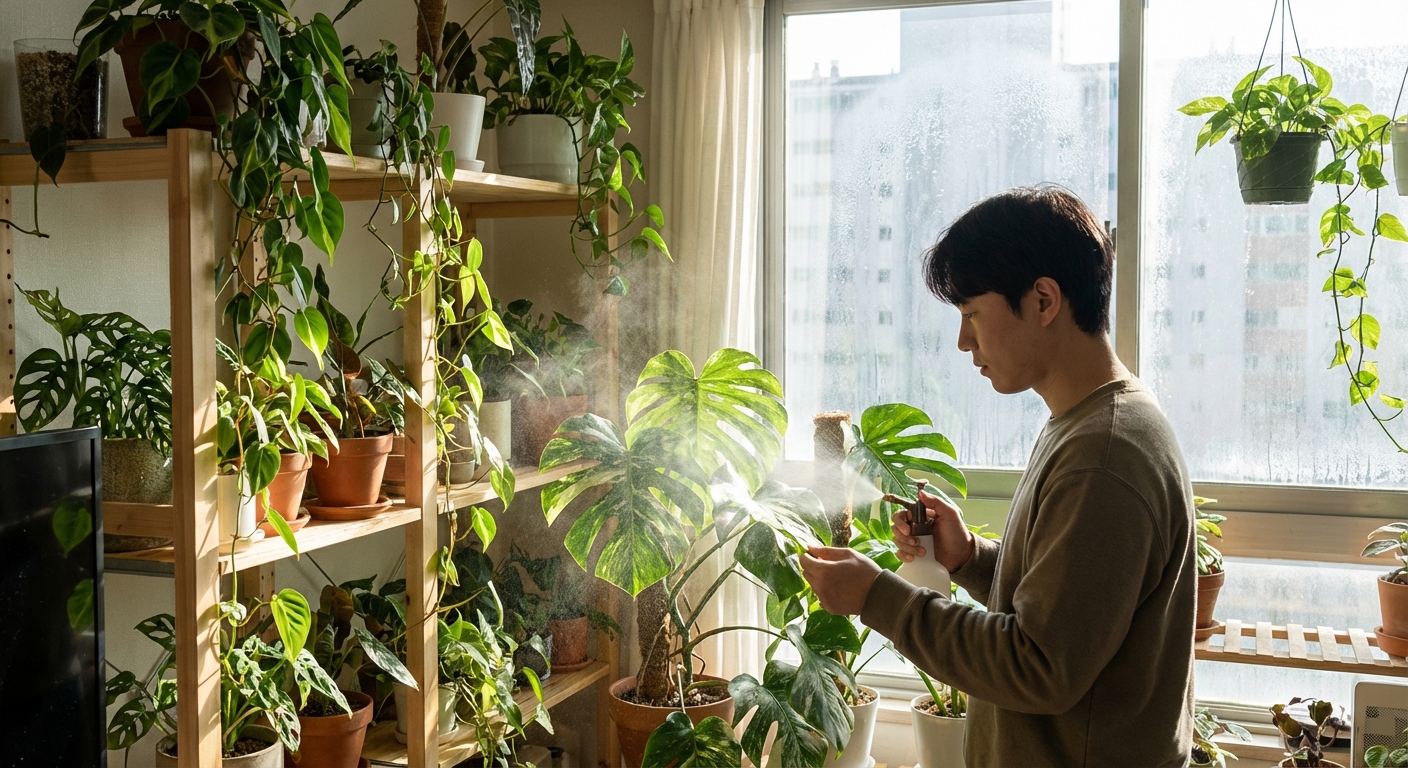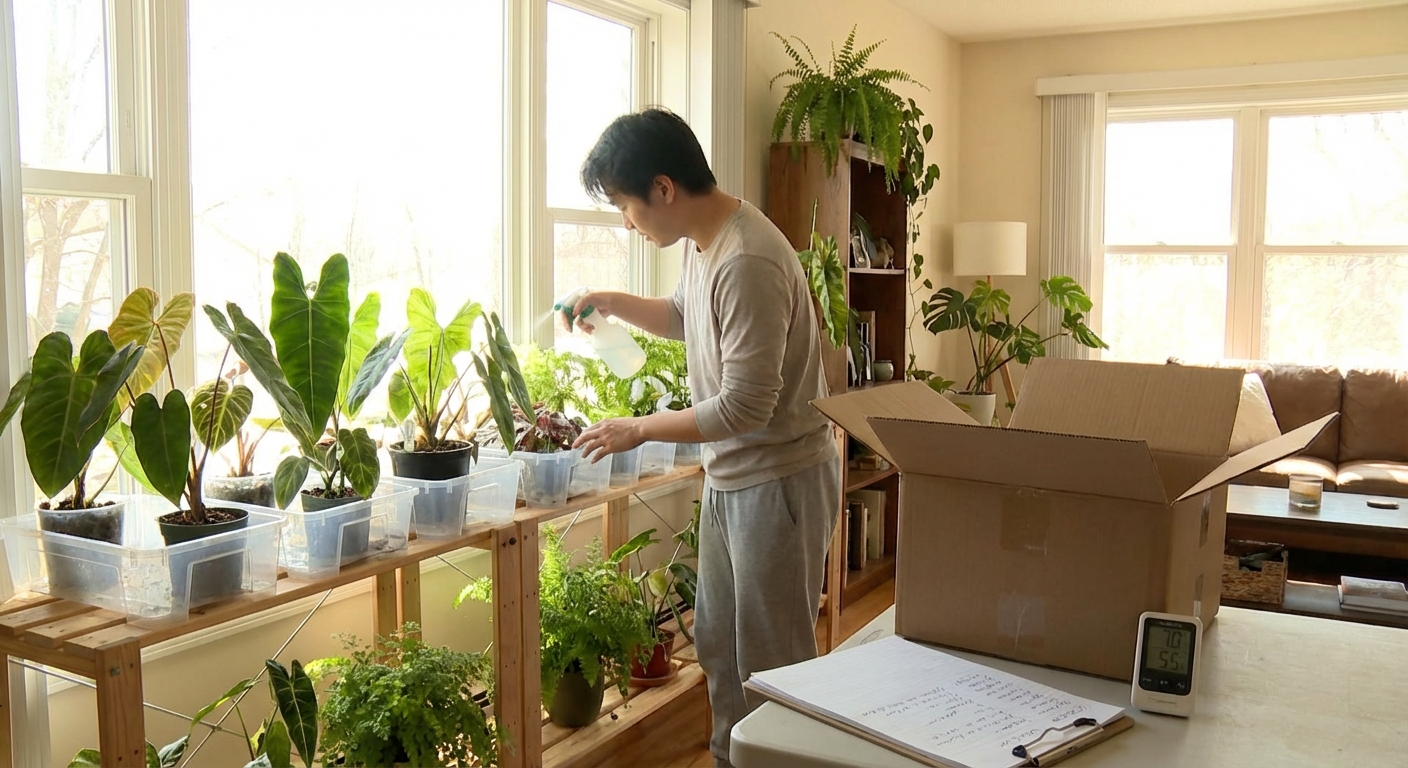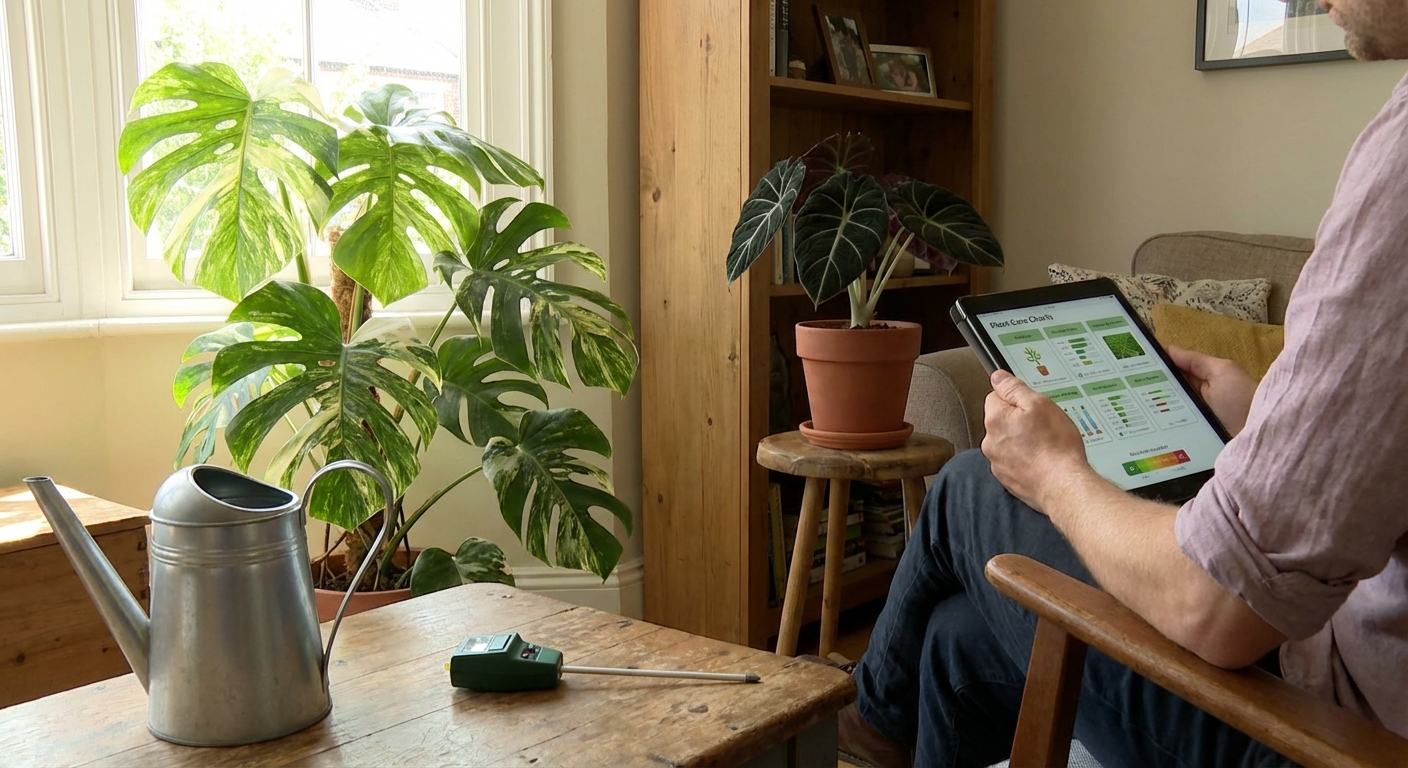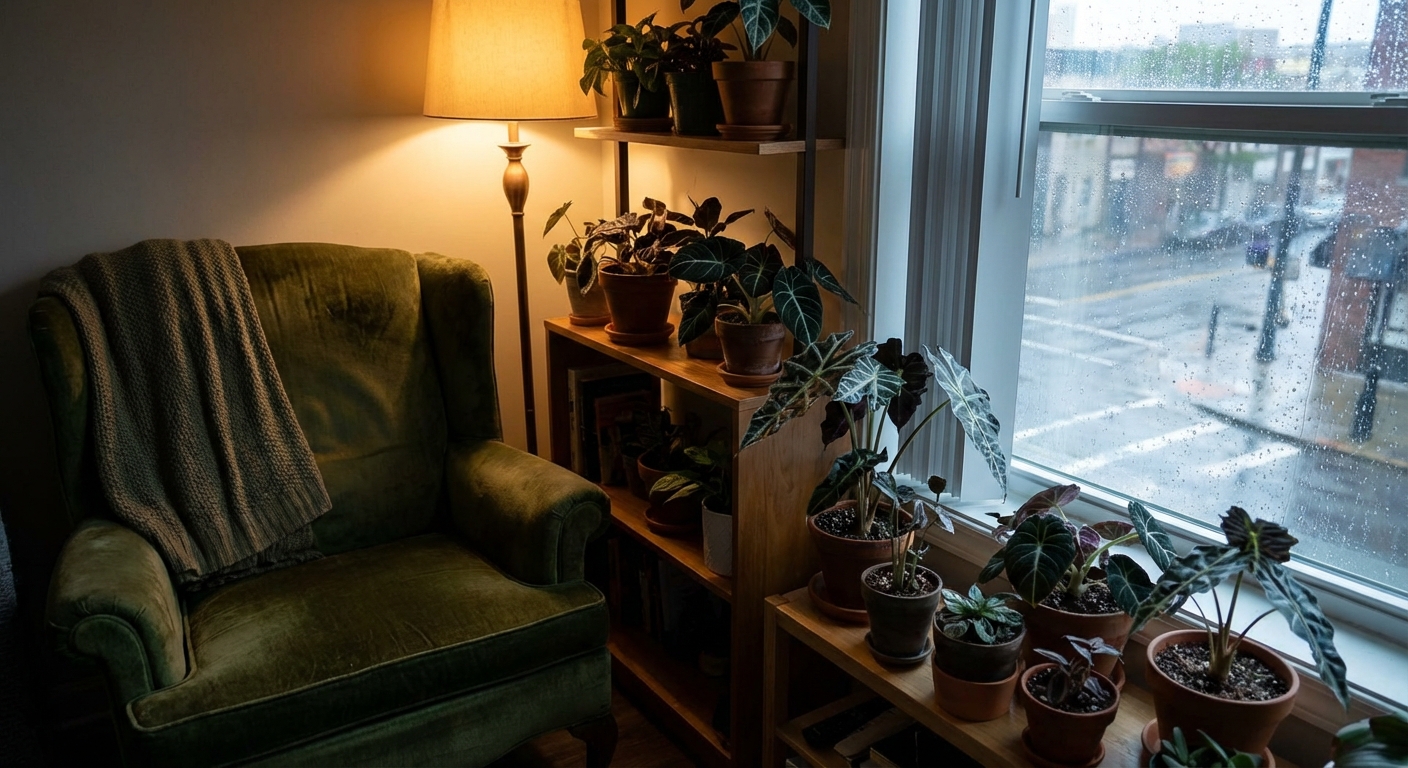
Not every home is filled with bright, sunlit windows. Many of us nurture plants in softly lit bedrooms, north-facing living rooms, or cozy apartments with only a few hours of indirect light.
Quiet Beauty for Gentle Light
The good news: some of the most captivating rare plants are naturally suited to softer light. Their velvet leaves, silver veins, and deep green tones have evolved to capture what little sun filters through forest canopies.
This guide introduces rare plants that can thrive in lower-light conditions, with calm, practical advice to keep them thriving.
1. Philodendron micans: The Velvet Vine
Why It’s Special
Philodendron micans offers shimmering, heart-shaped leaves with a velvety texture that shifts between bronze, green, and deep burgundy. While not the rarest philodendron, higher-quality or unusual clones are prized by collectors.
Light Needs
- Prefers medium to bright, indirect light, but tolerates lower light better than many rare plants.
- In low light, expect slower growth and slightly larger, thinner leaves.
Care Notes
- Watering: Allow the top 2–3 cm (about 1 inch) of soil to dry. Overwatering causes yellow, limp leaves.
- Soil: A light aroid mix (potting soil, perlite, and a bit of bark) keeps roots comfortable.
- Support: Can trail from a shelf or climb a moss pole; climbing often produces larger leaves.
Common mistake: Treating micans like a succulent and letting it dry completely. If the leaves feel limp or curl inward, it’s asking politely for a drink.
2. Scindapsus treubii ‘Moonlight’: Soft Silver Glow
Why It’s Special
Scindapsus treubii ‘Moonlight’ is a slow-growing, rare pothos relative with muted silver-green leaves that look hand-painted. Its gentle coloring brightens shady corners without demanding spotlight conditions.
Light Needs
- Thrives in medium indirect light and accepts lower light.
- In very low light, silver patterning may fade slightly, but the plant usually remains healthy.
Care Notes
- Watering: Let the soil dry about halfway down before watering. Overly frequent watering can cause blackened roots.
- Humidity: Average household humidity is fine, but 50–60% encourages steady growth.
- Fertilizer: Feed lightly in spring and summer every 6–8 weeks.
Troubleshooting: If leaves curl tightly and feel firm, the plant is often underwatered. A thorough drink and a gentle return to regular watering usually restores it.
3. Monstera standleyana ‘Albo Variegata’: Speckled Elegance
Why It’s Special
This climbing Monstera species features narrow, glossy leaves splashed and streaked with white or cream. It’s rarer than the classic Monstera deliciosa but generally more forgiving than some ultra-rare variegates.
Light Needs
- Prefers bright, indirect light, but can manage in medium light with slower growth.
- Avoid deep shade; variegation may reduce over time.
Care Notes
- Watering: Keep lightly moist, but not soggy. Allow the top layer to dry before watering.
- Support: Provide a pole or trellis. Climbing gives the plant more stability and encourages larger leaves.
- Pruning: Trim leggy stems in low light to keep growth compact and full.
Common mistake: Assuming variegated leaves can handle direct sun. Sudden bright sun can scorch white portions quickly; diffuse light is safer.
4. Calathea (Goeppertia) ‘White Fusion’: For the Patient Plant Parent
Why It’s Special
‘White Fusion’ is a striking prayer plant with irregular white, green, and sometimes lavender tones on its leaves. It is considered rare and a little temperamental, but deeply rewarding when happy.
Light Needs
- Best in medium indirect light; too little light dulls the white patterning.
- Direct light burns easily, especially the white areas.
Care Notes
- Soil: Light, airy, and consistently moist yet never soggy.
- Watering: Use filtered or dechlorinated water if possible. Let the top 1–2 cm (½–1 inch) dry.
- Humidity: Aim for 60% or higher. Edges crisp in dry air.
- Brown leaf edges often signal low humidity or hard water.
- Try a small humidifier nearby and consider rain or filtered water.
Troubleshooting:
Remember, occasional browning is common; you can trim edges with clean scissors for a tidier appearance.
5. Aspidistra elatior ‘Variegata’: The Indestructible Rarity
Why It’s Special
Nicknamed the cast iron plant, Aspidistra has been loved for generations. Variegated forms, however, are much rarer and coveted by collectors for their creamy stripes.
Light Needs
- Does well in low to medium light and even tolerates deep shade.
- Too much bright light can fade variegation and cause scorched patches.
Care Notes
- Watering: Let soil dry about 2/3 down between waterings.
- Soil: A well-draining, standard potting mix is usually enough.
- Pests: Generally hardy, but check for spider mites in very dry homes.
Common mistake: Over-tending. Aspidistra prefers to be left alone a bit; constant repotting or overwatering often does more harm than good.
Seasonal Tips for Low-Light Rare Plants
Spring & Summer
- Gently consider moving plants slightly closer to windows, still avoiding harsh sun.
- Light feeding every 6–8 weeks supports new growth.
- Good time to take cuttings of trailing plants like micans.
Autumn & Winter
- Expect slower growth in lower light.
- Rotate plants monthly so all sides receive what light is available.
- Avoid heavy fertilizing; your plants are resting.
If leaves grow smaller or more spaced out, it may be your plant’s way of saying, “I’m making do with what I have.” Adding a small grow light can make an enormous difference.
A Gentle Approach to Troubleshooting
When something looks off, step back and observe:
Check light: Has furniture moved? Are curtains kept closed more often?
Check water: Is the soil still wet a week after watering? Or bone dry after just two days?
3. Check roots: If decline is rapid, slip the plant gently from the pot and look for healthy, white or tan roots.
Instead of changing everything at once, adjust one variable at a time. Give the plant 2–3 weeks to respond. Rare plants, especially in low light, move slowly. With patience, they often surprise you with quiet resilience.
Creating a Soothing Low-Light Sanctuary
Rare plants in dimmer corners ask us to slow down. Growth may be gentle, leaves may emerge one at a time, and progress might feel subtle. But this gradual unfolding can become a comforting rhythm.
Choose a few species suited to your space. Learn their small signals of thirst, contentment, and stress. Over time, you’ll build not just a collection of rare plants, but a calm sanctuary that mirrors the soft, filtered light of the forests they once called home.
Key Takeaway
The most important thing to remember from this article is that this information can change how you think about Rare Plants.